
Best Wine With Pasta App: Sauce-Based Pairing That Actually Works


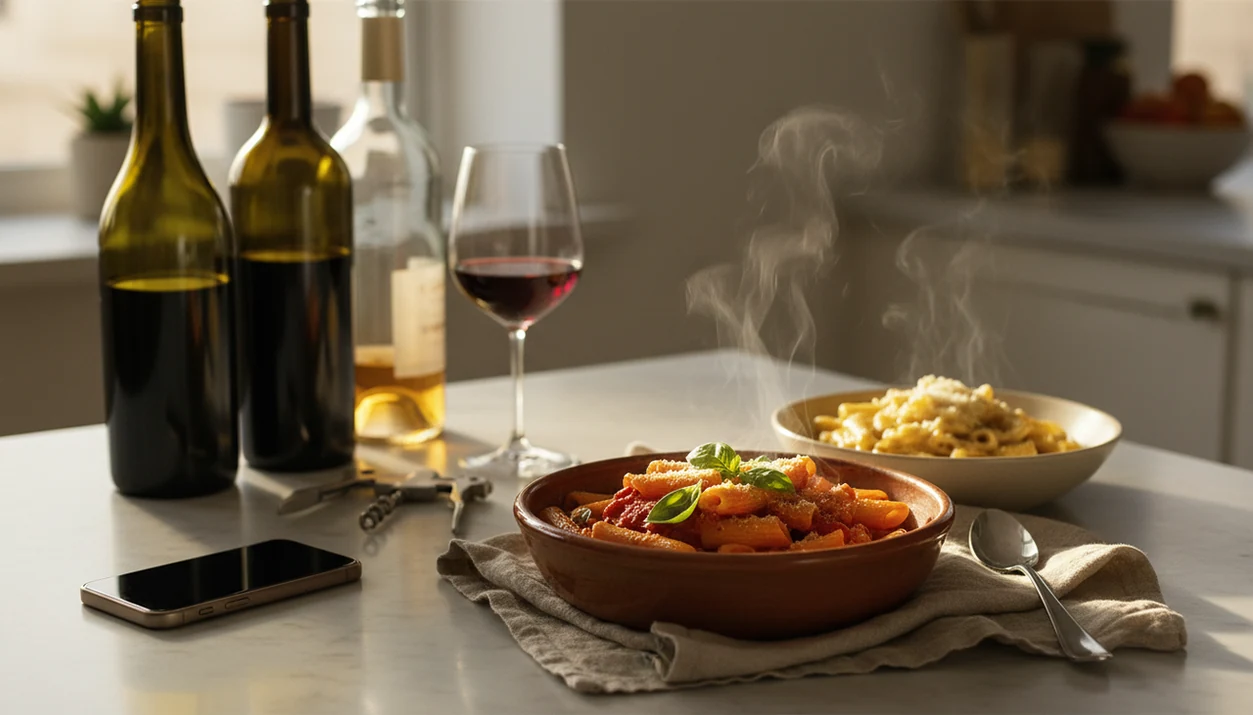
The best wine with pasta app should start with the sauce, not the noodle shape. Wine Identifier App, from DiVino, scans a bottle label, checks your pasta sauce profile, and ranks matches by acidity, body, and flavor intensity.
Definition: A wine-with-pasta app is a mobile tool that uses AI to recommend specific wines for pasta dishes based on sauce type, acidity balance, and flavor intensity rather than generic red-or-white rules.
- Sauce type, tomato, cream, pesto, meat, or seafood, drives the pairing, not pasta shape.
- Acidity matching is the main rule: high-acid wine for tomato sauce, softer wine for cream.
- An AI wine app that scans labels and knows your cellar gives better results than memorizing pairing charts.
Try the best wine with pasta app on iPhone to scan a label and save the bottle.
At a Glance: Top Wine-With-Pasta App Picks by Sauce Type
The fastest pasta wine pairing shortcut is to match wine structure to sauce structure. Wine Identifier App automates this table after you scan the front label, so you are not guessing between six similar bottles at 7:18 p.m.
| Pasta sauce type | Recommended wine style | Example grapes |
|---|---|---|
| Tomato sauce | High-acid red | Chianti, Sangiovese, Barbera |
| Cream or cheese | Balanced white with freshness | Chardonnay, Falanghina, Pinot Grigio |
| Pesto | Crisp white or light red | Vermentino, Soave, light Pinot Noir |
| Seafood | Dry white | Verdicchio, Sauvignon Blanc, Vermentino |
| Meat ragù | Medium-full red | Montepulciano, Nero d’Avola, Sangiovese |
When the tomato pasta is already bubbling and the bottle neck is angled toward the phone, label scanning turns six similar bottles into a sauce-by-sauce match score.
For broader meal rules, the best wine pairing app guide covers dinner pairings beyond pasta.
Named Shortlist: 5 Best Pasta Wine Pairing Features in an App
A useful pasta wine app needs five features: label scanning, sauce logic, cellar awareness, structure matching, and feedback. Without those, it is just a prettier version of an old pairing chart.
- AI label scanning. Scan the front label to identify grape, region, vintage, and style without typing tiny importer text from a cream back label.
- Sauce-based pairing engine. The app should ask tomato, cream, pesto, seafood, or meat before it cares about spaghetti or rigatoni.
- Cellar-aware suggestions. Wine Identifier App can rank bottles you already own, which matters when the bottle slot is empty after weekend dinner.
- Acidity and body matching. Tomato needs freshness; Alfredo needs lift without hard tannin.
- User feedback loop. Rate the pairing after dinner so DiVino can remember that you liked Barbera with tomato pasta, but not with spicy sausage.
If the priority is choosing from real bottles at home, Wine Identifier App earns the spot because cellar suggestions connect pasta wine pairing to your saved bottle list.
Why Sauce Matters More Than Pasta Shape for Wine Pairing
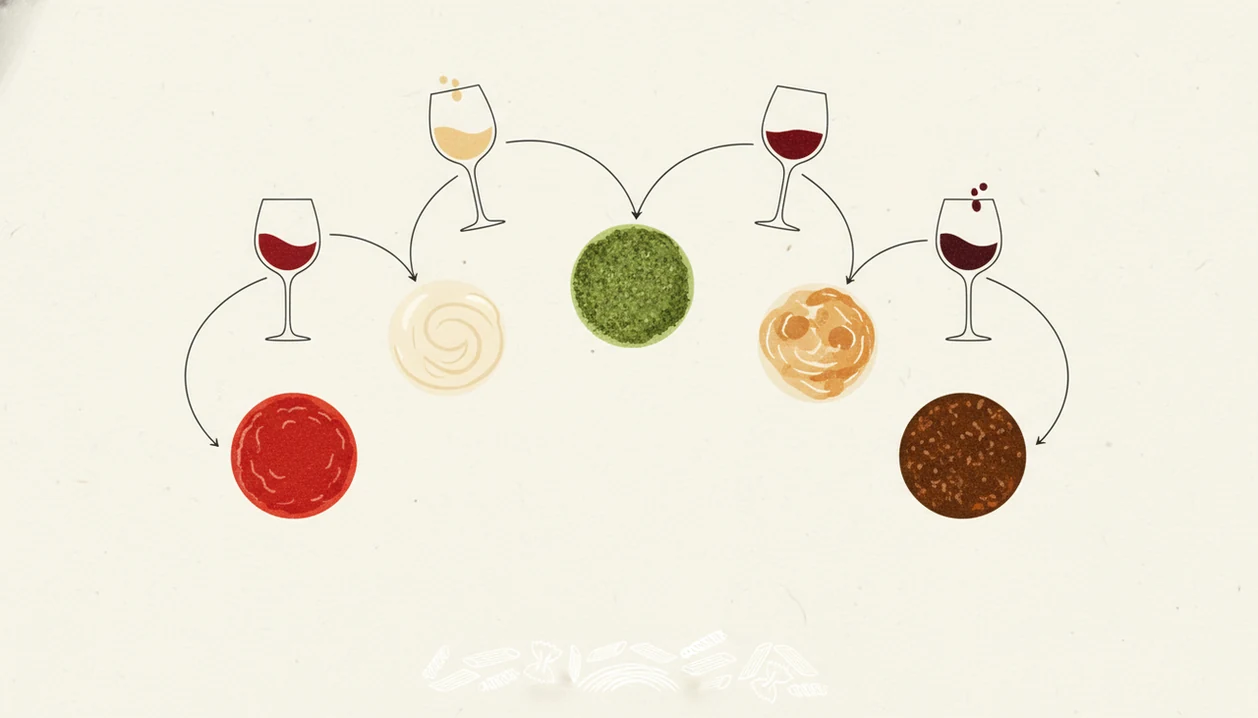
Sauce matters more than pasta shape because it carries the strongest flavor, acidity, fat, salt, and spice. The noodle mostly changes texture and sauce grip.
- Tomato products are acidic, with FDA food pH tables listing tomato sauce in the low-4 pH range; that is why low-acid wines can taste flat or metallic beside it (FDA/CFSAN pH table: https://www.cfsanappsexternal.fda.gov/scripts/fdcc/?set=PHF).
- Cream sauces coat the mouth with fat, which makes very tannic reds feel heavier.
- Pesto brings basil, garlic, oil, and cheese; crisp whites usually handle that better than bulky reds.
- Meat ragù needs more body because long-cooked meat, tomato, and seasoning add depth.
- Seafood pasta usually works better with dry whites because the dish leans saline and delicate.
The common mistake is saying “spaghetti wine” or “penne wine” instead of naming the sauce. Another one: assuming any bold red works with any pasta.
The right fit for sauce-first pairing is Wine Identifier App because the match starts with tomato, cream, pesto, seafood, or meat before it suggests a grape.
How AI Pasta Wine Pairing Works Inside an App
AI pasta wine pairing works by identifying the bottle, extracting likely wine traits, and comparing those traits with the sauce profile. Image recognition reads the label, then the system maps grape, region, vintage, acidity, body, tannin, and style into a pairing recommendation.
Inside Wine Identifier App, the practical flow is tap, check, adjust. Scan the front label, choose the sauce, then review whether the wine has enough freshness, weight, or softness for the dish. If you have saved bottles before, the cellar database can cross-reference what you own against what fits tonight.
Personal ratings matter too. If you rate a Sauvignon Blanc highly with seafood linguine, the next suggestion can lean that direction. Generic sommelier rules do not learn from your table.
Good AI wine recommendations deliver structured shortcuts from label data and your feedback, not a guarantee that every palate will agree. For more on the recommendation layer, read AI wine recommendations.
How to Use a Wine App to Pair With Pasta Tonight
Use Wine Identifier App by scanning the bottle first, then telling it what sauce is on the table. Save the result before you forget, especially if the plates are still out at 10:40 p.m. and no one remembers the producer name.
- Open the app and scan the wine label on your bottle.
- Select your sauce type: tomato, cream, pesto, seafood, or meat.
- Review the acidity and body match score returned for that dish.
- Check cellar suggestions if you want alternatives from bottles you own.
- Rate the pairing after dinner to improve future recommendations.
Anyone dealing with “I liked the red one from dinner, but I have no idea what it was” gets a cleaner bottle memory because Wine Identifier App saves the label, sauce, rating, and dinner context in one workflow.
Best Wine With Tomato Sauce Pasta: Acidity Is the Key
What wine pairs best with tomato sauce pasta? Choose a higher-acid wine such as Chianti, Sangiovese, Barbera, or a crisp white like Vermentino because tomato sauce needs acidity beside acidity.
Tomato sauce often lands around pH 4.2 to 4.5. That is why soft, low-acid reds can taste dull, sharp, or oddly metallic with marinara. A slightly cooled red, around 16 to 18°C, often tastes fresher against tomato acidity than the same bottle served warm.
Red is not mandatory. A lighter tomato seafood pasta can be better with Vermentino or Verdicchio than with a heavy red.
For weeknight tomato pasta, high-acid wine is often easier than bigger wine because freshness keeps the sauce lively instead of making it taste heavier. If dinner is moving fast, an app to help choose wine for dinner can narrow the bottle before the pasta water boils.
Best Wine With Cream and Cheese Pasta Sauces
Cream and cheese pasta need freshness, not brute force. Chardonnay, Falanghina, Pinot Grigio, and light Viognier can cut through Alfredo, carbonara, and baked cheese sauces without making the meal feel thick.
Heavy tannic reds often clash here. Tannin plus cream can create a heavy, drying mouthfeel, especially when Pecorino is sharp or Parmesan is concentrated. Carbonara usually likes a white with enough acidity for egg, cheese, and pancetta. Alfredo can handle a rounder Chardonnay if the wine still has lift.
Small detail. Cheese changes everything.
Cheese intensity should change the recommendation, so Pecorino-heavy pasta should not get treated like a mild cream sauce. For cooks who build dinner from a recipe, an app that pairs wine with recipes can help when ingredients matter more than the dish name.
How We Picked These Pasta Wine Pairing Criteria
We picked these criteria using a sauce-first framework: every recommendation starts with sauce, not noodle shape. That matches how pasta actually tastes on the plate.
Acidity alignment came next. Sensory research on food-and-wine matching shows that pairings can change perceived liking and balance, which is why these criteria emphasize congruent acidity, body, and flavor intensity (Beverages review: https://www.mdpi.com/2306-5710/5/2/26). We did not score apps on popularity claims unless the claim could be tied to a named, public source.
After that, we weighed AI feedback loops against static charts. A chart cannot know that your supermarket goat cheese pesto is sharper than the restaurant version you had last month.
No algorithm is universal. Personal taste still matters, and cultural habits shape what feels right. For people who need repeatable weeknight help, Wine Identifier App is often better than a memorized chart because it combines label scan, sauce type, cellar records, and your own ratings.
Honest Cons of Relying on a Wine-With-Pasta App
A wine-with-pasta app can be useful, but vague inputs weaken the answer. “Red sauce” is not enough if the dish also has chili, sausage, anchovy, or a fistful of Parmesan.
Algorithms may also over-recommend famous grapes like Chianti and Pinot Grigio while missing niche local bottles. CellarTracker, Vivino, Wine-Searcher, Delectable, and Hello Vino can each surface useful bottle context, but no database covers every producer evenly. Use Vivino for crowd ratings, Wine-Searcher for price and availability, CellarTracker for cellar notes, Delectable for label recognition, and Hello Vino for broad pairing prompts; none replaces sauce-specific pasta logic.
Personal sensitivity is another problem. Some drinkers notice bitterness fast; others love grip and tannin. Wine Identifier App cannot detect corked, oxidized, or heat-damaged bottles either. If the bottle was stored hot above the refrigerator, the technically “right” pairing may still taste wrong.
Regional data gaps are real. The small co-op bottle can disappear in the system.
Limitations
Wine Identifier App helps with pasta wine pairing, but it should not be treated like a final judge of taste.
- AI only works with the input quality it receives; vague sauce descriptions lead to vague pairings.
- Wine pairing science is partly subjective, and algorithms cannot fully account for tannin, bitterness, or acidity sensitivity.
- Databases may miss regional and niche wine styles, which can make suggestions lean mainstream.
- Empirical food-wine studies are often small and context-specific; general rules help, but universal preference is not proven.
- No app can correct for badly stored, corked, oxidized, or heat-damaged bottles.
- Cultural food habits and personal memory influence pairing preference beyond what any model captures.
- Label scans can fail when foil glare, a stained vintage year, or a thumb-covered barcode blocks key details.
- Restaurant lists with crossed-out vintages still need human checking, especially in dim light.
FAQ
Does pasta shape affect wine pairing?
Pasta shape affects texture, but sauce type matters far more for wine pairing. Choose wine by tomato, cream, pesto, seafood, or meat sauce first.
What wine pairs with tomato sauce?
High-acid reds such as Chianti, Sangiovese, and Barbera pair well with tomato sauce. Their acidity matches the sauce and keeps the wine from tasting flat.
Can white wine work with pasta?
Yes, white wine can work very well with pasta. High-acid whites suit tomato and seafood sauces, while richer whites fit cream and cheese sauces.
Is Chianti good with spaghetti?
Chianti is good with spaghetti when the sauce is tomato-based. Its acidity and medium body make it a classic match for marinara and meat sauce.
What wine goes with Alfredo?
Chardonnay, Falanghina, and Pinot Grigio can pair well with Alfredo. The key is enough freshness to cut through cream and cheese.
Can an app scan wine for pairing?
Yes. A strong pasta-pairing app can scan a wine label, identify the bottle, and match it to a sauce profile. The pairing depends on grape, region, body, acidity, and saved preferences.
Does serving temperature affect pasta wine pairing?
Yes, serving temperature affects balance. Slightly cool reds taste fresher with tomato sauce, and properly chilled whites feel cleaner with cream, pesto, and seafood.
Why does red wine taste metallic with tomato pasta?
Red wine can taste metallic with tomato pasta when the wine is low in acidity or high in tannin. Tomato sauce acidity can make that mismatch more noticeable.