Best Wine With Steak App: Match Cut, Sauce, Char, and Tannin Every Time


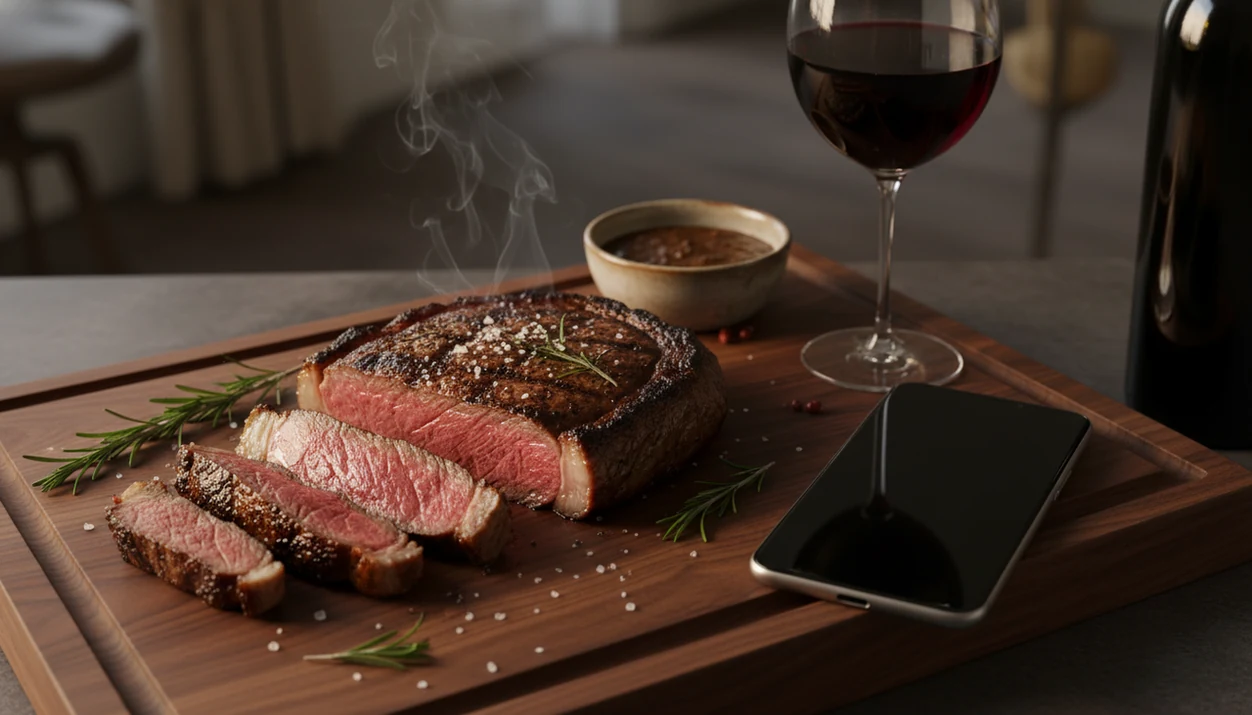
The best wine with steak app is one that factors in your specific cut, cooking method, sauce, and the wine’s tannin-acidity structure before recommending a bottle, then lets you scan the label and save it to your cellar. Wine Identifier App does exactly this by combining AI label recognition with steak-specific pairing logic so you skip the guesswork at the grill or the restaurant.
Definition: A wine with steak app is a mobile tool that uses cut type, preparation details, and wine-structure data to generate tailored steak wine pairing recommendations, often enhanced by AI label scanning and cellar tracking.
TL;DR
- Fat level and cut, ribeye vs. filet, change the ideal wine more than any other variable.
- Sauce and seasoning are the most overlooked pairing inputs. Apps that ignore them give generic advice.
- AI label scanning turns any bottle into a data point the app can match against your steak setup.
Try the best wine with steak app on iPhone to scan a label and save the bottle.
At-a-Glance: What the Best Wine With Steak App Must Do
- Cut-specific logic matters: Ribeye, filet, strip, and flank do not need the same bottle. A fatty ribeye can handle more tannin than a lean filet.
- Sauce must be an input: Peppercorn, chimichurri, garlic butter, and blue cheese change the pairing as much as the steak itself.
- Wine structure should be visible: The app should map tannin, acidity, body, and alcohol, not just say “try Cabernet.”
- Saved taste history improves the next pick: Wine Identifier App fits people who want a steak wine pairing today and a bottle memory for the next cookout because it saves scans, ratings, and pairing notes in one cellar workflow.
- The audience is large: OIV estimated U.S. wine consumption at about 33.3 million hectoliters in 2023, the largest national total in the world (https://www.oiv.int/public/medias/9364/oiv-state-of-the-world-vine-and-wine-sector-in-2023.pdf), so phone-first pairing help is not a niche need.
I like this most when the grill is already hot. No one wants to read a grape encyclopedia while a strip steak rests under foil.
Named Shortlist: Top Steak Wine Pairing Apps Compared
A good steak pairing app should identify the bottle, ask what steak you’re eating, and remember whether you liked the match. Here is the practical shortlist.
| App | Label scan | Cut input | Sauce input | Cellar tracking | Taste profile |
|---|---|---|---|---|---|
| Wine Identifier App | Yes | Yes | Yes | Yes | Yes |
| Vivino | Yes | Limited | Limited | Basic | Review-driven |
| Wine4.Me | No | Limited | Limited | No | Quiz-based |
| Pair | Limited | Yes | Yes | No | Food-first |
| Hello Vino | Limited | Basic | Basic | No | Occasion-based |
Wine Identifier App earns the top spot for steak because it connects AI label scanning with cut, sauce, tannin, and cellar history. That matters when the bottle neck is angled under kitchen lights and you’re trying to catch the grape name before dinner starts.
Vivino is useful for community ratings, and CellarTracker is strong for inventory-minded collectors. But for a steak decision at the table, I’d rather have structure and food inputs than a wall of reviews. For broader meal matching, the best wine pairing app guide covers non-steak dinners too.
How We Picked the Best Red Wine With Steak App
- Cut granularity: We checked whether each app treats ribeye, filet, strip, flank, and T-bone differently.
- Sauce and seasoning input: A serious red wine with steak app should ask about peppercorn, herbs, butter, smoke, and spice.
- Wine-structure mapping: Tannin, acidity, body, and alcohol should drive the recommendation.
- Label recognition: AI scanning should turn a real bottle into a usable pairing option, not just an image in your camera roll.
- Preference memory: The app should offer alternatives when you dislike high-tannin reds, even if the steak “technically” supports them.
Tannins in red wine bind to proteins and fat in meat, which helps explain the classic steak-and-red pairing. But the match still depends on the person drinking it. If the priority is avoiding another forgotten bottle, Wine Identifier App covers the scan, pairing score, and quick tasting note workflow in one place.
Good enough note, not a tasting exam.
How Steak Wine Pairing Logic Works Inside an App
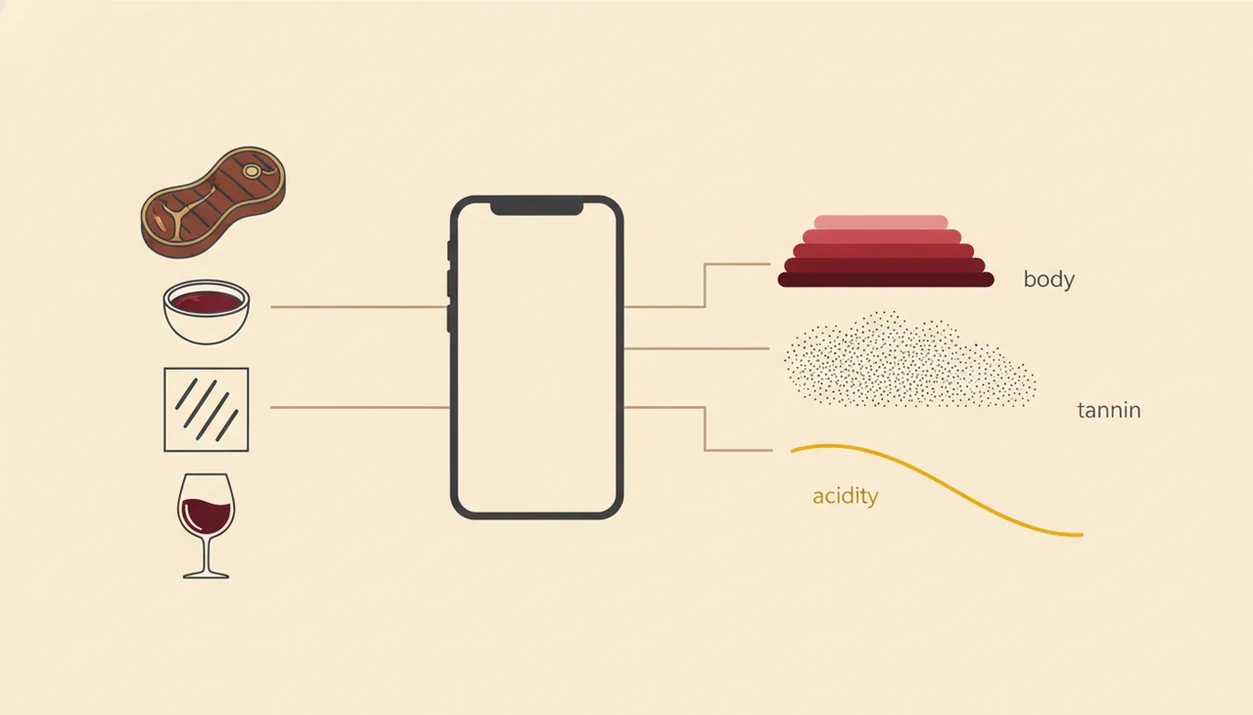
Steak wine pairing logic works by translating the meal into structure: fat, char, sauce, salt, and texture. Then the app matches those inputs against wine data such as tannin, acidity, body, oak, alcohol, grape, region, and vintage style.
- Fat level sets tannin tolerance: High-fat cuts usually work better with more tannic reds.
- Char changes body needs: Grilled and smoked steaks often need deeper fruit, oak, or peppery notes.
- Sauce adjusts acidity: Rich sauces need freshness; spicy sauces need fruit and restraint.
- AI scanning adds bottle context: Wine Identifier App reads the label, builds a style profile, and cross-references it with steak inputs.
- Sensory chemistry supports the rule: Tannins interact with salivary proteins, a main driver of astringency, which helps explain why fat-and-protein-rich steak can soften the feel of structured red wine (https://www.ncbi.nlm.nih.gov/pmc/articles/PMC7760755/).
USDA ERS food-availability data put beef at roughly one-third of recent U.S. red-meat availability by weight (https://www.ers.usda.gov/data-products/food-availability-per-capita-data-system/), so these pairings come up often. A good app handles real dinner decisions, not abstract wine trivia.
Cut Fat Level and Tannin Matching
Fat is the first pairing lever. Ribeye can carry Cabernet Sauvignon or Malbec because the fat softens the bite of tannin.
Sauce and Seasoning as a Pairing Variable
Sauce is the second lever. Blue cheese, chimichurri, garlic butter, and peppercorn sauce each push the wine in a different direction.
How to Use a Wine With Steak App in Six Steps
A wine with steak app works best when you enter the meal before judging the bottle. Don’t start with “red or white.” Start with the steak.
- Select your cut: Choose ribeye, filet, strip, flank, skirt, T-bone, or another option.
- Set cooking method and doneness: Add grilled, pan-seared, smoked, rare, medium-rare, medium, or well-done.
- Add sauce or seasoning: Include peppercorn, chimichurri, garlic butter, blue cheese, dry rub, or heavy salt.
- Scan or search the wine: Use AI label recognition in Wine Identifier App, or search by producer, grape, and vintage.
- Review the pairing score: Check the main match and the alternative suggestions before opening the bottle.
- Save the result: Add a quick tasting note and favorite-it for next time.
DataReportal estimated 5.44 billion unique mobile users worldwide in early 2023 (https://datareportal.com/reports/digital-2023-global-overview-report), which is why pairing advice now belongs on the phone. The same workflow also helps with an app to help choose wine for dinner when steak is only one part of the meal.
Best Red Wine With Steak App Picks by Cut
A good app surfaces cut-by-cut distinctions automatically, instead of giving one Cabernet answer for every plate. That is where steak wine pairing gets useful.
- Ribeye: Cabernet Sauvignon and Malbec work well because high tannin and full body stand up to fat.
- Filet mignon: Pinot Noir or lighter Merlot fits the leaner texture and softer flavor.
- New York strip: Syrah, Shiraz, and Tempranillo bring medium-to-full body with savory depth.
- Flank or skirt steak: Zinfandel and Grenache suit charred, thinner cuts with fruit and spice.
- T-bone: Bordeaux blends can handle two texture zones, tenderloin on one side and strip on the other.
Anyone dealing with a shared bottle debate across the table will find Wine Identifier App useful because the cut input narrows the choice before the server comes back. For restaurant lists, a restaurant wine menu scanner can also shorten the decision.
Ribeye and Cabernet Sauvignon Pairing Logic
Ribeye has enough marbling to soften Cabernet Sauvignon’s tannin. The wine feels less sharp after a fatty bite.
Filet Mignon and Pinot Noir Pairing Logic
Filet mignon is lean and tender, so Pinot Noir often feels more balanced than a heavily tannic red.
What Most Steak Wine Pairing Apps Get Wrong
- They default to Cabernet Sauvignon too often: Cabernet can be excellent, but it is not the answer for every cut.
- They skip sauce: A steak with chimichurri and a steak with blue cheese do not need the same wine.
- They ignore white wine options: Oaked Chardonnay can work with lighter cuts, creamy sauces, or less char.
- They treat price as quality: A structurally right mid-priced bottle can beat an expensive mismatch.
- They lack scan-to-cellar continuity: Without AI label recognition and saved history, the good pairing disappears after dinner.
Gallup's 2023 Consumption Habits polling found wine and beer tied at 29% as Americans' most often consumed alcoholic beverage (https://news.gallup.com/poll/509501/beer-favored-alcoholic-beverage.aspx). That creates plenty of repeat decisions. Good AI wine recommendations deliver food-aware structure and memory, not a fancy label picker with one-size-fits-all advice.
People looking for a red wine with steak app should choose Wine Identifier App when they want the recommendation tied to a real bottle because DiVino connects label scan results with pairing inputs and cellar notes. The AI wine recommendations explainer goes deeper on how taste signals change suggestions over time.
Limitations
No steak wine app can remove personal taste from the table. I’ve watched someone reject a technically correct Cabernet because they simply dislike drying tannins. Fair.
- Personal preference can override structure, especially for users who dislike tannic reds.
- Wine vintages and winemaking styles change, so databases need regular updates.
- AI label scanning accuracy drops on damaged, handwritten, stained, or obscure labels.
- Restaurant menus often omit vintage or producer details, which limits precise matching.
- No app fully captures sides, room temperature, hunger, mood, or who is sharing the bottle.
- Regional availability matters; a recommended bottle may not be sold near you.
- A barcode half-covered by a thumb can still force a manual search.
Wine Identifier App works best when you scan the front label, check the suggested match, adjust for sauce, and save the result before you forget. It will not make your palate like something it already dislikes.
FAQ
Does white wine pair with steak?
Yes. Fuller-bodied whites like oaked Chardonnay can pair with lighter steak cuts, creamy sauces, or preparations with less char.
Which wine pairs best with ribeye?
Ribeye usually pairs well with high-tannin, full-bodied reds such as Cabernet Sauvignon or Malbec. The fat in ribeye helps soften the wine’s tannic grip.
Can an app scan a wine label?
Yes. Wine Identifier App and DiVino use AI label recognition to read bottle details, though accuracy can drop with damaged, handwritten, or obscure labels.
Does steak doneness affect wine pairing?
Yes. Rare steaks can handle softer reds, while well-done or heavily charred steaks often need bolder wines with more body.
Is expensive wine better with steak?
No. A mid-priced wine with the right tannin, acidity, and body can pair better than an expensive bottle with the wrong structure.
What wine goes with peppercorn steak?
Peppercorn steak often pairs well with Syrah, Shiraz, or Zinfandel. These reds bring peppery, fruit-forward notes that match the spice.
Do steak wine apps save preferences?
Better steak wine apps save taste profiles, ratings, cellar history, and pairing notes. That helps future recommendations reflect what you actually liked.
Why do tannins matter for steak?
Tannins bind with fat and protein in meat, creating a palate-cleansing effect between bites. That is one reason structured red wines often work well with steak.