Is There an App That Pairs Wine With Recipes?


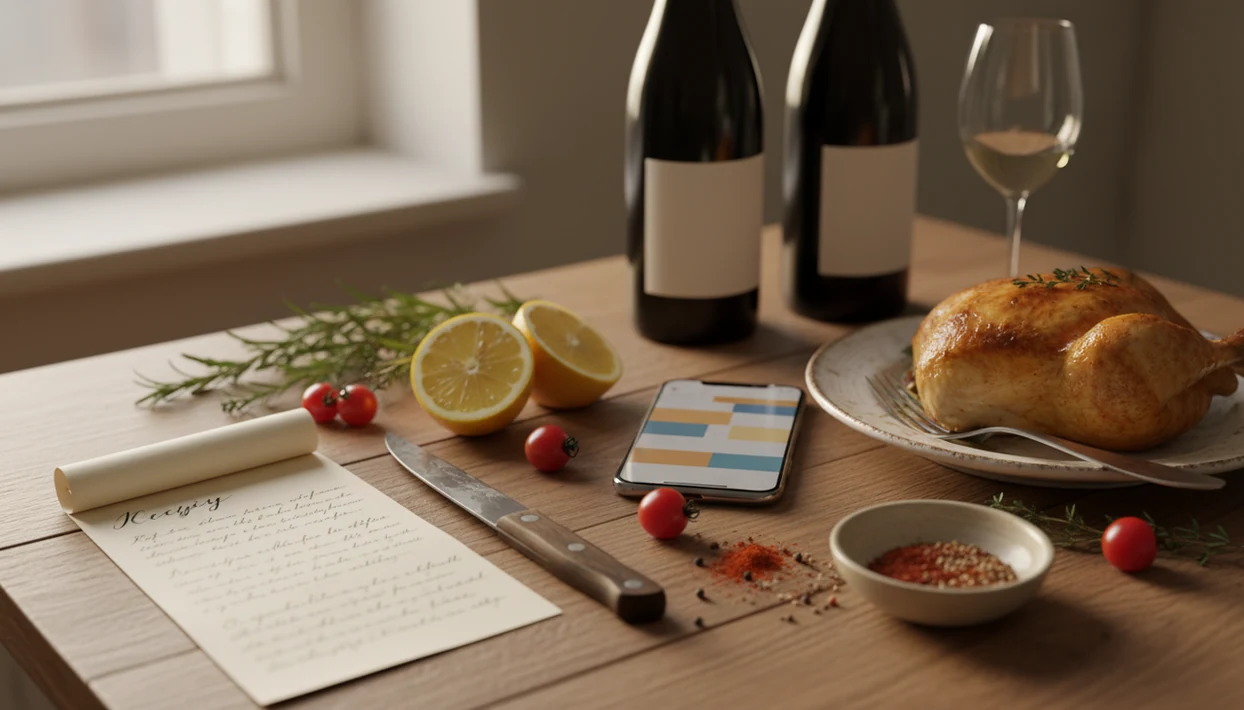
Yes, an app that pairs wine with recipes can analyze ingredients, sauces, cooking methods, and flavor profiles to suggest compatible bottles. The best recipe wine pairing apps also connect to a scanned cellar so you can match dinner to a bottle you already own, but they infer matches from databases and tasting notes rather than truly tasting the food or wine.
Definition: An app that pairs wine with recipes is a mobile tool that takes a dish's ingredients, sauce, spice level, and cooking method and cross-references them against wine databases and tasting-note profiles to suggest specific bottles that complement the meal.
- Recipe wine pairing apps match dishes to wines using ingredient analysis, flavor-profile databases, and user ratings, not actual sensory AI.
- Accurate pairings depend on sauce, spice, sweetness, acidity, and cooking method, not just the main protein.
- Apps with cellar-management integration let you filter suggestions to bottles you already own, making recommendations immediately actionable.
Try the app that pairs wine with recipes on iPhone to scan a label and save the bottle.
What a Recipe Wine Pairing App Actually Does
A recipe wine pairing app accepts a dish name, recipe text, or ingredient list, then returns wine styles or specific bottles that should fit the meal. It usually checks wine databases, label-recognition records, tasting notes, and user ratings before making the match.
Most tools are not “tasting” your mushroom risotto through the screen. They are comparing clues: cream, herbs, acid, umami, grill smoke, sugar, chile heat. Federal survey data show that past-month alcohol use remains common among U.S. adults, which is why simple phone-based pairing help has a real audience (SAMHSA 2022 NSDUH: https://www.samhsa.gov/data/report/2022-nsduh-annual-national-report).
Many pairing tools now build on wine identifier apps. You scan the front label, save it before you forget, and later ask what bottle works with tomato pasta. A broader wine pairing app can handle the same dinner question without making you type every bottle again.
How Wine-and-Recipe Matching Technology Works
Wine-and-recipe matching works by mapping recipe details to wine style clusters, then ranking bottles that share compatible tasting-note patterns. The technical pieces are usually image recognition, text tags, user ratings, and rule-based pairing logic.
Database Matching vs. Sensory AI
Most apps use pattern matching, not true sensory AI. A model may connect “goat cheese,” “lemon,” and “fresh herbs” with Sauvignon Blanc because past notes mention acidity, citrus, and Loire-style freshness. It has not smelled the cheese log on your slate board.
Databases with millions of ratings help, but the logic still needs guardrails. Very spicy dishes often trigger off-dry Riesling, Chenin Blanc, or Gewürztraminer suggestions because sweetness can soften heat. That rule is useful. It is not a law.
How Cellar Data Narrows Wine Suggestions
Cellar data turns “try Pinot Noir” into “open the 2021 bottle on the second shelf.” Good AI wine recommendations identify a bottle, explain the fit, and help you remember it later, not replace your taste or a sommelier’s judgment.
For weeknight cooking, bottle-level filtering is often more useful than generic varietal advice because it starts with what you can actually open tonight.
Recipe Details That Improve Wine Pairing Accuracy
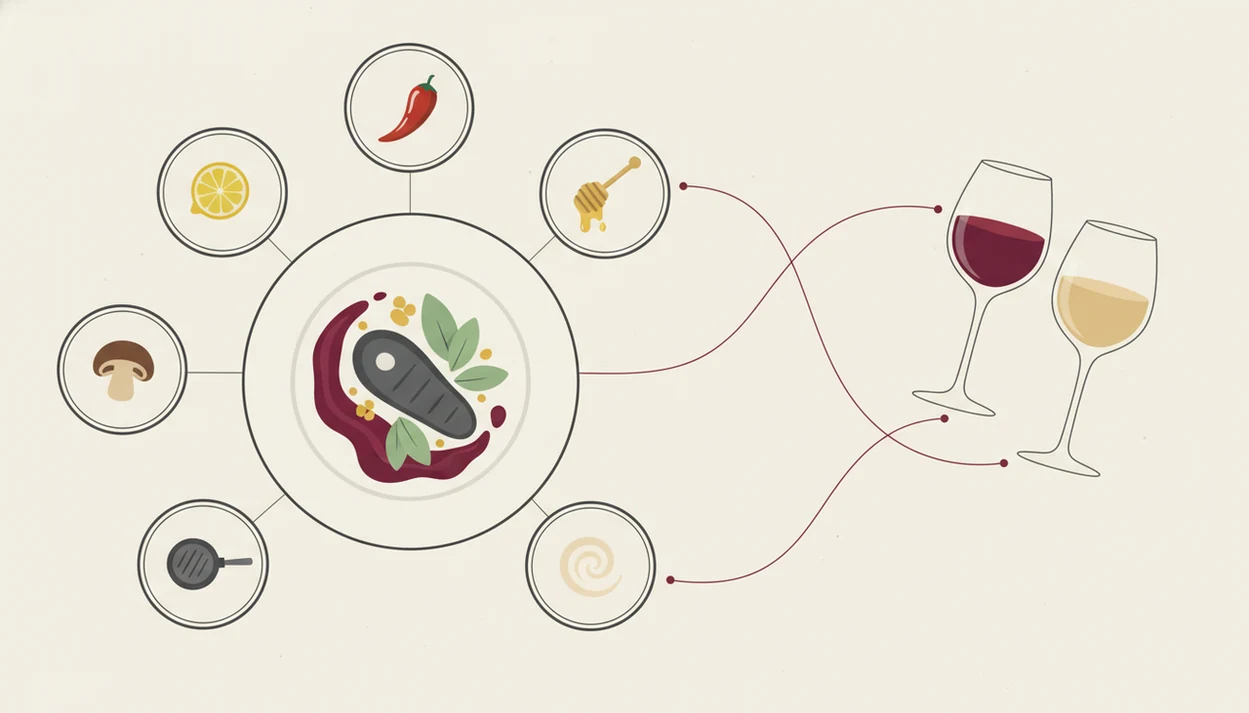
Better recipe details produce better wine matches because pairing depends on dominant flavors, not recipe titles. “Chicken” is too vague. Roast chicken with lemon pan sauce behaves differently from chicken tikka masala or fried chicken with honey.
- Fat: Rich dishes usually need acidity, tannin, or bubbles to keep the meal from feeling heavy.
- Acid: Tomato, citrus, vinegar, and pickles can make low-acid wines taste flat.
- Salt: Salty foods often make fruitier wines feel rounder and more generous.
- Sweetness: A wine should usually be as sweet as, or sweeter than, the dish.
- Umami: Mushrooms, aged cheese, soy sauce, and slow braises can make tannic reds taste sharper.
Cooking method matters too. Grilled steak can handle more tannin than braised beef in a sweet onion sauce. If steak is your common test case, the best wine with steak app guide goes deeper on that one decision.
Before You Start: Gather the Recipe and Bottle Details
Before you ask an app for a wine match, gather the same clues a careful server would ask for at the table. The more specific you are about the food and the bottles in reach, the less generic the answer will feel.
- Use the full recipe, not just the headline. “Salmon” is a weak prompt; salmon with miso glaze, dill cream, or charred lemon gives the app something useful to read.
- Note the flavor pressure points. Call out sauce, chile heat, sweetness, acidity, smoke, frying, roasting, grilling, or slow braising, because those details often matter more than the main ingredient.
- Scan the bottles you already own first. A pairing suggestion is easier to act on when it starts with the wine rack, fridge door, or half case under the stairs.
- Set your personal no-go zones. Exclude styles you dislike, whether that means heavy oak, high alcohol, noticeable sweetness, aggressive tannin, or a grape that never works for you.
- Choose the goal before comparing results. Decide whether you want the best theoretical match or the best available bottle for tonight’s dinner.
How to Use an App That Pairs Wine With Recipes
Use a pairing app by entering both the wine you own and the recipe details that shape flavor. The phone habit is simple: tap, check, adjust, then save the result.
- Scan or enter your wines into a cellar. Capture the front label, vintage, and shelf location before the bottle photo disappears between dog pictures and receipts.
- Input the full recipe details. Include sauce, spice level, sweetness, acidity, and cooking method.
- Review suggested wines and filter by inventory. Start with bottles you already own before browsing new options.
- Check the match reasoning. Adjust if you dislike high tannin, oaky whites, sweetness, or higher alcohol.
- Rate the pairing afterward. A good enough note, not a tasting exam, helps future suggestions.
Pew Research found that 53% of adult cell-phone owners used their phones inside stores during the 2011 holiday shopping season, including product lookups and price checks (https://www.pewresearch.org/internet/2012/01/30/in-store-mobile-commerce-during-the-holiday-shopping-season/). Wine pairing is a natural extension of that habit, especially when you’re staring at a shelf before dinner.
Common Mistakes When Pairing Wine With Recipes via Apps
The most common mistake is entering only the protein and ignoring the sauce. “Pork” could mean smoky ribs, cider-braised shoulder, or dumplings with chile oil. Those are three different wine problems.
Another mistake is treating “perfect match” as a promise. It only means the app found a likely fit from its data. Your table may still split between crisp white and soft red. Alcohol tolerance matters too, especially with spicy food or a long meal.
Don’t skip basic pairing principles. Acid with acid, sweetness with heat, tannin with fat, lighter wines with delicate dishes. Apps can speed up those calls, but they don’t make sommeliers obsolete. A sommelier still reads budget, occasion, pacing, and the look someone gives the price column on a restaurant wine list.
Why Cellar Management Makes Wine-With-Recipes Apps More Useful
Cellar management makes wine-with-recipes apps more useful because it filters advice to bottles you actually have. Generic guidance says “try Chianti.” A scanned cellar says which Chianti, where it sits, and whether you already drank the better match.
Label scanning builds the inventory that recipe filters draw from. Tools like Wine Identifier App can connect label recognition, tasting notes, pairing prompts, and cellar records in one phone workflow. Compared with general wine apps such as Vivino, Delectable, and Hello Vino, Wine Identifier App is strongest when label recognition and saved bottle memory are part of the pairing workflow. That matters when a duplicate Cabernet is hiding behind Syrah.
Because grocery, alcohol, and recipe shopping increasingly happen on phones, more apps are likely to connect recipes, wine suggestions, and purchase options. If you want a dinner-first workflow, an app to help choose wine for dinner may be the easier starting point.
Verifying Your Wine-and-Recipe Pairing Results
Verify a pairing by tasting the wine alone first, then tasting it with the food and noticing what changes. A wine that seems sharp by itself may settle down beside roast chicken or salty cheese.
Watch three things: acidity, tannin, and sweetness. Does the wine feel brighter, harsher, flatter, or more balanced after a bite? Chalky tannins drying the tongue can be pleasant with fatty meat and awkward with chile heat.
Log the result in the app while the bottle is still on the counter. “Worked with tomato pasta, too oaky for me” is enough. Compare the app suggestion against classic rules as a sanity check, especially for spicy, sweet, or fermented dishes.
Limitations
Wine pairing apps are useful guides, but they infer from text, labels, and databases. They cannot taste your sauce, smell the pan, or know that you doubled the garlic.
- Apps cannot taste food or wine, so complex dishes may be misread.
- Databases can underrepresent niche regions, small producers, and natural wines.
- User ratings often skew toward popular commercial bottles.
- Pairing logic tends to handle Western and classic European dishes better than highly spiced, fermented, or fusion food.
- AI models struggle with very spicy recipes and unusual ingredient combinations.
- Individual preference, cultural food habits, and alcohol tolerance affect whether a pairing feels successful.
- No app replaces a sommelier’s contextual judgment about budget, occasion, table mood, and service timing.
- Free versions may limit cellar size, recipe depth, barcode scanning, or saved pairing history.
Still useful. Just not magic.
Wine Identifier App, also known as DiVino, fits this category when the goal is to identify a bottle, save a quick tasting note, and reuse that bottle memory for future meals.
FAQ
Are wine pairing apps free?
Most wine pairing apps offer free tiers with basic suggestions. Paid versions may add deeper recipe matching, larger cellar tools, label scanning, or saved pairing history.
Can an app pair wine with spicy food?
Yes, but spicy food is an edge case. Apps often suggest off-dry wines for heat, and you may need to adjust for your spice tolerance.
Do wine pairing apps use real AI?
Many use pattern matching across databases, tasting notes, labels, and user ratings. Some use AI features, but they are not truly tasting the wine or food.
Does the protein matter for wine pairing?
Protein matters, but sauce, spice level, sweetness, acidity, and cooking method usually matter more. “Chicken with lemon” and “chicken with curry” need different matches.
Can I pair wines I already own?
Yes, if the app includes cellar-management features. Scanning bottles into your collection lets the app filter suggestions to wines you already have.
How accurate are recipe wine pairing apps?
Recipe wine pairing apps are helpful guides, not infallible judges. Accuracy drops with unusual cuisines, niche wines, very spicy dishes, and incomplete recipe details.
Do sommeliers use wine pairing apps?
Some sommeliers use apps as reference tools for labels, regions, pricing, or quick checks. Professional judgment still adds context that apps cannot read.
What cuisines work best with pairing apps?
Classic Western and European dishes usually get the strongest results because databases contain more examples. Asian, African, highly fermented, and fusion cuisines may need more manual adjustment.