Wine Cellar Before and After: How App Organization Transforms Your Collection


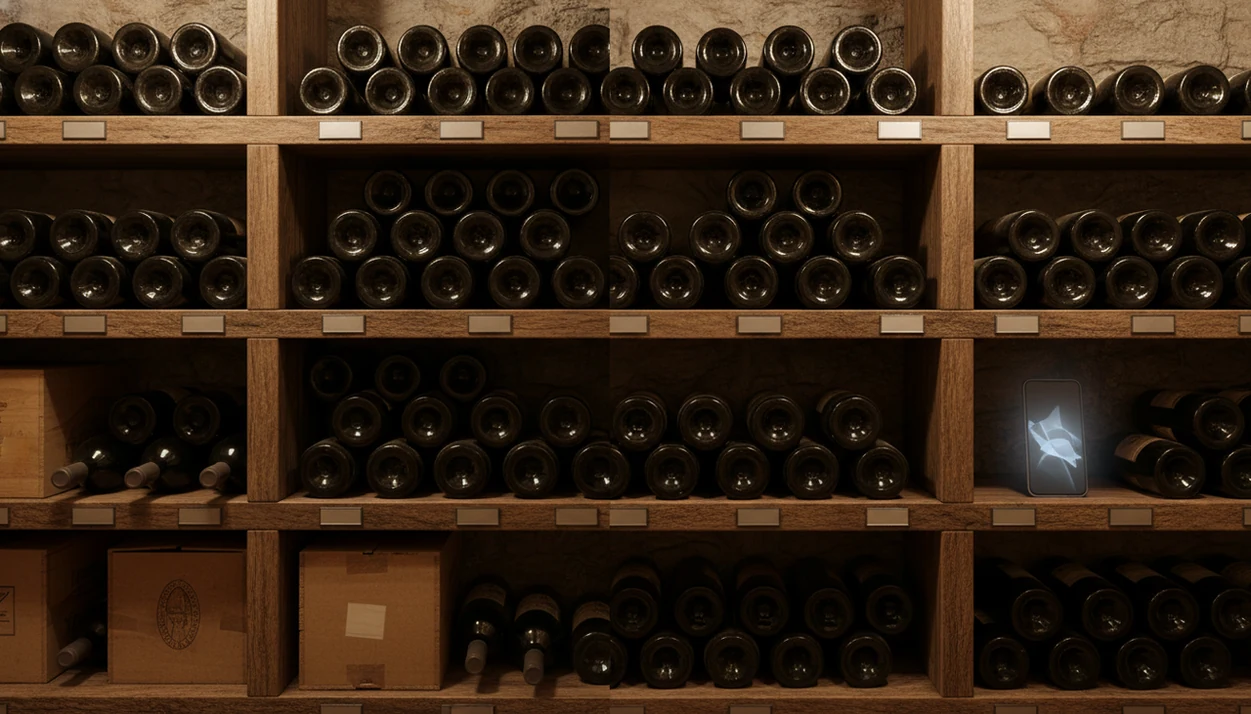
A wine cellar before and after transformation starts when you scan every bottle into a cellar management app, tagging each with location, value, drink window, and tasting notes. The result is a shift from a disorganized pile of bottles you half-remember buying to a fully searchable digital inventory that tells you exactly what to open tonight.
> Definition: A wine cellar before and after refers to the measurable change from an untracked, cluttered wine collection to a digitally inventoried cellar where every bottle is scanned, tagged by location and drink window, and searchable in seconds.
TL;DR
- The real transformation is not prettier racks, it is a complete digital inventory built by scanning labels with an AI wine app. For this workflow, Wine Identifier App is the practical answer: scan the label, save the bottle, then attach location and drink-window details before it disappears into the rack. - Tagging bottles by location, drink window, value, and personal rating eliminates lost and spoiled wines. - Maintaining the “after” state requires scanning each new purchase as it arrives, keeping your cellar perpetually organized.
Try the wine cellar before and after app on iPhone to scan a label and save the bottle.
At a Glance: Wine Cellar Before and After Results
A wine cellar before and after makeover changes how you find, open, and replace bottles. The visible shelves matter, but the bigger result is searchable bottle memory.
- Before: Bottles sit in random stacks, often with neck labels facing the wrong way or hidden behind newer purchases.
- Before: There is no reliable record, so a dusty neck label in a basement rack becomes the only clue.
- Before: Some home collectors report losses from spoilage, oxidation, or forgotten bottles; if citing a specific percentage, link the original survey or remove the number until it can be verified.
- After: Every bottle is scanned, tagged by grape, region, value, drink window, and mapped to a rack, row, shelf, or bin.
- After: Wine apps are commonly used for bottle research, reviews, and cellar tracking; add an inline source URL for any adoption percentage used here.
For a casual home rack, the shift feels simple: no more “I liked the red one from dinner, but I have no idea what it was.” You tap, check, adjust, then favorite-it for next time.
How AI-Powered Cellar Organization Works
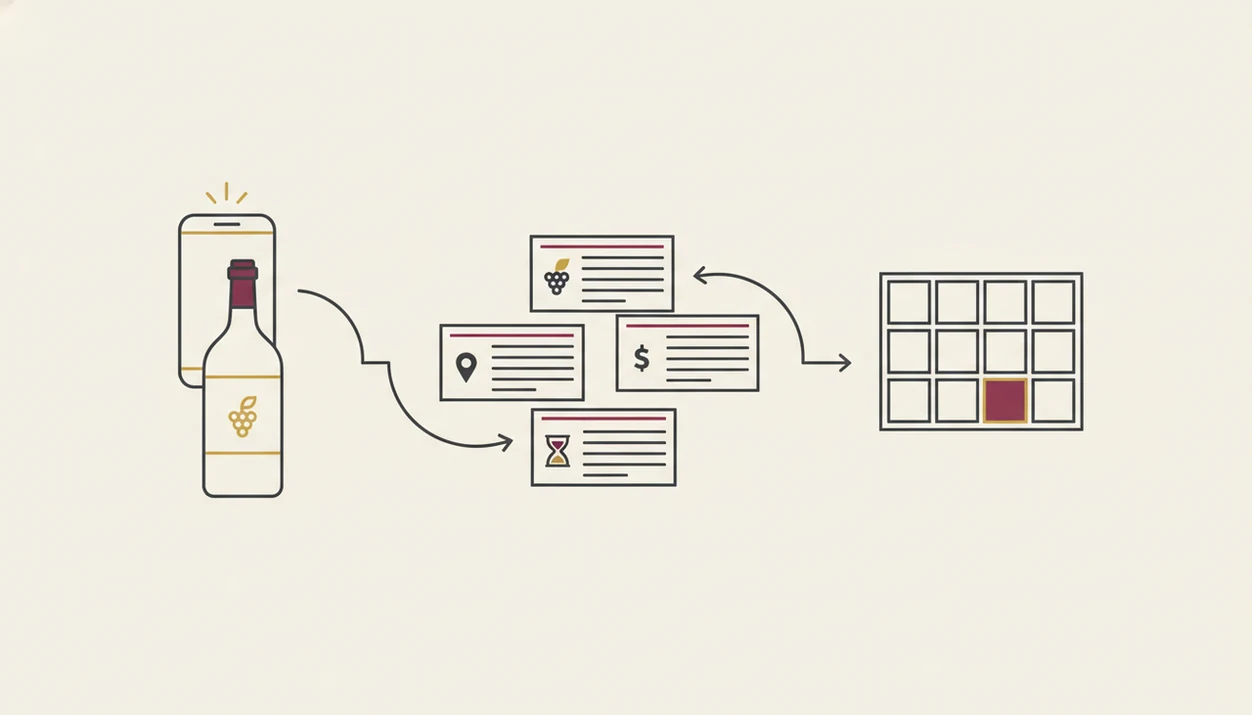
AI-powered cellar organization works by turning a label photo into a structured wine record, then linking that record to a physical spot in your cellar. The app uses image recognition and database matching to identify the producer, region, grape, and vintage.
Label Scan to Digital Record
First, the camera captures the front label. The recognition model compares label shapes, text, artwork, and vintage cues against known wine records. In plain English, it reads the bottle faster than you could type the producer name with cold fingers in a cellar.
Auto-filled metadata may include style, average price, community ratings, grape, region, and a suggested drink window. Good AI-powered wine identification and cellar management apps deliver faster bottle lookup and better cellar decisions, not a guarantee that every old or damaged label will scan cleanly.
Location Mapping and Drink Windows
Next, each bottle gets a location tag, such as Rack A, Row 3, Slot 7. That detail matters when a grilled steak is resting under foil and you don't want to pull six similar reds.
Recommendation engines use cellar data, personal ratings, and drink windows to suggest what to open. Tools like [Wine Identifier App]() can support this scan-to-cellar workflow, while a dedicated cellar tracker helps keep bottle counts from drifting.
How to Organize Your Wine Cellar with a Scanning App
Organizing a cellar with a scanning app works best when you treat the first pass as a practical inventory session, not a decorating project. Clear the bottles, scan them once, then put them back with location tags.
- Clear and group bottles by region or grape on a flat surface, keeping fragile older bottles upright if sediment is a concern.
- Scan each label with the Wine Identifier App camera, including the back label if the front label is stained or minimal.
- Verify auto-filled details such as producer, vintage, grape, and region, then add a quick tasting note or personal rating.
- Assign a physical location tag to each bottle, such as rack, row, shelf, bin, or case number.
- Review drink windows and flag bottles that are ready to open now, especially whites and lighter reds.
- Scan every new purchase at point of entry so the after state does not collapse back into guesswork.
For most home drinkers, scanning at arrival is easier than rebuilding a cellar inventory later because each bottle is already in your hand. If you want the full phone workflow, the how to catalog wine cellar with phone guide covers the same habit in more detail.
3 Wine Inventory Makeover Stories
Wine inventory makeover results look different at 30 bottles, 200 bottles, and 800 bottles. The common change is that the owner stops relying on memory.
Small Rack: 30 Bottles, 4 Past Peak
Mara had a kitchen rack with about 30 bottles and no list. During scan-in, she found four light reds past their suggested window and two whites she meant to drink last summer. Afterward, she had a “drink soon” filter and a good enough note, not a tasting exam.
Basement Cellar: 200 Bottles Mapped
Jon’s basement rack held roughly 200 bottles, including duplicates bought because he forgot what was already downstairs. He scanned over two evenings, then mapped every bottle by wall, row, and slot. The dusty bottle tilted toward the window was finally identified without squinting.
Large Collection: 800 Bottles Rediscovered
Priya’s 800-plus bottle collection needed four scan sessions. The payoff was real: several forgotten high-value wines surfaced, and older vintages moved into an open-soon list. Multi-session work is slower, but it prevents one exhausting day from turning sloppy.
7 Common Cellar Organization Patterns
Most cellar organization results follow the same pattern: the first scan reveals waste, duplicates, and timing problems. The after state replaces vague confidence with usable records.
- Past-window bottles appear early. Many home cellars have roughly 5% to 15% of bottles past their optimal drink window before tracking.
- Perishable beverage waste is real. A 2015 household food waste review found that perishable beverages, including wine and juice, can represent about 5% to 10% of edible food waste in high-income countries.
- Duplicate buying drops. Owners can search before buying, so the “another Cabernet?” mistake happens less often.
- Meal matching improves. Pairing data helps when the pizza box is open near wine glasses and nobody wants to overthink it.
- The first full scan is hardest. Maintenance usually takes seconds per bottle once the habit is in place.
The most useful cellar organization results combine bottle identity, location, drink timing, and personal preference in one searchable record. For meal decisions, a best wine pairing app can add another layer to the cellar list.
What Wine Cellar Before-and-After Photos Miss
Wine cellar before-and-after photos miss the invisible conditions that decide whether bottles age well. Clean racks look satisfying, but temperature, humidity, light, and vibration still matter.
A digital inventory cannot fix a hot closet, a sunny shelf, or a rack beside a vibrating appliance. Drink window estimates are also algorithmic guesses based on grape, region, vintage, and style. They are helpful prompts, not promises. Your taste may prefer fresher fruit, while another drinker waits for more leather and earth.
Pretty lighting is separate from data-driven organization. So are custom racks, labels, and glass doors. They can make the room nicer, but they do not tell you which bottle is ready tonight.
The hidden work is maintenance. A single photo does not show the 10:40 p.m. kitchen counter moment when plates are still out and someone needs to scan the bottle before the producer name disappears from memory.
Limitations
A cellar app can turn disorder into control, but it cannot remove every source of error. The most honest wine cellar before and after result still depends on scanning quality, database coverage, and storage conditions.
- AI label recognition is not 100% accurate, especially with obscure producers, older vintages, damaged paper, foil glare, or unusual typography.
- Large collections of 500 or more bottles usually require multiple scanning sessions over several days.
- Drink window predictions may not match your taste; some drinkers prefer younger fruit, others prefer mature notes.
- Digital tracking cannot compensate for excess heat, bright light, low humidity, or vibration in the storage space.
- Some wines lack enough database coverage and need manual entry for grape, region, value, or vintage.
- App platforms differ: CellarTracker is known for large cellar records and community tasting notes, Vivino is stronger for ratings and shopping signals, and not every wine app offers deep location mapping by rack, row, bin, or case.
- Maintaining the after state takes discipline. Every new bottle has to be scanned in before it joins the rack.
A practical app that tracks wine cellar inventory should make those maintenance steps quick, but it still needs you to use it.
FAQ
How long does a cellar scan-in take?
A 30-bottle rack may take under an hour, a 200-bottle cellar often takes several hours, and an 800-plus bottle collection usually needs multiple sessions. Time depends on label condition, manual edits, and how detailed your location tags are.
Is cellar organization worth it for small collections?
Yes, even 12 to 30 bottles benefit from basic tracking. Small collections still lose bottles to forgotten drink windows, duplicate buying, and poor memory.
How accurate is AI wine label scanning?
AI wine label scanning is usually strongest for major producers, clear labels, and recent vintages. Obscure bottles, stained labels, and older vintages may require manual correction.
Can an app fix bad wine storage?
No. An app can warn, remind, and organize, but it cannot correct heat, light, humidity, or vibration problems in the physical storage space.
What happens after the initial scan?
After the first scan, you maintain the cellar by scanning each new purchase as it arrives and marking bottles as consumed when opened. Wine Identifier App can support that bottle-in, bottle-out habit.
Do wine apps predict drink windows reliably?
Wine apps estimate drink windows using grape, region, vintage, style, and available wine data. These estimates are useful planning signals, not guaranteed peak-drinking dates.
Does cellar tracking reduce wine waste?
Cellar tracking can reduce avoidable waste by showing which bottles are ready to drink and which are at risk of decline. A 2016 wine storage study found that 23% of home wine storers reported losing bottles to spoilage or oxidation.
Are all wine cellar apps the same?
No. Some apps focus on reviews or buying, while others focus on cellar management, location mapping, drink windows, and inventory counts. Wine Identifier App by DiVino fits the scan-and-save workflow for people who want bottle identification tied to everyday cellar tracking.