Wine with a horse on the label: how to find it
To find a wine with a horse on the label, photograph the bottle if you can, read any producer name or region printed near the animal, and scan it. If the bottle is gone, search by what you remember: color, country, and where you drank it. Many unrelated wines use horses.


The short answer before the situations
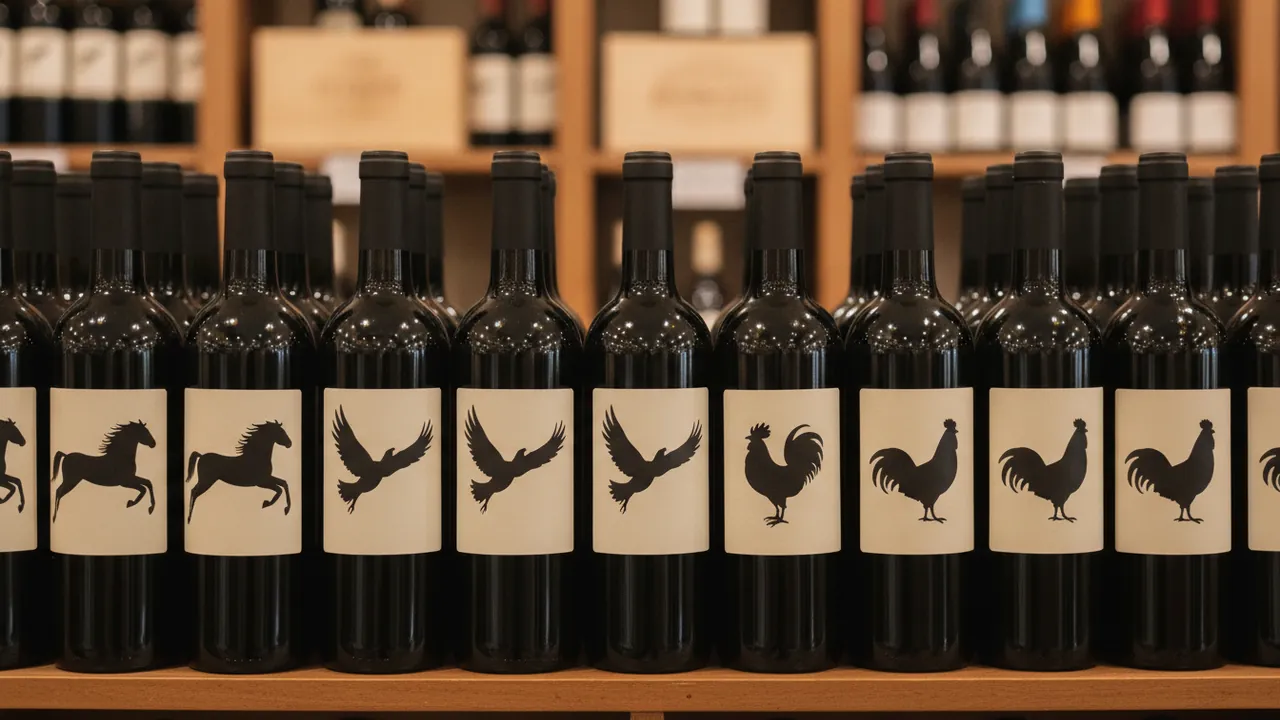
An animal is a logo, not a name. Horses, birds, dogs and big cats are everywhere on wine, and a horse tells you nothing about the producer. What identifies a wine is the text around the animal: producer, wine name, region, vintage. So the job is always the same: get that text in front of something that can read it.
Below, find your situation and use the matching tool.
Why so many wines carry an animal
Animals are easy to remember, easy to print small, and easy to understand in any language. A producer can build a family history, a vineyard nickname or a local legend into one image. Horses suggest work in the vines, speed, or old estates; birds and dogs tend to suggest the farm or the vineyard itself.
The catch for you is obvious: the same animal turns up on dozens of unrelated wines. I will not name a horse wine for you, because many different producers use horses and guessing would send you to the wrong bottle.
At the shop shelf, bottle in front of you
This is the easy one. Turn the bottle to the front label and, if you can, the back. Photograph the full wine bottle label, animal and all, so the producer name and year are in the frame.
Scanning shelf labels is what DiVino's menu and shelf scanner is for: point it at the bottle and it reads producer, wine, vintage and key details, then shows tasting notes, ratings and an estimated value. Glare on foil and curved glass can spoil a photo, so tilt the bottle until the print is clear. Check the year on the bottle itself, since the vintage on similar-looking labels can be misread.
No signal in the aisle? Ask the person stocking the shelf. Staff usually know their own range, and "the one with the horse" is a perfectly reasonable question to them.
At a dinner party, and the bottle is nearly empty
Ask the host before it hits the recycling. Take a photo of the front and back label while it is still on the table; nobody minds, and it beats a vague memory tomorrow.
If you want a result right then, the quickest route to find wine by label is the scanner in DiVino. Anything you scan lands in your history on your device, so you can come back to it when the evening is over. If the label is stained or torn, photograph whatever text survives; a region or a grape name narrows it more than you would think.
At home, in front of a rack
If you own the bottle, you are in the best position of anyone. Scan it and save it to your cellar: you can set quantity, assign a rack, shelf or custom spot, and add your own notes. The drinking window shows one of four states: Hold, Ready, At peak or Past peak.
Estimated value is guidance, not an appraisal, and a scan cannot prove where a bottle has been or how it was stored. For your own rack, that rarely matters; for a bottle you are about to sell, it does.
You only have a memory and no bottle
This is the hard case. Write down everything before it fades: the color of the wine, the country, the animal and what it was doing, the price range, and where you bought or drank it. Then you have three routes.
- Call or message the shop or restaurant and describe it; they often have a purchase record.
- Use a search on the animal plus the country or grape, then compare label images.
- Ask the AI Sommelier chat in DiVino for regions and styles that fit what you remember, then check candidates against any photo you can find.
Be honest about the odds: a memory of just a horse rarely gets you to one bottle. A memory of a horse plus a country plus a grape often does.
Two animals people misremember
A French wine with a rooster on it is often not French at all. The black rooster seal on Chianti Classico bottles is an Italian consortium mark, so that bottle is from Tuscany. The gallic rooster is a French national symbol, which is why the memory slides that way.
Likewise, the wine with a kangaroo on the label is frequently [yellow tail], whose animal is a yellow-footed rock wallaby that many people call a kangaroo. If your memory says kangaroo and Australia, start there.
Getting a scanner on your phone
DiVino is a wine identifier by picture that you can get from the App Store for iPhone and iPad, as long as you are on iOS 18 or later. Apple silicon Macs and Vision Pro can run it too.
Over on Android, you can download this wine bottle identifier from Google Play. DiVino is rated for adults, as you would expect.
Some producers add augmented reality wine labels, where the animal moves when you point a phone at it. Those are a separate, brand-specific thing, and a normal scan reads the printed text either way.
If you do only one thing
Photograph the whole label, front and back, before the bottle leaves the room. Text beats the animal every time.
[yellow tail] is a trademark of its owner. Wine Identifier and DiVino have no affiliation with it; app details come from public store listings checked in November 2026.
Frequently asked questions
What are the 7 types of wine?
A common grouping is red, white, rosé, sparkling, dessert, fortified, and orange wine. Some lists swap in light and full-bodied styles, but these seven cover the main categories.
Why do so many wines have animals on the label?
Animals are memorable and easy to spot on a crowded shelf, so many producers use them as a brand mark. Some come from family crests or local history, and others are purely a marketing choice, which is why a horse alone rarely identifies a wine.
Can a wine label with an animal on it be misidentified from memory?
Yes, people often mix up similar animals, such as a horse and a zebra, or a kangaroo and a wallaby. Searching by the color of the label, the country and where you tasted the wine usually narrows the field faster than the animal alone.
How do I identify a wine by label picture?
Take a clear, well-lit photo of the whole label and scan it in a wine scanner. The app reads producer, wine and vintage, and you should confirm the year on the bottle.
Is there a famous wine with a horse on the label?
Many unrelated wines use horses, so no single bottle is the answer. Use the producer name, region and grape printed near the horse to pin it down.
Is a rooster on a wine label always French?
No. The black rooster on Chianti Classico bottles is an Italian consortium mark, so a rooster wine is often Tuscan.