What Information Is on a Wine Label? Every Field Explained After a Scan


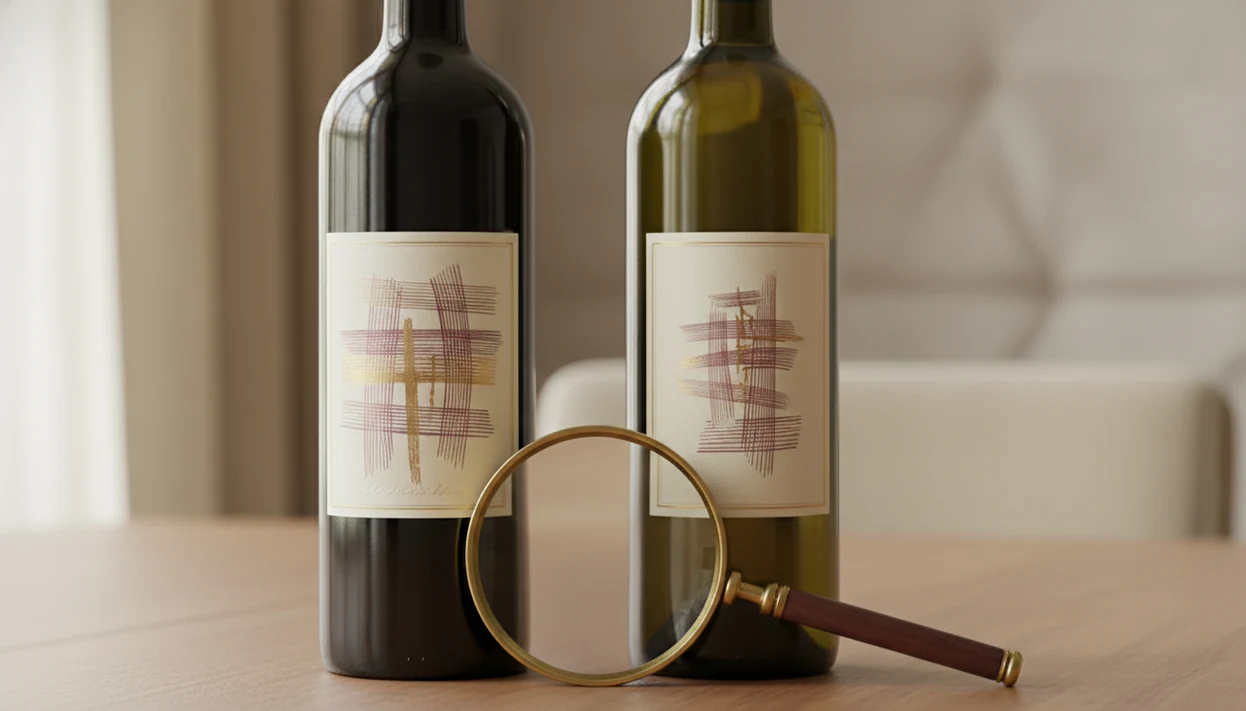
If you're asking what information is on wine label, the core fields are the producer name, grape variety or style, region or appellation, vintage year, alcohol by volume (ABV), and legal disclosures like sulfite warnings and bottler details. Together these fields identify the exact bottle, support vintage lookup and food pairing, and keep cellar records accurate whether you read the label manually or use an AI scanner.
> A wine label is the printed text on a bottle's front and back that identifies the producer, grape variety, origin, vintage, alcohol content, and legally required disclosures, serving as both a marketing tool and a regulated identification document.
- Core label fields: producer, grape/style, region, vintage year, and ABV.
- Legal requirements add sulfite declarations, bottler address, net contents, and health warnings, often on the back label.
- Terms like “Reserve” or “Old Vines” are unregulated in many countries and should not be trusted for identification or quality.
Try the what information is on wine label app on iPhone to scan a label and save the bottle.
Five Essential Wine Label Details Every Drinker Should Know
Five wine label details matter most: producer, grape or style, region, vintage, and ABV. If you capture those five fields, you can usually identify the bottle, compare vintages, and save a useful cellar note.
- Producer or brand name identifies who made or sold the wine. It is usually the first field to read, especially when two bottles share the same grape and region.
- Grape variety or wine style tells you what the wine is made from. Under U.S. TTB rules, a varietal wine using an American appellation generally must contain at least 75% of the named grape (TTB wine labeling rules).
- Region or appellation tells you where the wine comes from. EU systems such as PDO and PGI protect regional names, so origin can be legally meaningful, not just decorative.
- Vintage year tells you when the grapes were harvested. For cellar records, 2018 and 2019 are not interchangeable. A stained vintage year can change the whole bottle memory.
- ABV helps predict weight and warmth. A 12.5% Pinot Noir usually drinks differently from a 15% Shiraz.
For grape basics, a wine grape varieties guide is often easier than guessing from label shorthand.
How Wine Label Identification Works
Wine label identification works by combining several fields into one bottle identity. Producer plus wine name plus vintage plus appellation forms a more stable match than any single logo or label photo.
An AI label scanner first reads visible text through optical character recognition. Then it compares image patterns, text strings, and database records. In plain English, it looks at both the picture and the words. A dusty bottle tilted toward a window may still scan well if the producer, region, and vintage are clear.
Logos alone are risky. Wineries change artwork, supermarkets use private labels, and sub-brands sometimes hide the parent producer. Region plus grape plus vintage often survives those design changes better than a crest or gold sticker. Back-label data can help too, especially lot numbers, importer text, bottler codes, and barcodes partly covered by a thumb.
For everyday drinkers, the safest scan habit is simple: capture the front, then the back. Save it before you forget.
Tools like Wine Identifier App can help turn those fields into a saved record, not just another bottle photo.
Mandatory Legal Fields on a Wine Label
Mandatory wine label fields are the disclosures a producer must include before the bottle can be sold legally. In the U.S., TTB rules cover items such as bottler name and address, net contents, alcohol content, sulfite declaration when sulfur dioxide reaches 10 ppm or more, and the federal health warning. For U.S. bottles, these requirements come from the Alcohol and Tobacco Tax and Trade Bureau’s wine labeling rules, including alcohol content, sulfite, net contents, and health-warning disclosures (TTB wine labeling).
The scale is large. The TTB reported more than 114,000 alcohol beverage label applications approved in fiscal year 2020 (TTB annual report), which helps explain why label layouts vary so much. Same shelf, very different label logic.
European labels follow different rules. PDO and PGI designations protect origin names, allergen disclosures matter, and newer ingredient or nutrition-access rules may apply depending on wine type and market. That is why a Burgundy label may treat the appellation as the main identifier, while a California bottle may lead with Cabernet Sauvignon.
Important legal details often sit on the back label. I always check the cream back label with tiny importer text before saving cellar data, because the front can be prettier than it is complete.
Front Label vs. Back Label: Where to Read Wine Label Details
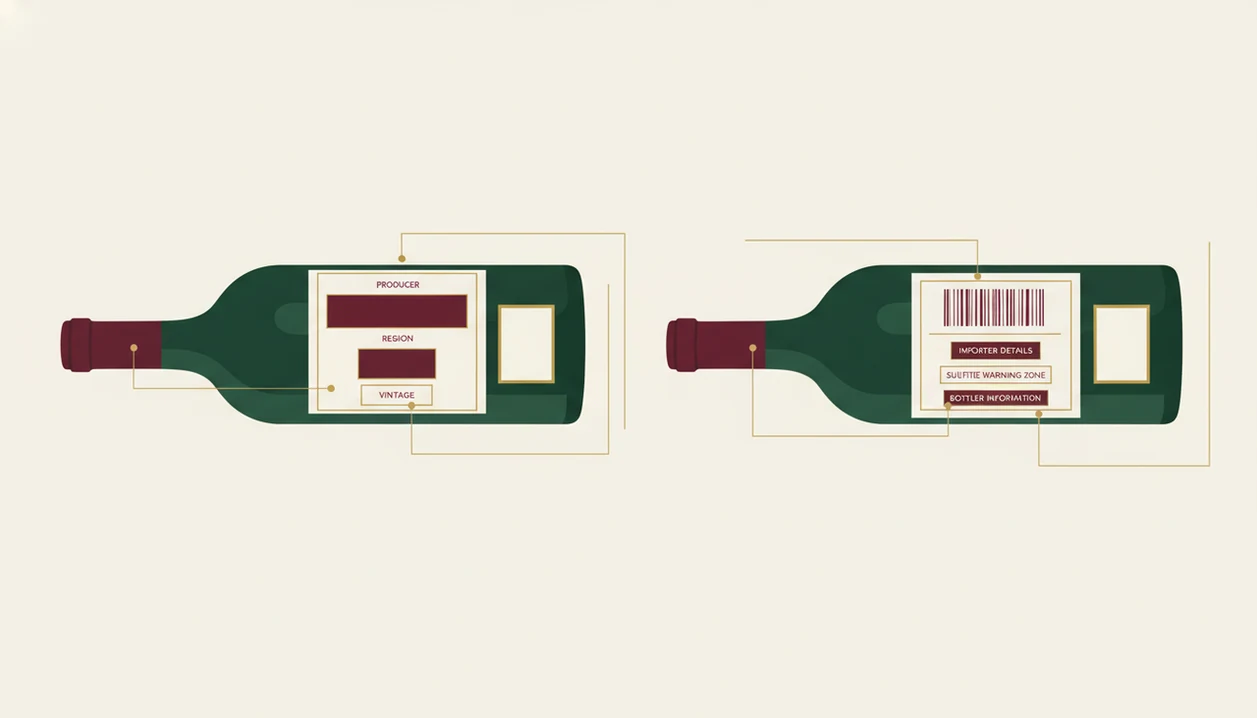
The front label usually tells you what the wine wants you to notice first. The back label often tells you what the law, importer, or cellar record needs you to know.
A front label typically shows producer, wine name, vintage, grape, region, and sometimes ABV. A back label commonly adds bottler address, sulfite warning, government health warning, tasting notes, QR codes, lot numbers, barcode data, and sometimes the fuller appellation. Many buyers never turn the bottle around, but that is where the boring useful stuff lives.
The fastest scan order is producer, wine name, vintage, then region. That order works well when six similar bottle photos are buried between dog pictures, receipts, and a blurry restaurant menu in your camera roll.
For location terms, the wine regions and appellations guide helps decode why “Napa Valley,” “Bourgogne,” and “Rioja” behave differently on labels.
Tap, check, adjust. Then save the right bottle.
How to Read a Wine Label in 5 Steps
To read a wine label, build the bottle identity first, then use the legal details to confirm it. The goal is not to admire every word; it is to capture enough reliable information to recognize the same wine later.
- Start with the producer and wine name on the front label. If the label has a large château, estate, or brand name, treat that as your first anchor before reading smaller text.
- Check the vintage, grape, region, and ABV before you guess the style. A 2021 Sonoma Chardonnay and a nonvintage sparkling wine are telling very different stories.
- Turn the bottle around and read the back label for the less glamorous details: bottler, importer, sulfite statement, health warning, lot code, and barcode.
- Compare the appellation, bottler, importer, and barcode when two bottles look nearly identical. This is especially useful with supermarket exclusives, restaurant lists, and changed label designs.
- Save both label photos with one plain-English note about taste or pairing, such as “crisp with fish tacos” or “too oaky for pasta.” That little note is often more useful than a perfect score.
Wine Label Fields That Matter for Pairing and Flavor
The label fields that matter most for pairing are grape variety, region, vintage, and ABV. They do not tell the full flavor story, but they give you a practical starting point before dinner gets cold.
Grape is usually the strongest shortcut. Sauvignon Blanc suggests citrus and brightness. Cabernet Sauvignon suggests tannin and darker fruit. Region adds climate clues: cool-climate Pinot Noir may feel lighter and sharper, while warm-climate Shiraz can taste riper and fuller. Vintage can affect acidity, ripeness, and aging potential, especially in regions with variable weather.
ABV is useful too. Higher alcohol often signals more body and ripe fruit, though it does not prove sweetness. Labels rarely state tannin level, oak use, or residual sugar in plain English. You usually infer those from grape, region, producer style, or tasting notes.
For a weeknight bowl of tomato pasta, I would rather have a good enough note than a tasting exam. “Bright, red fruit, worked with sauce” is enough to favorite-it for next time.
Marketing Terms vs. Regulated Wine Label Information
Marketing terms are not the same as regulated label information. Words such as “Reserve,” “Old Vines,” and “Winemaker’s Selection” may sound official, but in many countries, including the U.S., they often have no strict legal definition.
Regulated terms work differently. “Reserva” in Spain can indicate defined aging requirements. “Grand Cru” in Burgundy is tied to classification and place. Those terms carry more legal weight than a decorative phrase on a private-label red blend.
Two common assumptions cause bad bottle records. First, labels do not always list every grape in a blend. Minor components may be omitted entirely. Second, most wine labels do not have to show calories, sugar, or a full nutrition panel. New access rules are changing some markets, but you should not expect a nutrition label like you see on cereal.
Good ai-powered wine identification and cellar management tools deliver label recognition, vintage context, pairing prompts, and bottle tracking, not proof that a marketing word means quality.
Examples of Wine Label Structures Across Regions
Wine labels look different because regions organize identity differently. A universal read wine label rule helps, but regional habits still matter.
- Napa Valley Cabernet Sauvignon: The label is often varietal-forward. You usually see the producer prominently, Cabernet Sauvignon named clearly, and Napa Valley or a smaller AVA listed.
- Burgundy or Bourgogne: The appellation often leads. The grape may not appear because Pinot Noir and Chardonnay are assumed through place and tradition.
- Rioja: Classification terms such as Crianza, Reserva, and Gran Reserva can signal legally defined aging categories. That matters more than a casual “reserve” elsewhere.
- Australian Shiraz: Grape and region are usually clear, though some wines note multi-region blends. The label may say Barossa, McLaren Vale, or South Australia.
- Champagne and other protected names: The regional name itself carries legal meaning. Place, method, and category may matter more than grape display.
These differences complicate scanning because the “main” field moves around. A wine list folded around a dessert menu is not the time to decode every tradition from scratch.
For bottle age decisions after identification, a wine vintage lookup can connect the year on the label to drinking-window context.
Limitations
Wine labels are useful, but they cannot tell you everything. They are legal documents and marketing surfaces at the same time, so the emphasized information can be selective.
- Regulations vary widely by country. There is no single global wine label standard.
- Sweetness level is often missing, especially on dry-looking wines with a little residual sugar.
- Oak use and tannin intensity are rarely stated clearly.
- Minor blend components may be omitted, even when they affect flavor.
- Lot numbers, sub-AVAs, vineyard parcels, and bottler codes can be tiny or easy to mis-scan.
- Front labels may hide the most useful legal details on the back.
- A familiar producer name does not guarantee the same wine across vintages or sub-brands.
- CDC survey data reported that 31% of U.S. adults who drank alcohol said they drank wine in 2023, yet many casual buyers still struggle to interpret basic label fields (CDC alcohol use data).
The practical answer is not to memorize every rule. Scan both labels, save the vintage, and add one plain-English note before the bottle memory disappears. For cellaring, a drinking window calculator can help after the label data is correct.
FAQ
Is vintage year required on wine labels?
Vintage year is optional in many jurisdictions unless an appellation or regional rule requires it. If listed, it usually means the year the grapes were harvested.
What does “Contains Sulfites” mean?
“Contains Sulfites” means sulfur dioxide is present at 10 ppm or more under U.S. labeling rules. Most commercial wines meet that threshold.
Does “Reserve” guarantee higher quality?
No. “Reserve” is unregulated in many countries, including the U.S., so it does not guarantee higher quality.
Are calories listed on wine labels?
Usually not. Most jurisdictions do not require wine labels to display full calorie or nutrition information.
What does the varietal name mean?
The varietal name is the grape named on the label, such as Merlot or Chardonnay. Under U.S. rules, American appellation varietal wine generally must contain at least 75% of that grape.
Why do some wine labels omit the grape variety?
Many European wines use appellation names instead of grape names by tradition and regulation. The region often implies the permitted grapes.
Can an app scan a wine label accurately?
Yes, an app can scan many wine labels accurately by matching producer, vintage, region, and wine name fields. Wine Identifier App and DiVino work better when both front and back labels are clear.
What information is only on the back label?
Back labels often show bottler address, sulfite warning, health warning, lot number, barcode, importer, and sometimes full appellation. Wine Identifier App can use those fields to improve bottle matching.