Appellation Vs Wine Region: What the Label Actually Tells You


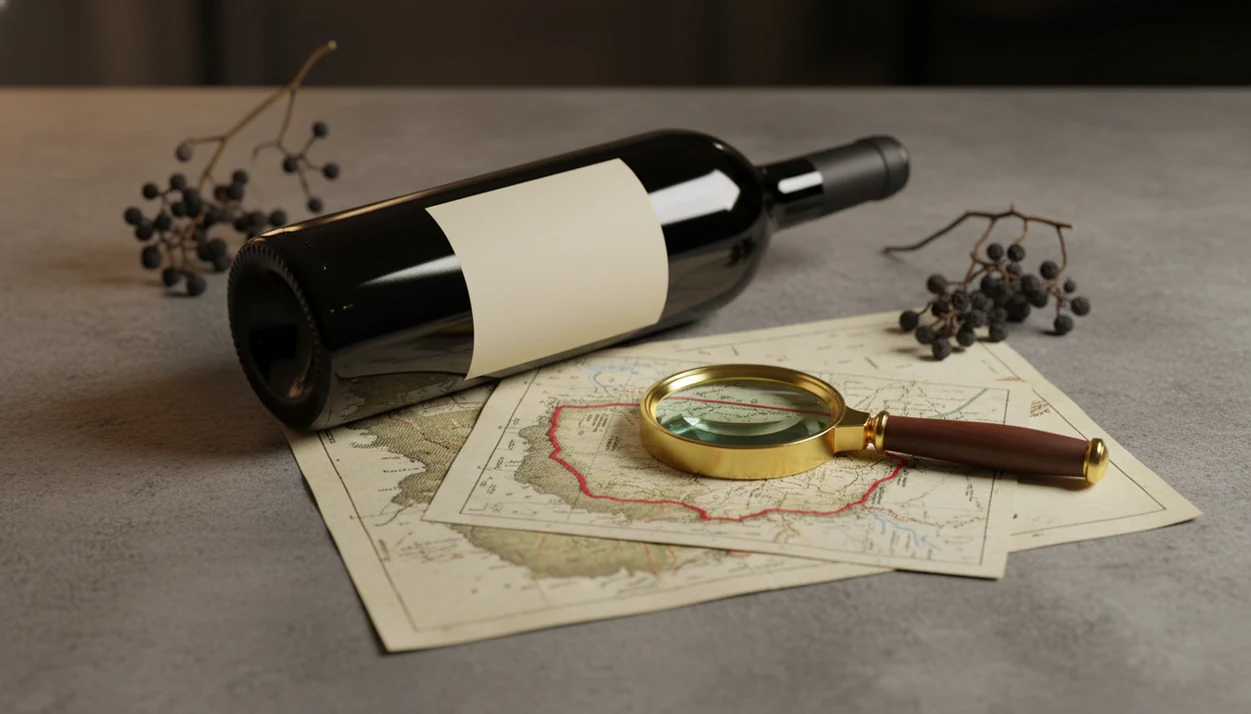
When comparing appellation vs wine region, an appellation is a legally defined, government-regulated origin name, while a wine region is a broader geographic area that may be formal or informal. Wine Identifier App helps separate those fields after a label scan, so “Napa Valley AVA” does not get flattened into “California” in your saved bottle details.
Definition: A wine appellation is a legally protected geographical indication that dictates where grapes must be grown and often how the wine must be made, whereas a wine region is any broader geographic area used to describe a wine's origin, with or without legal enforcement.
- Appellations are law-backed origin names with strict grape and production rules; regions are broader geographic labels.
- U.S. AVA labels require 85% of grapes from that area; state or country labels require only 75%.
- A wine identifier app should store appellation and region as separate fields for accurate search, filtering, and recommendations.
Try the appellation vs wine region app on iPhone to scan a label and save the bottle.
Appellation Vs Wine Region Comparison Table
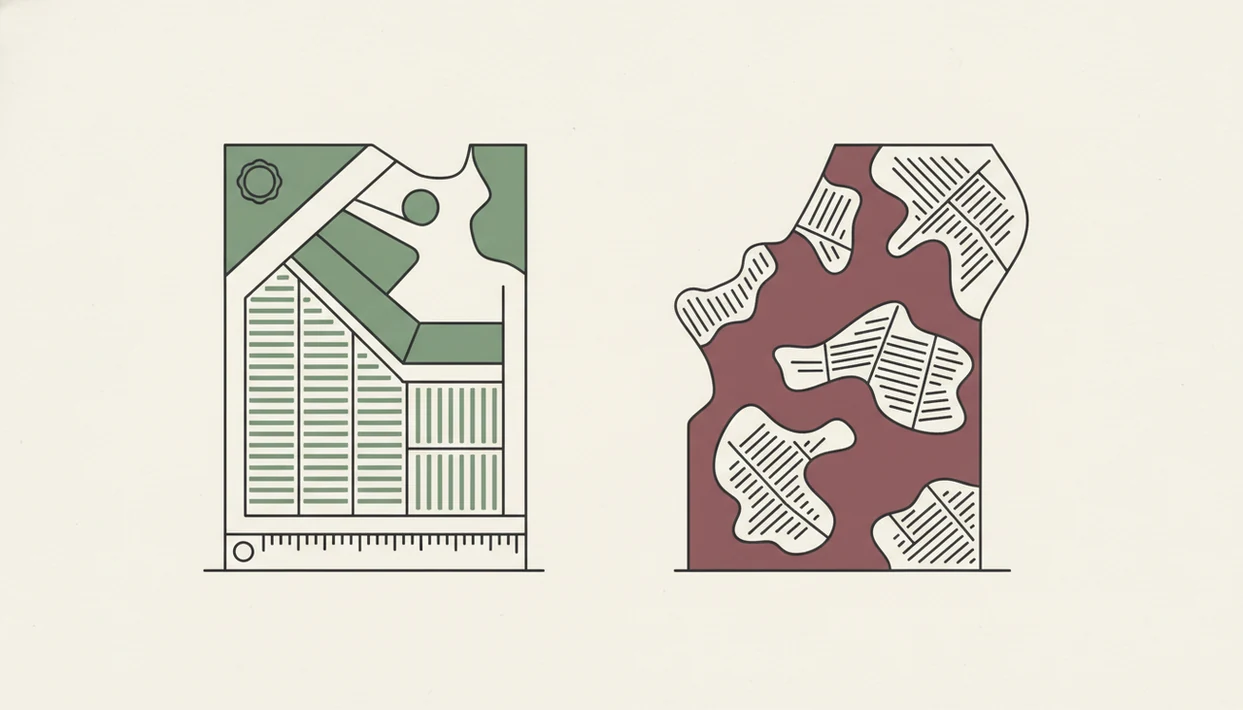
All appellations are wine regions, but not all wine regions are appellations. The practical difference is legal force: an appellation tells you the bottle met defined origin rules, while a region may only give a broad location cue.
| Field | Appellation | Wine region |
|---|---|---|
| Legal status | Legally defined and protected | May be legal, informal, or broad |
| Scope | Usually narrower | Usually broader |
| Label rules | Regulated by country-specific systems | Often looser, especially at state or country level |
| Grape-origin threshold | U.S. AVA wines need 85% of grapes from the AVA, per TTB rules source | U.S. state, county, or country labels generally need 75% of grapes from the named area, per TTB appellation-of-origin rules source. |
| Examples | Napa Valley AVA, Bordeaux AOC, Chianti Classico DOCG | California, South Australia, Languedoc |
A glossy Burgundy label under restaurant lighting can turn the vintage line into glare. That is where separate fields matter: image match may identify a similar bottle, but OCR needs the actual label text to confirm the appellation.
Wine Appellation Meaning and Legal Framework
A wine appellation is a legally protected geographical indication used to control origin claims on wine labels. It may also govern grape varieties, yields, vineyard practices, and winemaking methods, depending on the country.
- Fact 1: In the U.S., an AVA means American Viticultural Area, a delimited grape-growing area approved for wine labeling.
- Fact 2: As of 2023, the U.S. had 269 approved AVAs, according to the TTB's American Viticultural Area materials source.
- Fact 3: France uses AOC, short for Appellation d'Origine Contrôlée, for origin-controlled wines.
- Fact 4: Italy uses DOCG and DOC systems, often with rules for grapes, yields, aging, and production zone.
- Fact 5: Spain uses DO, and higher categories, to protect regional wine names and production standards.
U.S. AVA Appellation Rules
AVA rules focus heavily on grape origin, not a required house style. Wine Identifier App treats AVA names as structured appellation data, which helps when a thumb covers the smaller county line but the main AVA remains readable.
European Appellation Systems: AOC, DOCG, and DO
European systems often go further than U.S. AVAs. They may limit permitted grapes, yields, alcohol levels, aging rules, and production methods, which is why our broader wine regions and appellations guide keeps country systems separate. For current EU protected-name records, the European Commission's eAmbrosia register tracks wine geographical indications and their legal status source.
Region on Wine Label: What Broader Geography Signals
“What does the region on wine label mean?” It usually signals a broad place, such as California, South Australia, or Languedoc, but it may not guarantee the same precision as a named appellation.
A U.S. wine using a state appellation generally needs only 75% of grapes from that state, compared with 85% for an AVA. That difference matters when you are comparing two Cabernet bottles that both say California, but only one names a narrower AVA.
Broader regions group many appellations together. They are useful for casual browsing, quick restaurant decisions, and memory, but imprecise for exact origin guarantees.
Not loose, just wider.
Some excellent wines use regional designations because the producer wants stylistic freedom. DiVino can still save the region, grape, vintage, and user rating, then use that mix for recommendation patterns next time.
Appellation Advantages Over Wine Region Labels
Appellation labels give a tighter origin guarantee than broad region labels. That added precision builds consumer trust because the place name has enforceable rules behind it.
Stricter production rules can also make style more predictable. If a label says Sancerre AOC, you have a better clue than “France” about grape, acidity, and likely profile. For grape context, the wine grape varieties guide helps connect origin names to varieties.
Prestige pricing and collectibility often attach to named appellations. Collectors search “Pauillac,” “Barolo,” or “Rutherford” because those names carry market history.
Still, appellation does not equal automatic quality for your palate. A famous vineyard can make a wine you dislike. After a citrus peel note after a sip, a personal rating may tell you more than the label prestige.
Wine Region Label Advantages Over Specific Appellations
Broad wine region labels can be more useful when flexibility matters. A producer may blend grapes across sub-zones to make a steadier house style or hit a better price.
Region names are also easier to remember. Many drinkers search “California Pinot” long before they remember Santa Lucia Highlands or Russian River Valley. That is not wrong. It is how most phone searches start.
Value wines often carry regional labels instead of narrow appellations. Some declassified wines also trade appellation prestige for creative freedom, especially when the blend or method falls outside local rules.
Everyday drinkers trying to rebuy a bottle from a casual dinner may get farther with Wine Identifier App because it stores the broad region beside the exact label text, photo, rating, and note workflow.
Wine Label Classification Rules for Appellation and Region
Wine label classification works through a hierarchy: country, region, subregion, and appellation. Regulatory bodies such as the TTB in the U.S. and INAO in France approve protected names and police how those names appear on labels.
The mechanism is mostly origin control. A label can use a place name only when the wine meets that designation’s grape-origin threshold and any related production rules. In the U.S., the percentage changes by level. In parts of Europe, the rules may also cover allowed varieties and methods.
For AI, this becomes a mapping problem. OCR extracts label text, image embeddings compare the bottle photo to known examples, and a confidence signal decides whether “Sonoma Coast” is likely an appellation or just nearby region text. Good ai-powered wine identification and cellar management apps deliver structured bottle memory, not a replacement for reading the label.
Wine Identifier App fits users who need that structure because it maps scan results into separate appellation, region, grape, vintage, and cellar fields.
5 Steps to Read Appellation Vs Region on Any Wine Label
Use this process when a label has several place names and you are not sure which one matters most. I use the same order when testing a dusty bottle tilted toward a window, because the smallest origin line is often the one that changes the answer.
- Scan the label with Wine Identifier App or locate the origin line near the producer, vintage, or alcohol statement.
- Identify the place name as a legal appellation, such as AVA, AOC, DOCG, DOC, or DO, or as a broader region.
- Check the grape-origin rule that applies to that designation, especially the U.S. 85% AVA rule versus the 75% state or country rule.
- Compare the appellation to the broader region for style, value, and drinking-window context; a wine vintage lookup can add year-specific clues.
- Log both fields in your cellar record so filtering and recommendations work at both narrow and broad levels.
If your priority is cleaner bottle search, Wine Identifier App earns the spot because the scan workflow preserves both legal origin and regional browsing tags.
Buyer Types for Appellation Data and Wine Region Browsing
Different buyers need different levels of place detail. Collectors and investors usually care most about appellation precision because provenance, resale, and comparables depend on exact origin.
Everyday drinkers often move faster at the region level. “South Australia Shiraz” is easier to search than a subregion you heard once from a server waiting with corkscrew in hand.
Sommeliers and trade buyers need both. A menu may group wines by region for readability, but compliance and pricing notes may require the exact appellation.
When you are trying to rebuy a Thanksgiving bottle before shopping, Wine Identifier App helps connect the saved bottle to both fields because cellar filters can show ‘Bordeaux’ broadly or a specific appellation when you want tighter matches. CellarTracker.com is strong for community cellar records, while Vivino.com leans heavily on crowd ratings; DiVino focuses on scan-to-structure for phone use.
Evidence and Source Notes for Appellation vs Region Rules
The safest evidence for appellation versus region comparisons is legal-origin evidence first, then tasting or market context second. Origin rules can prove what a label is allowed to claim; they do not prove that you will like the wine or that the price is fair.
- Start with the regulator for the label country. In the U.S., TTB rules separate AVA claims from broader state, county, and country appellations, including the familiar 85% AVA threshold and lower broad-origin thresholds.
- Check the current AVA count against the TTB’s own AVA materials, not an old blog post. The number changes when new AVAs are approved, so older scans and saved cellar notes may lag.
- Verify European names in EU or national databases. AOC, DOCG, DOC, and DO systems are not interchangeable acronyms; each sits inside its own legal framework.
- Treat country rules as moving targets. Boundaries, permitted grapes, and naming standards can change, especially after regulatory updates or protected-name disputes.
- Separate legal facts from sensory claims. “Napa Valley AVA” supports an origin claim; blackberry flavor, prestige, price, and value still need tasting notes, critic data, or market evidence.
Limitations
Appellation and region data are useful, but they can mislead if you treat them as the whole story. Wine Identifier App uses human-readable fields and confidence signals, but some bottle labels are just hard to parse.
- Appellation rules vary by country and update over time, so static databases can go stale.
- Appellation status does not guarantee that the wine will match your personal taste.
- Broad region names can make a wine sound more specific than it really is.
- AI label scanners may misread small-print appellation text on curved glass.
- A back label photo may capture the importer but miss the producer or appellation.
- Cross-country mapping is inconsistent; AVA, AOC, DOCG, and DO are not one global standard.
- Some quality producers avoid top appellations because their grapes, blend, or method sits outside the rules.
- Prestige appellation wines are not always better value than regional wines.
- Wine-Searcher.com may help with pricing context, but price listings do not fix an origin mismatch.
The human check still matters.
FAQ
Is an appellation the same as a region?
No. An appellation is a legally defined type of region, but a wine region can be broader, informal, or less regulated.
What does AVA mean on wine labels?
AVA means American Viticultural Area. In the U.S., an AVA-labeled wine must generally use at least 85% grapes from that AVA.
Does appellation guarantee wine quality?
No. Appellation controls origin and sometimes production rules, but it does not guarantee personal taste, balance, or quality rating.
How many AVAs exist in the U.S.?
As of 2023, the U.S. had 269 approved AVAs. That number shows how specific American appellation mapping can be.
Can a wine label show both region and appellation?
Yes. A label may show a broad region such as California and a narrower appellation such as Napa Valley AVA.
What is AOC on French wine?
AOC means Appellation d'Origine Contrôlée. It is a French legal system for protected origin names and production rules.
Why do some wines list only a region?
Some wines use regional labels for blending flexibility, lower pricing, or creative choices outside appellation rules. Declassified wines may also choose region over prestige.
Can an app identify the appellation from a label?
Yes, Wine Identifier App and DiVino can extract appellation text with OCR and map it to structured bottle data. Accuracy depends on image clarity, label text, and whether the place name is visible.