
Wine Grape Varieties Guide: Scan Labels, Learn Flavors, Pair Smarter


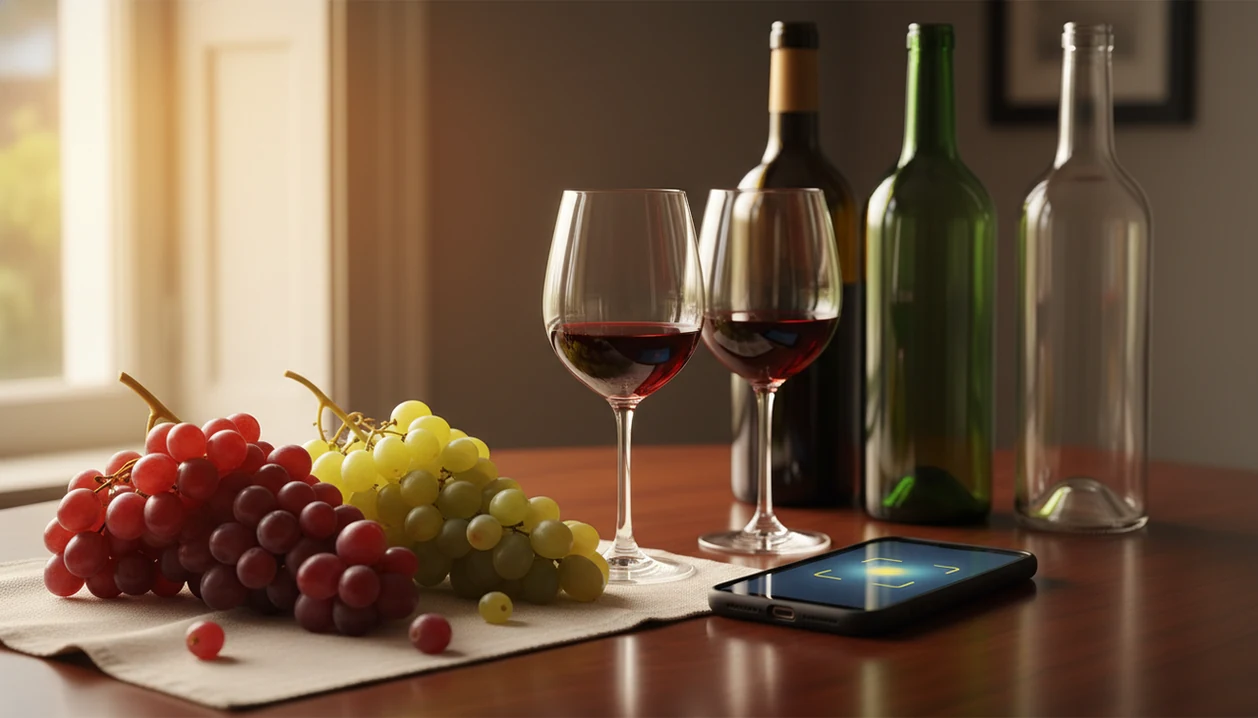
A wine grape varieties guide is a reference that maps grape names to flavor profiles, regions, and food pairings so you can understand any bottle you encounter. Used well, a wine grape varieties guide helps turn label text into practical choices: what the wine may taste like, what food it might suit, and whether a similar bottle belongs in your cellar.
Definition: A wine grape varieties guide is a structured reference that links grape names to their flavor characteristics, growing regions, common synonyms, and food pairing recommendations, helping wine drinkers decode labels and choose bottles with confidence.
TL;DR
- The grape on the label is only one factor, region, climate, and winemaking style also shape flavor.
- AI-powered apps can scan a wine label and instantly surface the grape variety, region, synonyms, and pairing ideas.
- Wine Grapes by Jancis Robinson, Julia Harding, and José Vouillamoz catalogues more than 1,300 wine grape varieties (https://www.jancisrobinson.com/learn/booksDVDsapps/wine-grapes), but learning 15–20 key grapes covers most bottles you'll encounter.
Try the wine grape varieties guide app on iPhone to scan a label and save the bottle.
Wine Grape Varieties at a Glance: 5 Facts Every Drinker Should Know
- Major grape references catalogue more than 1,300 wine grape varieties, including the Wine Grapes reference by Robinson, Harding, and Vouillamoz (https://www.jancisrobinson.com/learn/booksDVDsapps/wine-grapes), which shows why no casual drinker needs to memorize every wine grape.
- Grape variety is not flavor destiny. Region, climate, oak, fermentation choices, and bottle age can change the same grape sharply.
- Synonyms are common. Syrah and Shiraz are the same grape, while Garnacha and Grenache point to the same variety in different naming traditions.
- Most retail shelves lean on roughly 15–20 familiar grapes, including Cabernet Sauvignon, Merlot, Pinot Noir, Chardonnay, Sauvignon Blanc, and Riesling.
- AI label-scanning apps can often infer grape, region, winery, vintage, and color type from a bottle photo when the label is clear.
A pale gold wine under patio sun may look simple, but the label can hide a lot: grape, region, producer style, and sometimes a local synonym. The grape name starts the story. It does not finish it.
How Wine Grape Identification Works: From Vine to Label to App
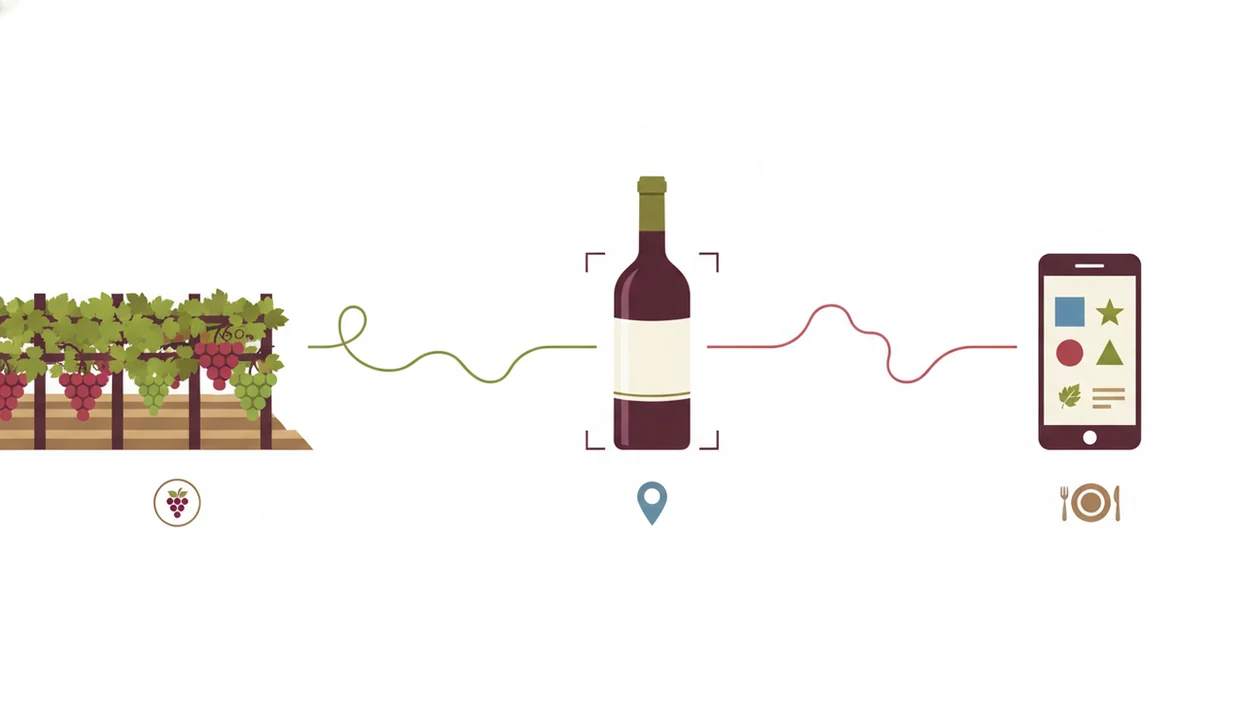
Wine grape identification works by matching label clues, regional rules, and known grape databases to a likely variety. On the phone side, OCR reads label text, image matching compares the bottle to known examples, and synonym tables help connect local names to standard grape profiles.
Varietal Labels vs. Regional Naming Conventions
Some labels name the grape directly, such as “Cabernet Sauvignon” or “Chardonnay.” Others name the place, not the grape. Bordeaux, Chianti, Rioja, and Chablis often require regional knowledge before you know what grapes are likely inside. The wine regions and appellations guide helps explain why place names can carry grape rules.
AI Label Scanning and Grape Lookup
A scan starts with what the camera can see: winery name, label text, region, vintage, and color type. If restaurant lighting turns a glossy Burgundy label into a white glare spot, confidence drops fast. Retaking the photo square-on against a dark table usually gives the OCR better edges and fewer vintage mistakes.
A good ai-powered wine identification and cellar management app delivers faster label lookup, grape context, pairing cues, and bottle organization, not a guaranteed expert verdict on every obscure bottling.
Because Wine Identifier App does not publish a universal accuracy rate for every label condition, treat the scan result as an assisted lookup rather than a certified identification. Clear lighting, an undamaged front label, and visible vintage/appellation text matter most.
Red Wine Grape Varieties: Profiles, Flavors, and Pairing Cues
Red wine grapes are often easiest to compare by body, tannin, fruit character, and how they handle protein-rich food. The most useful profiles are practical, not poetic.
Full-Bodied Reds: Cabernet Sauvignon, Syrah, and Merlot
Cabernet Sauvignon: Full-bodied, tannic, and dark-fruited, with blackcurrant, cedar, and sometimes graphite notes. It is a strong match for steak, lamb, burgers, and other red meat.
Syrah/Shiraz: Full-bodied, peppery, and dark-berried. French Syrah may feel savory and smoky, while Australian Shiraz often tastes richer and riper. Grilled meats make sense here.
Merlot: Medium to full-bodied, usually softer than Cabernet, with plum, cocoa, and rounder tannins. It works with roast chicken, pork, mushrooms, and weeknight pasta.
Lighter Reds: Pinot Noir, Grenache, and Gamay
Pinot Noir: Lighter-bodied, red-fruited, and earthy. It pairs well with poultry, salmon, duck, and mushroom dishes.
Grenache/Garnacha: Medium-bodied, red-fruited, spicy, and warm-toned. It fits Mediterranean dishes, sausages, pizza, and roasted vegetables.
Two labels from the same producer can look nearly identical but name different vineyards. That is where grape plus place matters.
White Wine Grape Varieties: Profiles, Flavors, and Pairing Cues
White wine grapes are often compared by acidity, body, aroma, sweetness, and oak influence. Region can shift the flavor so much that one grape may taste crisp in one bottle and broad in another.
Crisp Whites: Sauvignon Blanc and Pinot Grigio
Sauvignon Blanc: High-acid, citrusy, and herbal, often showing grapefruit, lime, grass, or passion fruit. It pairs with salads, goat cheese, asparagus, shellfish, and green herbs.
Pinot Grigio/Pinot Gris: Usually light to medium-bodied. Pinot Grigio often signals a crisp Italian style, while Pinot Gris can point to a richer Alsace or Oregon style.
Rich and Aromatic Whites: Chardonnay, Riesling, and Gewürztraminer
Chardonnay: Ranges from lean and unoaked to buttery and oaked. It fits poultry, cream sauces, lobster, and roast vegetables.
Riesling: Aromatic, high-acid, and made from dry to sweet. It is one of the most flexible grapes for spicy cuisine.
Chenin Blanc and Gewürztraminer: Chenin can be dry, sweet, still, or sparkling. Gewürztraminer brings lychee, rose, and spice, especially with aromatic dishes.
Grape Synonyms and Alternate Names: Why They Matter for Wine Search
Grape synonyms matter because the same wine grape may appear under different names depending on country, region, and label tradition. Syrah/Shiraz, Pinot Grigio/Pinot Gris, Garnacha/Grenache, and Tempranillo/Tinta Roriz are common examples.
The 200+ Wine Grapes app says it covers more than 200 wine grapes and 8,500 synonyms on its public listing (https://www.winegrapesapp.com/). That scale explains why simple text search can miss bottles. A cellar log that stores “Garnacha” separately from “Grenache” may split your own tasting history.
Tools like Wine Identifier App can resolve many synonym issues during a scan by matching label text against grape and region records. DiVino can also use those corrections later, especially when a user types “2020, not 2019” after a shaky scan. Small fixes improve future context.
Synonyms are not trivia. They change search results.
Grape Variety Food Pairing Chart: Match Wine Grapes to Meals
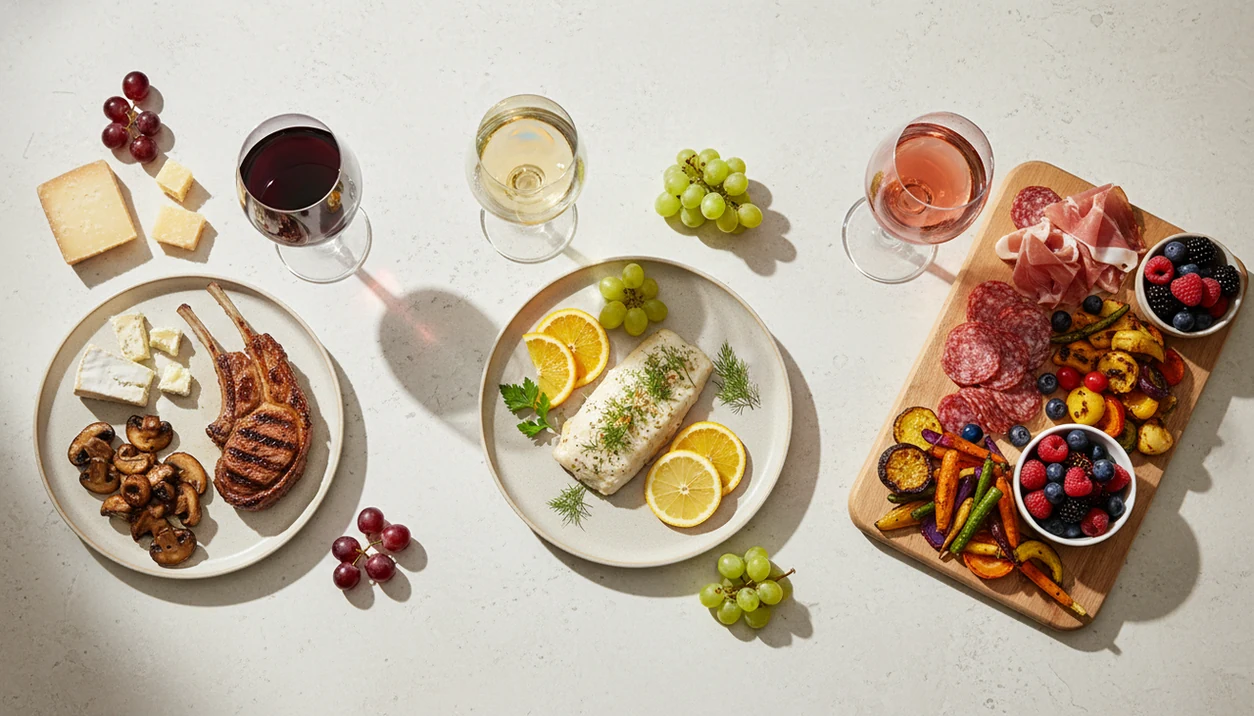
A grape variety food pairing chart gives a starting point, not a rulebook. Acidity, tannin, sweetness, sauce intensity, and cooking method all affect the final match.
| Grape | Body | Key Flavors | Best Food Matches |
|---|---|---|---|
| Cabernet Sauvignon | Full | Blackcurrant, cedar, tannin | Steak, lamb, burgers |
| Merlot | Medium-full | Plum, cocoa, soft spice | Roast chicken, pork, mushrooms |
| Pinot Noir | Light-medium | Cherry, earth, red fruit | Salmon, duck, poultry |
| Syrah/Shiraz | Full | Blackberry, pepper, smoke | Grilled meats, barbecue |
| Grenache | Medium | Raspberry, spice, herbs | Pizza, sausages, Mediterranean dishes |
| Chardonnay | Light-full | Apple, citrus, butter, oak | Poultry, cream sauces, lobster |
| Sauvignon Blanc | Light-medium | Lime, herbs, grapefruit | Salads, goat cheese, shellfish |
| Riesling | Light-medium | Peach, lime, flowers | Spicy food, pork, Thai dishes |
For everyday drinkers, grape-based pairing is often easier than region-based pairing because the flavor cues are easier to remember at the table.
How to Use a Grape Variety Wine App for Scan-to-Pair Recommendations
Does a grape variety wine app help with dinner decisions? Yes, if it connects the scanned label to grape profile, region, and pairing logic instead of just naming the bottle.
- Open the app and point the camera at the wine label. Keep your thumb off the vintage and appellation line.
- Review the identified grape variety, region, and color type. If the result says red Burgundy, expect Pinot Noir unless the label indicates otherwise.
- Check synonyms and alternate names if the grape seems unfamiliar. Garnacha and Grenache may lead to the same grape profile.
- Read the suggested food pairings based on the grape profile. Garlic shrimp still sizzling in the pan needs different cues than braised beef.
- Save the bottle to your cellar log with tasting notes. Add a rating, serving context, and a quick note like “better with food.”
Wine Identifier App can perform this scan-to-pair flow from a phone photo, then save the bottle for later comparison. For label basics before scanning, the what information is on wine label explainer is useful.
Lesser-Known Wine Grapes Worth Scanning Next
Lesser-known wine grapes are worth scanning because they expand your taste map beyond the shelf regulars. The UC Davis 1,377-variety scope is a reminder that Cabernet and Chardonnay are only a tiny slice.
Grüner Veltliner: Austria’s signature white often tastes peppery, citrusy, and bright. Try it with schnitzel, salads, or vegetable dishes.
Albariño: A Spanish coastal white with peach, citrus, and salt-edged freshness. It is a natural fit for shellfish and grilled fish.
Nero d’Avola: Sicily’s dark-fruited red can show plum, spice, and firm structure. It works with tomato sauces and roasted meats.
Tannat: Known in Uruguay and southwest France, Tannat is dark, tannic, and bold. Rich beef dishes help soften it.
Torrontés: Argentina’s aromatic white smells floral but often finishes dry. Pair it with spicy empanadas or fragrant herbs.
A broad grape database helps because obscure bottles often hide behind local names.
Wine Grape Varieties Guide vs. Related Concepts
A wine grape varieties guide focuses on grapes: how they taste, where they grow, what names they use, and what foods they tend to match. It answers “What is this grape like?”
A wine atlas focuses on geography and terroir. It explains why Sancerre, Napa Valley, Rioja, and Barolo behave differently. The appellation vs wine region distinction is especially helpful when a label gives place before grape.
A sommelier course is broader. It covers service, tasting method, cellar handling, business knowledge, and certification prep.
For most everyday wine drinkers, the grape guide is the quickest entry point. A wine atlas becomes more useful once the same grape starts tasting different from one region to another.
Limitations
A wine grape varieties guide is useful, but it cannot remove every ambiguity from a bottle. The edge cases are real.
- Bottle-scanning tools are not infallible. Bad photos, torn labels, glare, and uncommon bottlings can produce wrong matches.
- A back label photo may catch the importer and miss the producer, which weakens the image match.
- Grape-based flavor profiles are generalizations. Vintage variation and winemaker choices can override the typical profile.
- Synonym databases are never perfectly complete, especially for obscure local varieties and regional aliases.
- Food pairing advice is approximate. Personal taste, sauce intensity, spice level, and cooking method change outcomes.
- A guide covering 15–20 grapes still misses hundreds of commercially available varieties.
- Region and climate can make two wines from the same grape taste dramatically different.
- Drinking windows require more than grape identity. For aging decisions, a drinking window calculator can add vintage, region, and style context.
Use the guide as a strong first read, then let the glass confirm or correct it.
FAQ
How many wine grape varieties exist?
UC Davis lists 1,377 grape varieties. Most drinkers encounter only a small fraction of them in shops, restaurants, and home cellars.
Which red grape is best for beginners?
Merlot or Pinot Noir is often a good starting point because both can have approachable tannins. Merlot feels rounder, while Pinot Noir is usually lighter.
Can an app identify grape variety from a label?
Yes, AI label-scanning apps can extract label text and match the wine to grape, region, winery, and color type. Wine Identifier App can do this when the photo and database match are strong.
Why does the same grape have different names?
Wine grapes often have regional synonyms, such as Syrah/Shiraz and Garnacha/Grenache. Apps resolve this by mapping alternate names to the same grape record.
Does grape variety determine food pairing?
Grape variety is a starting point for pairing, not the whole answer. Acidity, tannin, sweetness, sauce, and cooking method also matter.
What is the difference between varietal and blend?
A varietal wine is labeled around one dominant grape. A blend is made from multiple grapes, with labeling rules varying by region.
Are expensive grapes better than cheap ones?
No grape is inherently better because it costs more. Price often reflects region, scarcity, farming, aging, reputation, and production cost.
How accurate is wine label scanning?
Wine label scanning accuracy depends on photo quality, label condition, lighting, and database coverage. It is helpful but not 100% reliable.
Which white grape pairs with spicy food?
Riesling and Gewürztraminer often pair well with spicy food. Their aromatics and possible residual sweetness can balance heat.