Restaurant Wine Choice Results: What Actually Happens When You Scan the Menu


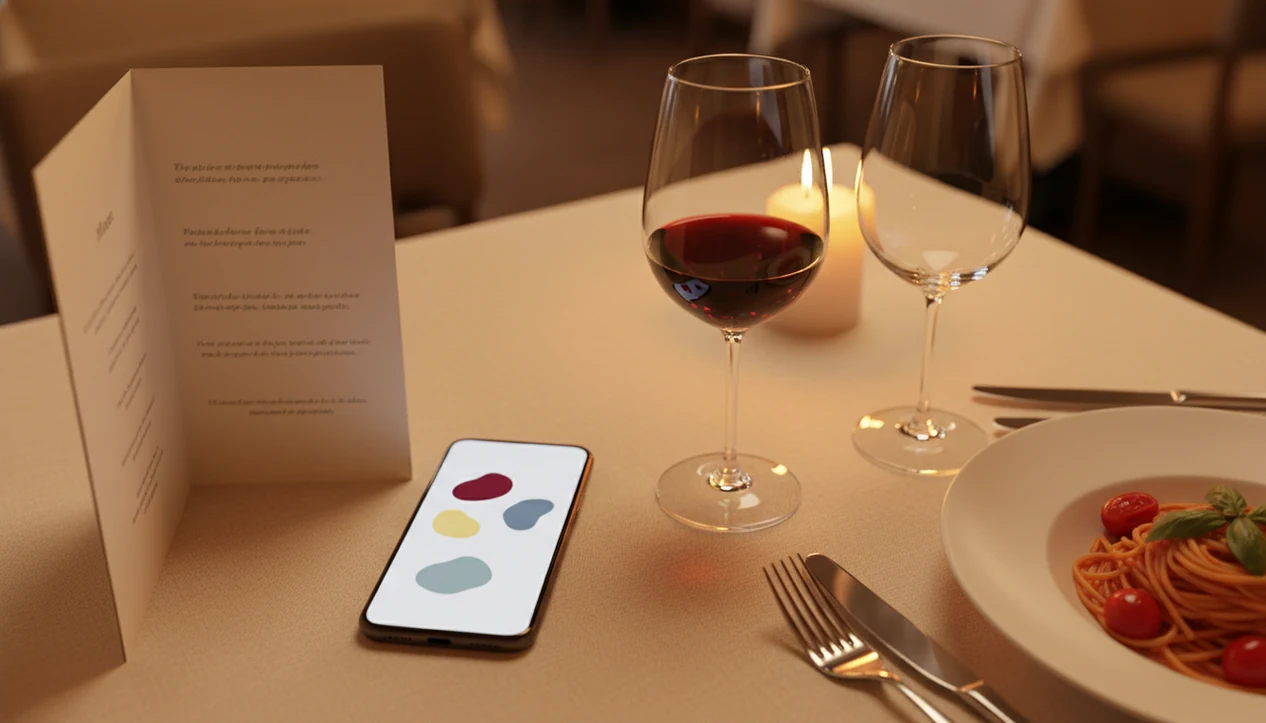
Quick answer: Restaurant wine choice results improve measurably when you scan a wine list with Wine Identifier App before ordering, because it turns a long list into a ranked shortlist matched to style, food, and price. Diners often report less decision stress, better food-wine matches, and fewer overpriced regrets.
Definition: Restaurant wine choice results are the real-world outcomes, including confidence level, taste satisfaction, spend efficiency, and discovery rate, that a diner experiences after using a wine menu scanner to inform their bottle or glass selection.
TL;DR
- Scanning a restaurant wine list with an AI app cuts decision stress by filtering dozens of options down to a ranked shortlist matched to your palate and meal.
- Diners who see tasting notes, food pairings, and scores before ordering report higher confidence in choosing a wine they enjoy.
- Results still depend on scan quality, database coverage, and personal taste. No app guarantees a perfect pick every time.
Try the restaurant wine choice results app on iPhone to scan a label and save the bottle.
At a Glance: Typical Restaurant Wine Choice Results With Menu Scanning
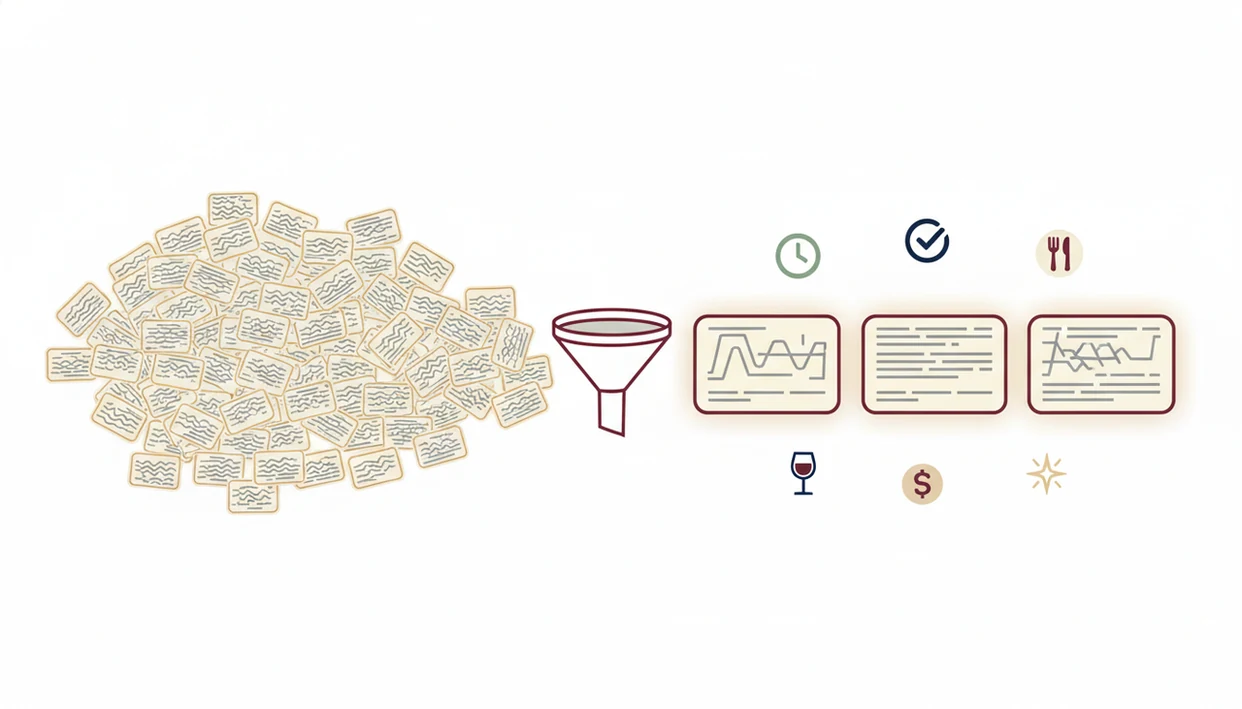
Five outcomes usually change first: speed, confidence, food fit, price control, and discovery. That matters because 73% of U.S. high-frequency wine drinkers have felt overwhelmed or confused by restaurant wine lists at least some of the time, according to Wine Market Council research source.
- Decision speed: A 90-bottle page can become three practical choices before the server returns.
- Taste satisfaction: Clearer tasting descriptions and pairings can raise confidence before ordering, but keep any exact lift percentage tied to a named study or internal test URL.
- Price confidence: A visible budget ceiling helps you avoid the awkward drift from $58 to $92.
- Food-pairing accuracy: Tomato pasta, grilled fish, or steak can be matched by acidity, body, and tannin.
- New-wine discovery: Familiar grapes still help, but the shortlist may surface Barbera, Godello, or Blaufränkisch.
Small relief counts at the table.
5-Metric Method for Restaurant Wine Pick Results
A useful test compares scanning with an app against ordering without app help, then measures the result after the meal. The five metrics are decision time, confidence self-rating, post-meal satisfaction, price-to-quality ratio, and repeat-order rate.
Here’s the framework I use when testing wine menu app results: start the clock when the list arrives, note the chosen bottle or glass, then ask one plain question after dinner: “Would I order that again?” Not fancy. Just honest.
Choice-overload research matters here because large option sets can make people less satisfied and more stuck, especially when the differences are unfamiliar. A diner choosing between ten Pinot Noirs may feel fine. A diner facing three pages of Burgundy, Etna, Rioja, and California blends under a phone glow beneath a white tablecloth has a different problem.
For most diners, a ranked three-bottle shortlist is often easier than a full restaurant list because it preserves choice without forcing every comparison.
How AI Wine Menu Scanning Works Behind the Scenes
AI wine menu scanning works by reading the printed or digital list, matching the extracted wine details to a database, then ranking likely choices against your preferences. The mechanism is simple to use, but there are several steps behind the tap.
First, OCR, or optical character recognition, captures producer names, vintages, regions, grapes, and prices from a photo. In plain English, the app turns the wine list image into searchable text. Then the system compares that text with wine records that may include critic scores, tasting profiles, typical prices, and pairing data.
A preference model can then rank wines by your past ratings, stated budget, and selected dish. If you loved a bright Sangiovese last month, that signal may nudge similar high-acid reds upward.
Good AI-powered wine identification and cellar management apps deliver faster label, menu, pairing, and inventory decisions, not a guarantee that the bottle will match your mood.
Rare producers, misspelled menus, and brand-new vintages can still create gaps.
How to Use a Wine Menu App for Stronger Restaurant Results
Use a wine menu app as a shortlisting tool, then confirm the final choice with the person serving the wine. The strongest restaurant wine choice results come from combining scan data with the table’s actual food, inventory, and mood.
- Open the app and photograph the wine list in good light. Avoid glare, curled pages, and a thumb over the vintage.
- Set your budget ceiling and select your entrée or cuisine type. A $60 limit and “roast chicken” gives better results than no filter.
- Review the ranked shortlist with scores, tasting notes, and pairing ratings. Look for plain descriptors like crisp, full-bodied, oaky, dry, or high-acid.
- Compare the top two or three picks for style fit. Check body, acidity, familiar grapes, and whether the wine sounds like something your table enjoys.
- Confirm with your server or sommelier. Use the app’s descriptors as a conversation starter, not a verdict.
If you want the full workflow, a restaurant wine menu scanner guide can help before dinner.
3 Real Dining Scenarios for Wine Choice Results
Restaurant wine choice results look different depending on pressure, budget, and occasion. A weeknight table needs speed, while a celebration may need discovery without making the bottle feel like a gamble.
Weeknight Pasta and a $45 Barbera
Two friends scan a 40-bottle list beside a weeknight bowl of tomato pasta. The app filters out heavy, high-tannin reds and surfaces a $45 Barbera with bright acidity. The result is not dramatic, but it fits the food and stays under $50.
Business Dinner With a 300-Bottle List
At a client dinner, the list is huge and full of unfamiliar regions. The scan narrows the options to three medium-bodied reds under the stated ceiling. Nobody has to pretend they know every village in the Northern Rhône.
Useful, quietly.
Anniversary Splurge With Sommelier Assist
For an anniversary, the couple wants something new, not just a bigger price tag. They scan, find two splurge candidates, then ask the sommelier which bottle is drinking better tonight. That human check matters.
Wine Identifier App can support this kind of choice by keeping the scan, note, and bottle memory in one place; comparable tools such as Vivino, Delectable, and CellarTracker may cover parts of the same workflow.
Common Patterns in Wine Menu App Results
Across repeated scans, the most common pattern is compression: diners move from the full list to three to five candidates in under a minute. That is the practical win, especially when the server is hovering and the table is still choosing entrées.
Wine decisions are common, too. Pew Research Center reported that 63% of U.S. adults who drink alcohol say they drink wine, making restaurant wine choice a regular problem for many diners source.
Familiar grapes still dominate. Cabernet Sauvignon and Pinot Noir remain safe anchors, but discovery rises when the app explains that Mencía may feel like a lighter red or Albariño may suit seafood.
Budget anchoring is another pattern. People tend to stay closer to the ceiling they typed in, instead of panic-ordering the second-cheapest bottle. Over time, saved ratings can feed taste-profile learning and simple cellar records in apps such as Wine Identifier App and CellarTracker.
Blind Spots in Wine Menu App Results
Wine menu app results can improve the decision, but they cannot see everything happening inside the restaurant. The scan may know the wine’s usual profile, yet miss the markup, storage condition, and whether the last bottle was sold twenty minutes ago.
Value-for-money is especially tricky. A bottle that looks fairly priced in a retail database may be steep on a restaurant list. By-the-glass columns can also change fast, with crossed-out vintages or substitutions that never make it into the app.
Personal sensitivity is another blind spot. If you dislike coconut-like oak notes, soft sweetness, heavy tannin, or a certain earthy edge, the model may need several ratings before it learns that pattern.
The room changes the result, too. A noisy birthday table, a tense work dinner, or a group split between steak and fish can affect satisfaction more than the app score.
Limitations: Restaurant Wine Scanner Gaps
Restaurant wine scanners are useful, but they work inside real constraints. Treat the result as a better starting point, not a command.
- Low light hurts OCR. Stylized fonts, folded menus, laminated pages, and candle glare can scramble producer names.
- Small producers may be missing. New releases, private labels, and tiny regional bottlings may have weak database coverage.
- Scores are not your palate. Expert consensus can point to quality, but it cannot know whether you dislike vanilla oak or firm tannin.
- Restaurant inventory changes fast. Promotions, by-the-glass rotations, substitutions, and out-of-stock bottles may be invisible.
- Prices need context. Markup, pour size, vintage change, and storage quality may not appear in the scan result.
- Privacy deserves a look. Scan photos, taste ratings, and location-linked activity may be stored, so review the app’s data policy.
For beginners who want gentler setup, a best wine app for beginners guide is often less intimidating than starting at the table.
FAQ: Restaurant Wine Scanner Questions
Do wine menu scanners work accurately?
Wine menu scanners are generally reliable when the photo is clear and the wine is in the database. They can miss rare wines, unusual spellings, or dim menu photos.
Is a wine scanning app free?
Many wine scanning apps offer free basic scans. Premium tiers often add deeper scores, cellar tracking, saved histories, or advanced pairing tools.
How fast does the scan return results?
Most scans return results in under 10 seconds. Low light, long lists, weak signal, or messy menu layouts can slow the scan.
Should I still ask the sommelier?
Yes, app data plus sommelier input usually gives better restaurant wine choice results. The app helps you ask a clearer question.
Can I scan by-the-glass options?
Yes, by-the-glass sections scan the same way as full-bottle listings. Results may be less stable because glass pours rotate often.
Does the app learn my palate over time?
Yes, rating wines after meals trains the preference model. Wine Identifier App can use saved ratings and notes to improve future suggestions.
What if a wine isn't in the database?
The app may show grape, region, or style-level information instead. It may also flag the wine as unrecognized.
Is my scan data kept private?
Review the app’s data policy before relying on it. Scan photos and ratings are typically stored to improve recommendations, including in DiVino.