Wine Storage Temperature Guide


Definition: Wine storage temperature is the controlled temperature at which unopened bottles are kept to slow aging and protect flavor, aroma, cork condition, and overall wine quality.
Try the wine storage temperature guide app on iPhone to scan a label and save the bottle.
What Is the Best Wine Storage Temperature?
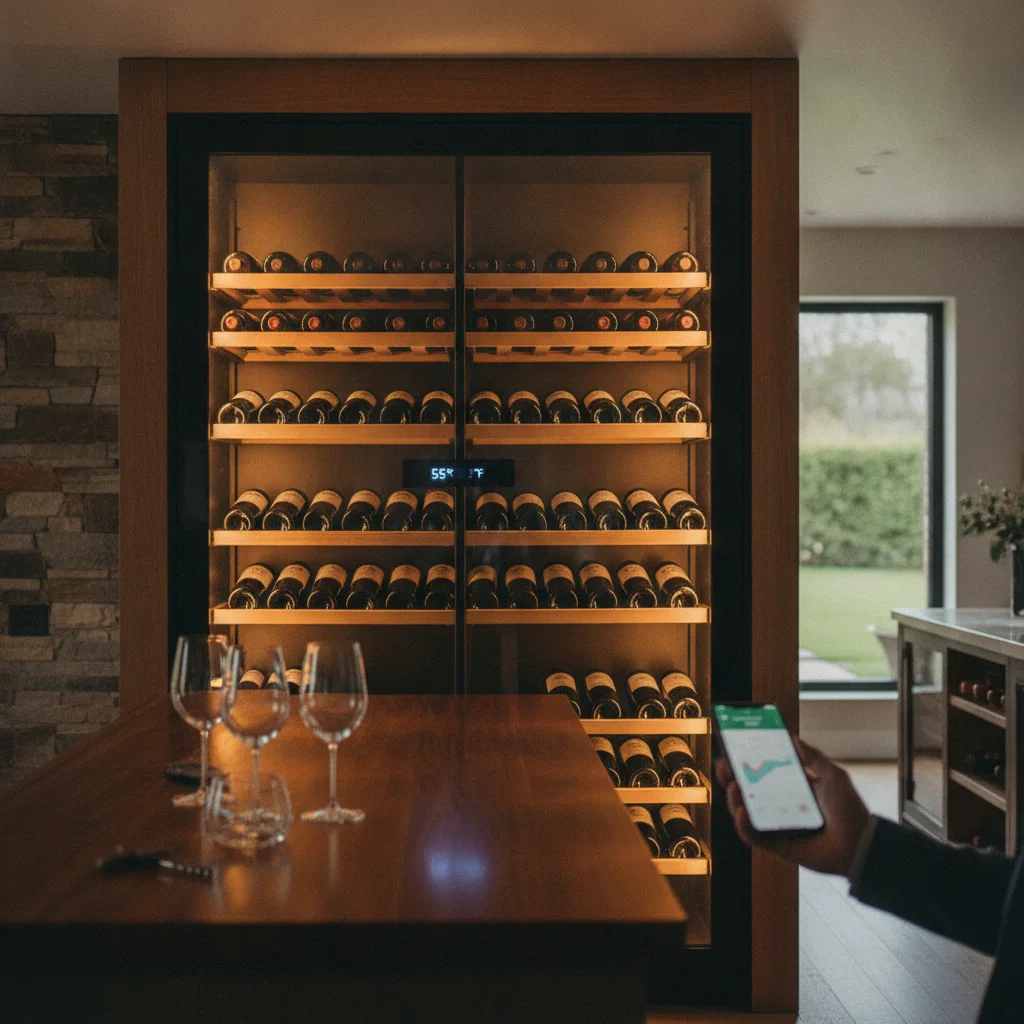
The best wine storage temperature for most bottles is approximately 55°F or 13°C. This applies broadly to red, white, rosé, dessert, and sparkling wines when the goal is storage rather than immediate serving. A practical long-term range is about 50°F to 59°F, or 10°C to 15°C.
Wine storage temperature refers to the environment surrounding an unopened bottle while it rests. It is different from serving temperature, which may be adjusted shortly before drinking. DiVino, also known as the Wine Identifier App, is an iPhone wine scanner and cellar tracker that can help users identify bottles, record cellar locations, review drinking windows, and save tasting notes. It does not replace a physical thermometer or temperature-controlled wine cabinet.
A bottle held steadily at 57°F is generally in a better situation than one repeatedly moving between 48°F and 65°F. Small, gradual seasonal changes are less concerning than frequent or abrupt fluctuations.
Storage Temperatures for Red, White, and Sparkling Wine
Different wine styles are often served at different temperatures, but they do not require dramatically different conditions for long-term storage. A mixed collection can usually be kept in one climate-controlled space near 55°F.
- Red wine: Store near 55°F. Full-bodied reds are commonly served warmer, often after the bottle has been removed from storage.
- White wine: Store near 55°F. Chill the bottle further before serving if the style benefits from a colder presentation.
- Rosé: Use the same general storage target, then cool it to the desired serving temperature.
- Sparkling wine: A cool, stable environment is appropriate. Chill it more thoroughly before opening.
- Fortified and dessert wine: Unopened bottles can share standard cellar conditions, although storage after opening depends on the wine style.
Keeping separate long-term zones for every style is usually unnecessary. Dual-zone wine refrigerators are most useful when one zone is being used for ready-to-serve bottles rather than when both zones are dedicated solely to aging.
Why Heat and Temperature Swings Harm Wine
Wine changes gradually in the bottle. Excess heat can accelerate chemical reactions, causing a wine to mature faster than intended and potentially lose freshness. Sustained temperatures above approximately 70°F or 21°C are a warning sign, particularly for bottles intended to age.
Temperature swings can also affect the air and liquid inside a bottle. Repeated expansion and contraction may place stress on the closure and increase the risk of seepage or unwanted oxygen exposure. Signs such as a raised cork, sticky capsule, or wine stains around the closure can indicate heat exposure or leakage, although they do not prove that the wine is spoiled.
Freezing is another risk. Wine freezes below the freezing point of water because it contains alcohol, but a household freezer can still become cold enough to freeze or partially freeze it. Expansion may push the cork outward, compromise the seal, or break the bottle. Do not use a freezer for long-term chilling or storage.
Wine Fridge, Home Cellar, or Storage Rack?
The right setup depends on how long you plan to keep the wine, the value of the collection, and the temperature of your home.
- Wine refrigerator: A good choice for apartments and warm homes. Select a unit designed for wine, set it near 55°F, and verify the internal temperature with an independent thermometer.
- Climate-controlled cellar: Best suited to larger collections and long aging. The room should control temperature while limiting light, vibration, and extreme humidity.
- Interior storage rack: Reasonable for bottles that will be consumed relatively soon if the room stays cool and stable. Choose an interior closet or low shelf away from windows, ovens, radiators, laundry appliances, and heating vents.
- Kitchen refrigerator: Useful for short-term chilling, but generally too cold and dry for extended wine aging. Compressor vibration and frequent door opening may also make it less suitable for valuable bottles.
Measure conditions where the bottles actually sit. Temperatures near the ceiling, exterior walls, garage doors, or cooling vents may differ from the center of a room.
Humidity, Light, Bottle Position, and Vibration
Temperature is the main concern, but the surrounding environment also matters. For a traditional cellar, moderate relative humidity of roughly 50% to 70% is a common practical target. Very dry conditions may contribute to cork drying over long periods, while excessive humidity encourages mold and label damage.
Protect bottles from direct sunlight and strong indoor light. Ultraviolet exposure can trigger unwanted changes, particularly in wine stored in clear or lightly colored glass. Keep the storage area dark whenever possible.
Traditionally cork-sealed bottles intended for long storage are commonly placed on their sides so the wine remains in contact with the cork. Screw-cap bottles and many alternative closures do not need horizontal storage, although racks may still make organization easier.
Avoid continuous vibration from washing machines, speakers, mechanical rooms, or frequently moving shelves. Normal household movement is not usually an emergency, but a quiet, undisturbed location is preferable for bottles aging over many years.
How to Monitor a Home Wine Collection
Place a digital thermometer in the storage area and check both current temperature and recorded highs and lows. A thermometer with memory provides a clearer picture than a single reading. For larger or more valuable collections, consider a temperature and humidity monitor that sends alerts when conditions move outside your chosen range.
- Set a target: Aim for approximately 55°F or 13°C.
- Track variation: Look for daily spikes caused by sunlight, heating systems, or appliance cycles.
- Move vulnerable bottles: Place age-worthy wine in the most stable part of the space.
- Organize records: Note the bottle, vintage, storage location, purchase date, and expected drinking window.
- Inspect periodically: Check for seepage, raised corks, damaged labels, or unusual changes in fill level.
DiVino can support bottle identification and cellar organization on iPhone, while a separate physical sensor monitors the storage environment. Android users can use AI Lens for visual wine search, but DiVino itself is iPhone only.
Frequently asked
What is the ideal wine storage temperature?
Approximately 55°F or 13°C is a practical target for most unopened wines. Stability is more important than maintaining one exact degree.
Can red and white wine be stored at the same temperature?
Yes, red and white wines can both be stored near 55°F for long-term aging. Adjust each bottle to its preferred serving temperature before drinking.
Is 65°F too warm for wine storage?
A stable 65°F may be acceptable for short-term storage, but it can accelerate aging compared with a cooler cellar. For long-term storage, a temperature closer to 55°F is preferable.
Can wine be stored in a normal refrigerator?
A kitchen refrigerator is suitable for short-term chilling but is generally too cold and dry for extended aging. A dedicated wine refrigerator provides more appropriate long-term conditions.
How long can wine stay on a household rack?
It depends on the room temperature and the wine, but a cool, dark interior rack can work for bottles intended for relatively near-term drinking. Age-worthy or valuable bottles should be moved to controlled storage.
Should wine bottles be stored on their side?
Traditionally cork-sealed bottles are commonly stored horizontally for long periods. Screw-cap and alternative-closure bottles can be stored upright.
What happens if wine gets too cold?
Very cold storage slows development, while freezing may push out the cork, damage the seal, or break the bottle. Avoid leaving wine in a freezer.
Does a dual-zone wine fridge improve aging?
Dual zones are not usually necessary when all bottles are aging near 55°F. They are useful when one section holds wine at a colder or warmer ready-to-serve temperature.
Scan labels and track your cellar
Use Wine Identifier App by DiVino on iPhone to identify bottles, save notes, and organize your cellar. Drink responsibly and follow local alcohol laws.
Get Wine Identifier App