Practical Wine Pairing Chart


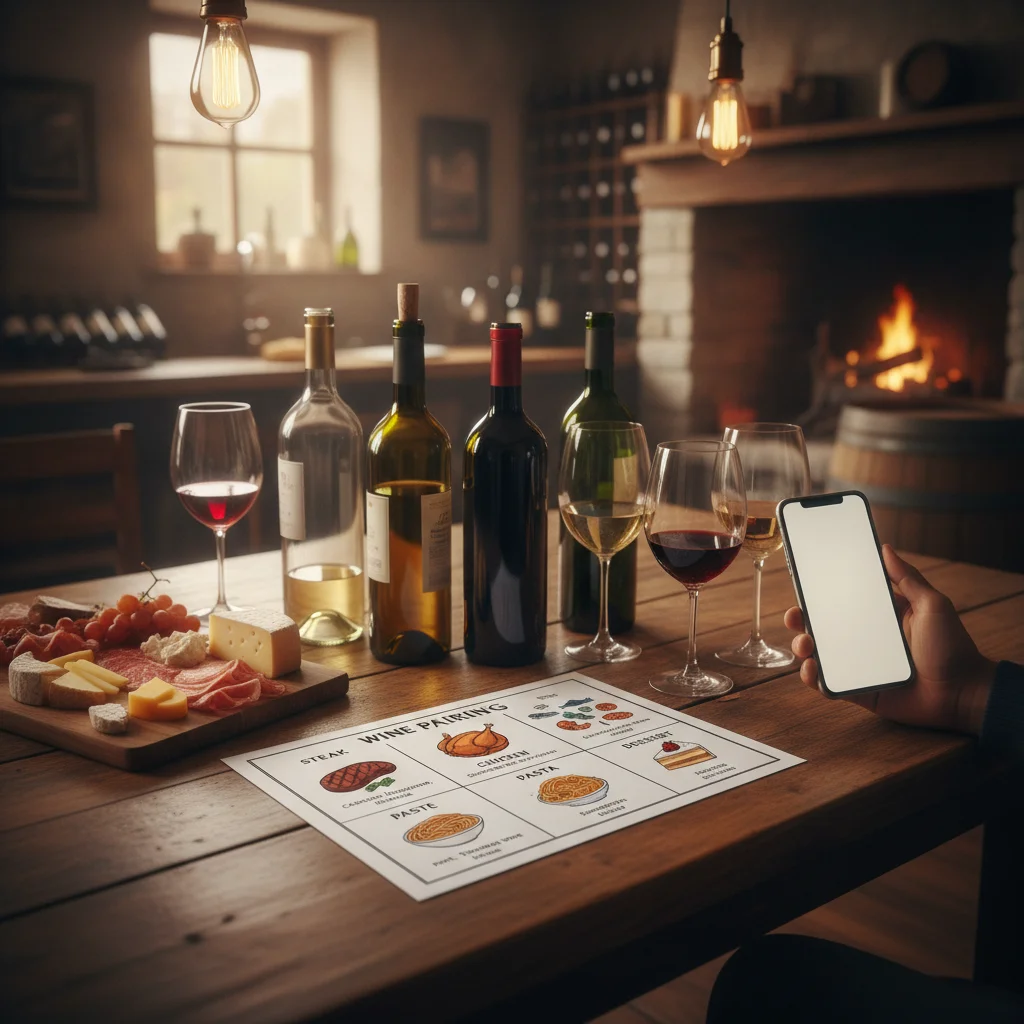
Definition: A wine pairing chart is a quick reference that matches wine styles or grape varieties with foods that have compatible flavors, textures and intensity.
Try the wine pairing chart app on iPhone to scan a label and save the bottle.
What Is a Wine Pairing Chart?
A wine pairing chart organizes reliable matches between common foods and wine styles. It is a starting point rather than a strict rule because sauces, seasoning, sweetness and preparation can change the best choice.
Wine Identifier App, also called DiVino, is an iPhone wine scanner, cellar tracker and pairing tool. You can scan the label of a bottle you already own, identify its style and compare it with the recommendations below instead of shopping for a specific label.
For the most consistent match, compare the intensity of the food and wine. A subtle fish dish can be overwhelmed by a powerful red, while a rich braise may make a delicate white seem thin.
Wine Pairing Chart by Meal
- Steak or roast beef: Cabernet Sauvignon, Malbec, Syrah or a structured red blend.
- Burgers: Zinfandel, Malbec, Merlot or fruity Syrah.
- Roast chicken: Chardonnay, Pinot Noir, Grenache or dry rosé.
- Pork chops: Pinot Noir, Chenin Blanc, Riesling or Grenache.
- Lamb: Syrah, Cabernet Sauvignon, Rioja-style Tempranillo or Bordeaux-style blends.
- Salmon: Pinot Noir, Chardonnay, dry rosé or sparkling wine.
- White fish: Sauvignon Blanc, Pinot Grigio, Albariño or unoaked Chardonnay.
- Shellfish: Muscadet-style whites, Albariño, Chablis-style Chardonnay or sparkling wine.
- Tomato pasta: Sangiovese, Barbera, Montepulciano or dry rosé.
- Creamy pasta: Chardonnay, Chenin Blanc or a light, high-acid red.
- Pizza: Sangiovese, Barbera, Lambrusco or medium-bodied red blends.
- Vegetable curry: off-dry Riesling, Gewürztraminer or fruity rosé.
- Mushroom dishes: Pinot Noir, Nebbiolo or earthy Chardonnay.
- Soft cheese: sparkling wine, Sauvignon Blanc or dry rosé.
- Chocolate dessert: ruby Port-style wine, Banyuls-style fortified wine or sweet red wine.
Pair Wine With the Sauce, Not Just the Protein
The same ingredient can call for very different wines depending on its sauce. Grilled chicken with lemon and herbs suits Sauvignon Blanc or a crisp Chardonnay. Chicken in a mushroom cream sauce can handle a richer Chardonnay or Pinot Noir. Spicy chicken may be better with off-dry Riesling.
- Tomato sauce: choose an acidic red such as Sangiovese or Barbera.
- Cream or butter sauce: choose a wine with enough acidity to refresh the palate, such as Chardonnay or Chenin Blanc.
- Herb and citrus sauce: try Sauvignon Blanc, Albariño or dry rosé.
- Smoky barbecue sauce: try Zinfandel, Malbec or fruit-forward Syrah.
- Sweet and spicy glaze: choose an aromatic, slightly sweet white rather than a highly tannic red.
Four Rules for Better Food and Wine Matches
- Match intensity: light dishes generally suit light-bodied wines, while slow-cooked or grilled meals can support fuller wines.
- Use acidity with fat: crisp wine can balance fried food, creamy sauces and fatty fish. Sparkling wine is especially useful with salty fried dishes.
- Limit tannin with heat: alcohol and tannin can make chile heat feel stronger. Fruity, lower-alcohol or slightly sweet wines are often easier with spicy food.
- Keep dessert sweeter: a dry wine may taste sour or bitter beside a sweet course. Select a wine that is at least as sweet as the dessert.
These rules also help when a bottle is unfamiliar. Identify its body, acidity, sweetness and tannin, then choose the closest style in the chart.
How to Pair a Bottle You Already Own
Start with the bottle rather than the recipe when you want to use wine from your rack or refrigerator. Scan the front label in DiVino on iPhone, check the identified grape or style, and note whether the wine is light, rich, dry, sweet or tannic.
- Identify the bottle and its main wine style.
- Choose a meal with similar flavor intensity.
- Check whether the sauce is acidic, creamy, spicy or sweet.
- Adjust the match using the four pairing rules.
- Save the bottle and your tasting notes so you can remember the result.
For a restaurant list, DiVino can also scan a wine menu and help you compare options with the food you plan to order.
Flexible Wines for Mixed Meals
When several dishes share the table, choose a versatile wine rather than trying to match every plate. Brut sparkling wine works with salty appetizers, fried food, seafood and many cheeses. Dry rosé can bridge salads, grilled vegetables, chicken and salmon.
High-acid whites such as Sauvignon Blanc, Albariño and dry Riesling suit many vegetable, seafood and herb-driven dishes. Light reds such as Pinot Noir or Gamay are useful when a meal includes poultry, mushrooms and mild meat dishes. Serving lighter reds slightly cool can make them feel fresher beside food.
Frequently asked
What wine pairs with most foods?
Brut sparkling wine, dry rosé and high-acid whites are flexible choices. They work particularly well with salty foods, appetizers, seafood, poultry and vegetables.
What is the best wine for steak?
Cabernet Sauvignon, Malbec and Syrah are classic choices because their body and tannin suit rich beef. A leaner steak may pair better with Merlot or a medium-bodied red.
Can red wine pair with fish?
Yes. A light, lower-tannin red such as Pinot Noir can pair with salmon, tuna, mushrooms or fish served with an earthy sauce.
Which wine goes with spicy food?
Try off-dry Riesling, Gewürztraminer or a fruity rosé. Slight sweetness and lower alcohol can soften the perception of chile heat.
What wine pairs with pasta?
Match the wine to the sauce: Sangiovese for tomato sauce, Chardonnay for creamy pasta and Sauvignon Blanc for herb or seafood pasta.
How do I pair wine with cheese?
Sparkling wine suits many cheeses, while Sauvignon Blanc works with tangy goat cheese and fortified sweet wine complements blue cheese. Match stronger cheeses with wines of similar intensity.
Can I scan my own bottle for pairing ideas?
Yes. DiVino on iPhone can scan a wine label, identify the bottle and help you review pairing information for wine you already own.
Scan labels and track your cellar
Use Wine Identifier App by DiVino on iPhone to identify bottles, save notes, and organize your cellar. Drink responsibly and follow local alcohol laws.
Get Wine Identifier App