
Best White Cooking Wine for Home Cooks


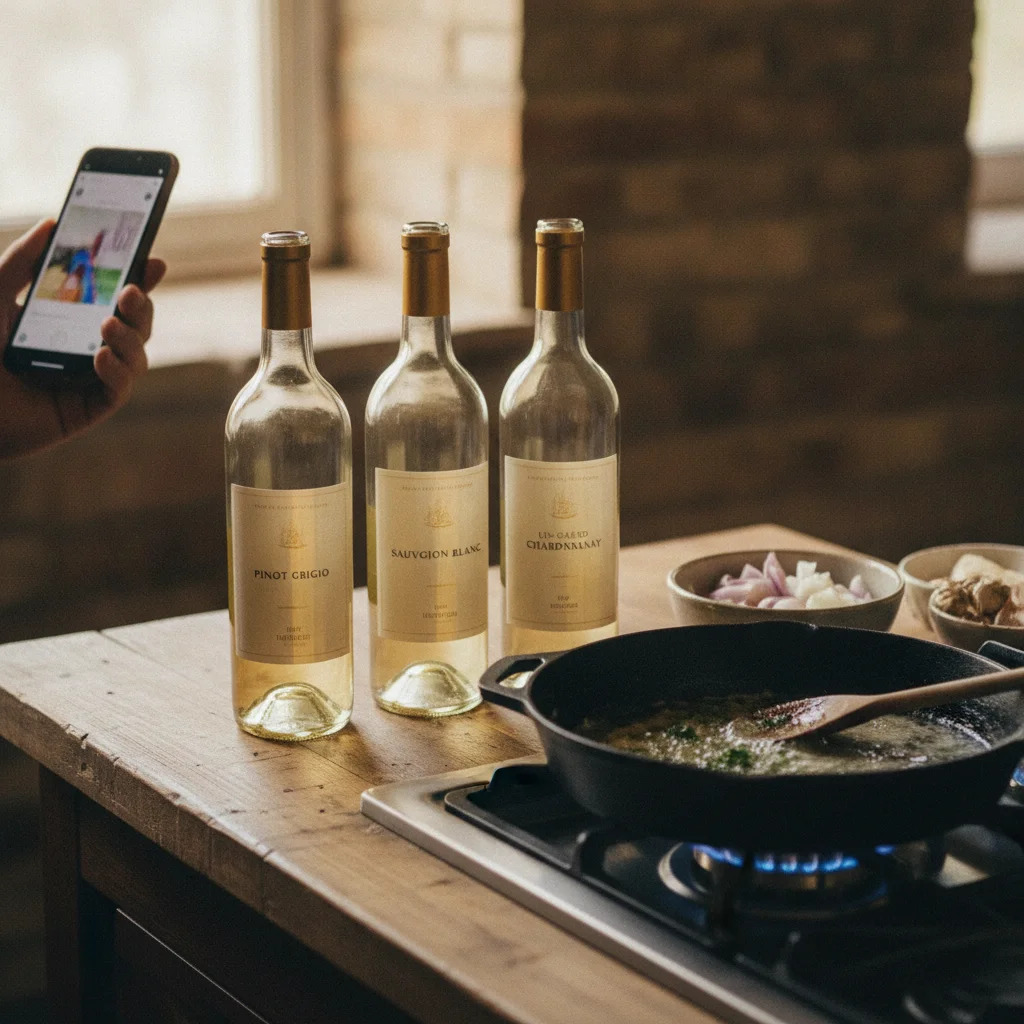
Definition: White cooking wine is white wine used to add acidity, aroma and depth to food. For most recipes, a dry table wine is preferable to a product labeled cooking wine, which may contain added salt.
Try the wine app on iPhone to scan a label and save the bottle.
What Is the Best White Cooking Wine?
The best white cooking wine is a dry, reasonably acidic white wine with little or no obvious oak. It should taste pleasant on its own, although it does not need to be expensive. Pinot Grigio is the most flexible all-purpose option, while Sauvignon Blanc, unoaked Chardonnay and dry vermouth suit particular recipes.
Avoid assuming that a bottle labeled cooking wine is automatically better for cooking. Many grocery-store cooking wines contain added salt and can make seasoning harder to control. A basic table wine generally gives you cleaner flavor and can also be served with the meal.
If an open bottle is already in your refrigerator, DiVino, also known as Wine Identifier App, can identify the label from an iPhone photo and provide information that helps you judge its likely grape, style and food pairing. Android users can use AI Lens for basic visual bottle search.
Best White Wine Styles for Cooking
Each white wine style contributes a different balance of acidity, fruit and body. These four choices cover most home recipes:
- Pinot Grigio: Light, dry and generally neutral. It is a dependable option for pan sauces, seafood, chicken, pasta and risotto.
- Sauvignon Blanc: Crisp and more aromatic, with citrus, herbal or grassy character. Use it for seafood, vegetables, goat cheese sauces and dishes that benefit from bright acidity.
- Unoaked Chardonnay: Fuller in body without the strong vanilla or toast character associated with oak. It fits cream sauces, mushrooms, chicken and buttery seafood.
- Dry vermouth: A fortified, aromatized wine that works well in small quantities for sauces, soups and deglazing. Its herbal character can be noticeable, so use it thoughtfully.
Dry Chenin Blanc and dry Riesling can also work. Check that the bottle is genuinely dry because sweeter examples may change the balance of a savory dish.
Which White Wine Matches Your Recipe?
Match the wine's body and flavor intensity to the food rather than using the same bottle for every recipe.
- Chicken: Choose Pinot Grigio for a light pan sauce or unoaked Chardonnay for a creamier preparation.
- Fish and shellfish: Pinot Grigio is subtle and versatile. Sauvignon Blanc brings more citrus-like acidity to mussels, clams and lean fish.
- Risotto: A dry Pinot Grigio or unoaked Chardonnay adds acidity without overwhelming the rice. Add it early enough for the sharp raw-wine aroma to soften.
- Cream sauces: Unoaked Chardonnay provides body, while Sauvignon Blanc creates a brighter and tangier result.
- Vegetables: Sauvignon Blanc complements green vegetables and herbs, although its grassy notes may become prominent as the liquid reduces.
- French-style pan sauces: Dry vermouth is useful when only a small amount of wine is required.
For tomato-heavy or deeply browned dishes, white wine can still deglaze the pan, but a red wine may better match the recipe's intensity.
How to Choose a Bottle at the Store
Look for the word dry or choose a grape and region commonly associated with dry table wine. You do not need a premium bottle, but the wine should be free from unpleasant oxidation, excessive sweetness or flavors you dislike.
- Check sweetness: Sweet wine can make savory sauces taste unbalanced unless the recipe specifically calls for it.
- Consider oak: Heavily oaked Chardonnay may introduce vanilla, toast or woody bitterness when reduced. Unoaked Chardonnay is safer for general cooking.
- Check salt: Products sold specifically as cooking wine may be salted. Adjust the recipe's seasoning if you use one.
- Buy a practical size: A smaller bottle or can may reduce waste if you rarely drink wine.
- Plan the pairing: Using a wine you would also serve with dinner makes it easier to finish the bottle.
Price is less important than dryness, freshness and compatibility with the dish.
How to Scan a Wine Already in Your Fridge
An unfamiliar open bottle may still be useful, but first identify what it is. With DiVino on iPhone, photograph the front label in good light and review the wine's identified grape, region, style and pairing information. Wine Identifier App can also help you save the bottle to a cellar list or add tasting notes for later reference.
Once identified, ask three practical questions:
- Is it dry? Dry wine is the safest choice for most savory recipes.
- Is it heavily oaked? Strong wood flavors can become more concentrated during reduction.
- Does it still smell fresh? Discard wine with unpleasant vinegar-like, stale or otherwise clearly spoiled aromas.
A scanner can identify a label and provide style context, but it cannot confirm the condition of an opened bottle. Smell and taste a small amount before adding it to food.
Cooking With White Wine Successfully
Add white wine when the recipe needs acidity, aromatic depth or liquid for deglazing. After sautéing meat or vegetables, remove excess fat, add the wine and scrape up the browned bits with a wooden spoon. Let the liquid reduce before adding stock, cream or butter.
Start with less wine than you think you need. You can add more, but correcting a sauce that tastes sharply alcoholic, overly acidic or too sweet is more difficult. Reduction concentrates the wine's flavors, including undesirable oak, sweetness or oxidation.
- Season after reducing: Salt and acidity become more concentrated as water evaporates.
- Do not rely on cooking to remove all alcohol: The amount remaining depends on cooking time, heat and preparation method.
- Use stock for an alcohol-free approach: Add a small amount of lemon juice or mild vinegar if the recipe also needs acidity.
- Store opened wine cold: Reseal it, refrigerate it and check its aroma and flavor before the next use.
For most kitchens, one dry, neutral bottle is more useful than a specialized product labeled cooking wine.
Frequently asked
What is the best all-purpose white wine for cooking?
Dry Pinot Grigio is a versatile choice because it is light, crisp and usually not strongly oaked. It works in chicken, seafood, pasta sauces and risotto.
Is Sauvignon Blanc good for cooking?
Yes, especially for seafood, vegetables and bright pan sauces. Its herbal and citrus character can intensify during reduction, so use it carefully.
Can I cook with Chardonnay?
Yes, but unoaked Chardonnay is usually the better option. Heavily oaked versions can add strong vanilla, toast or woody flavors to a reduced sauce.
Can I substitute dry vermouth for white wine?
Dry vermouth works well for deglazing, soups and pan sauces. Use slightly less at first because its herbal flavor can be more pronounced.
Should I buy wine labeled cooking wine?
A dry table wine is generally preferable because products labeled cooking wine may contain added salt. If you use salted cooking wine, reduce the recipe's other seasoning.
Can I use old opened white wine for cooking?
Use it only if it still smells and tastes acceptable. Wine with clearly stale, vinegar-like or otherwise spoiled aromas should be discarded.
How can I identify a white wine in my fridge?
iPhone users can scan the label with DiVino, the Wine Identifier App, to identify the bottle and review style information. Android users may use AI Lens for visual search.
What can I use instead of white wine in cooking?
Use chicken or vegetable stock, then add a small amount of lemon juice or mild vinegar for acidity. Adjust gradually to avoid making the dish too sour.
Scan labels and track your cellar
Use Wine Identifier App by DiVino on iPhone to identify bottles, save notes, and organize your cellar. Drink responsibly and follow local alcohol laws.
Get Wine Identifier App