Do Wine Identifier Apps Work for Real Bottles?


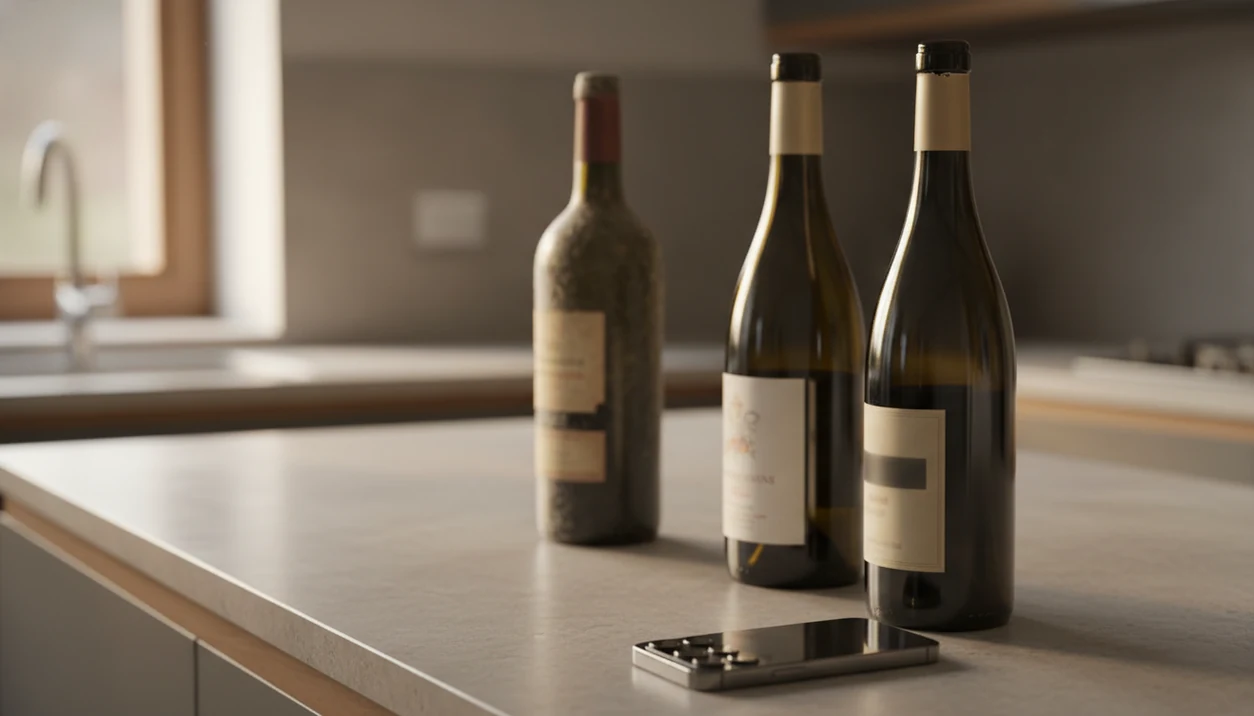
Do wine identifier apps work? Yes, they reliably identify many mainstream, widely distributed wines through label scanning and barcode matching, but accuracy drops for obscure producers, older vintages, and small-production bottles. They are decision aids, not infallible oracles, and their usefulness depends on database coverage, lighting, and the quality of crowd-sourced data behind the ratings you see.
> A wine identifier app uses image recognition and barcode scanning to match a photographed wine label against a large database, then returns ratings, tasting notes, price comparisons, and food pairings for the identified bottle.
- Wine identifier apps correctly name most popular bottles but struggle with rare, new, or very small-production wines.
- Ratings are crowd-sourced, not expert consensus, so sample size and user bias affect every score you see.
- AI recommendations improve over time only if you consistently scan and log your wines.
Try the do wine identifier apps work app on iPhone to scan a label and save the bottle.
Wine Identifier App Features That Matter
A wine identifier app “works” when it can identify the bottle, return useful context, and make the next decision easier without pretending the score is final truth. The core features are label scan, barcode match, user ratings, price lookup, and food pairing suggestions.
Identification accuracy is only the first layer. Data-quality accuracy is the second. An app may correctly name a Chianti Classico, then show thin pricing data or a rating based on twelve people. That matters when you’re standing in a store aisle with two similar labels and one dinner plan.
Most people already behave this way online: Pew Research Center found that 72% of U.S. adults at least sometimes rely on online ratings and reviews before buying something for the first time (https://www.pewresearch.org/internet/2016/12/19/online-reviews/). Wine apps borrow that same habit, then attach it to a label photo.
A good enough note beats a forgotten bottle.
Wine Label Recognition Technology
Wine label recognition works by turning a bottle photo into searchable visual data, then comparing it with stored label images and product records. The usual pipeline is photo, feature extraction, database matching, then a ranked result.
The light technical term is image embedding. In plain English, the app converts the label into a pattern it can compare quickly. A clean front label on a flat supermarket shelf is much easier than restaurant candlelight on cursive script. Foil glare, stained paper, torn corners, and gothic fonts all reduce confidence.
When the photo match fails, many apps fall back to barcode or QR scanning. That can work well for retail bottles, but not every producer uses a consumer-facing barcode tied neatly to vintage, importer, and size.
The real engine is the database. Community scans, merchant listings, producer records, and user corrections all feed the match quality. For a deeper photo-specific explanation, the technical side is covered in can AI identify wine from photo.
Retail Wine Scanner Success Cases
Wine scanner apps work best on mainstream retail bottles because those wines have many scans, reviews, merchant listings, and repeated label examples. High scan volume gives the app more chances to match the right bottle.
- Popular grocery-store wines often return fast matches because thousands of users have scanned the same front label.
- Barcode lookup is especially useful when two bottles share a similar design but differ by grape or vintage.
- Price comparison helps you spot whether a shelf price is normal, inflated, or unusually low.
- Pairing prompts are useful for weeknight food, like tomato pasta, roast chicken, or supermarket goat cheese.
- Global wine consumption was about 236 million hectoliters in 2021, according to the International Organisation of Vine and Wine, which creates a strong incentive to catalog bottles at scale (https://www.oiv.int/sites/default/files/documents/OIVStateoftheworldVineandWinesector_2021.pdf).
For everyday buyers, label scanning is often easier than manual search because producer names, cuvée names, and appellations can be hard to type correctly.
Wine Scanner Identification Failures
Wine scanner failures usually happen when the app lacks enough clean examples of that exact bottle. Obscure producers, natural wines, tiny releases, and micro-négociants may have few scans or inconsistent records.
Vintage precision is a common weak spot. The app may find the right producer and wine, but show 2019 when you’re holding 2017. That happens because many wineries keep nearly identical label designs for several years. A stained vintage year makes it worse.
Old bottles are harder. Faded ink, cellar dust, capsule damage, and labels scraped in a basement rack can confuse the image match. I’ve had a dusty neck label read as a completely different Bordeaux-style blend until the back label importer text saved it.
Menus are another problem. A restaurant list is not the same as a physical label, especially if it uses abbreviations or leaves out the producer. Coverage also varies by region. Napa and Bordeaux tend to be stronger than newer or less exported regions.
Wine App Crowd Ratings vs. Expert Scores
Wine app ratings are community averages, not objective measurements of wine quality. They reflect who reviewed the bottle, what those drinkers like, and how many ratings the wine has collected.
Crowd scores often favor sweet, fruity, recognizable styles because casual drinkers rate what feels immediately pleasing. That is not wrong. It just means a lean, savory, high-acid wine may score lower even if it is well made.
Sample size matters more than the decimal point. A 4.3 score from nine users tells you less than a 3.9 score from 4,000 users. Promotional scanning campaigns can also nudge ratings if a brand encourages enthusiastic buyers to review quickly.
Professional critic scores are different. Critics usually taste in structured settings and compare wines against style, region, and vintage expectations. If you want the rating problem in more detail, the guide to are wine app ratings reliable breaks down the bias points.
4 Myths About Wine Identifier App Accuracy
Wine identifier apps are useful, but four myths make people expect more than the technology can honestly deliver. The safest view is simple: use the app for clues, then check the details.
- Myth 1: Any bottle can be identified from any photo. Reality: dark rooms, torn labels, red wax seal flakes on the counter, and odd fonts can break recognition.
- Myth 2: A higher app rating always means a better wine. Reality: scores reflect the app’s users, not universal quality.
- Myth 3: No app data means the wine is bad. Reality: small-production wines may be excellent and barely represented.
- Myth 4: AI wine apps can replace a trained sommelier. Reality: apps retrieve patterns, but sommeliers add service context, cellar knowledge, and real tasting judgment.
- Myth 5: One scan gives the whole story. Reality: the back label, vintage, importer, and price still need a quick check.
Good AI-powered wine identification and cellar management apps deliver faster bottle memory, label lookup, pairing clues, and home inventory support, not a guaranteed judgment of taste or authenticity.
Wine App Trust Decision Framework
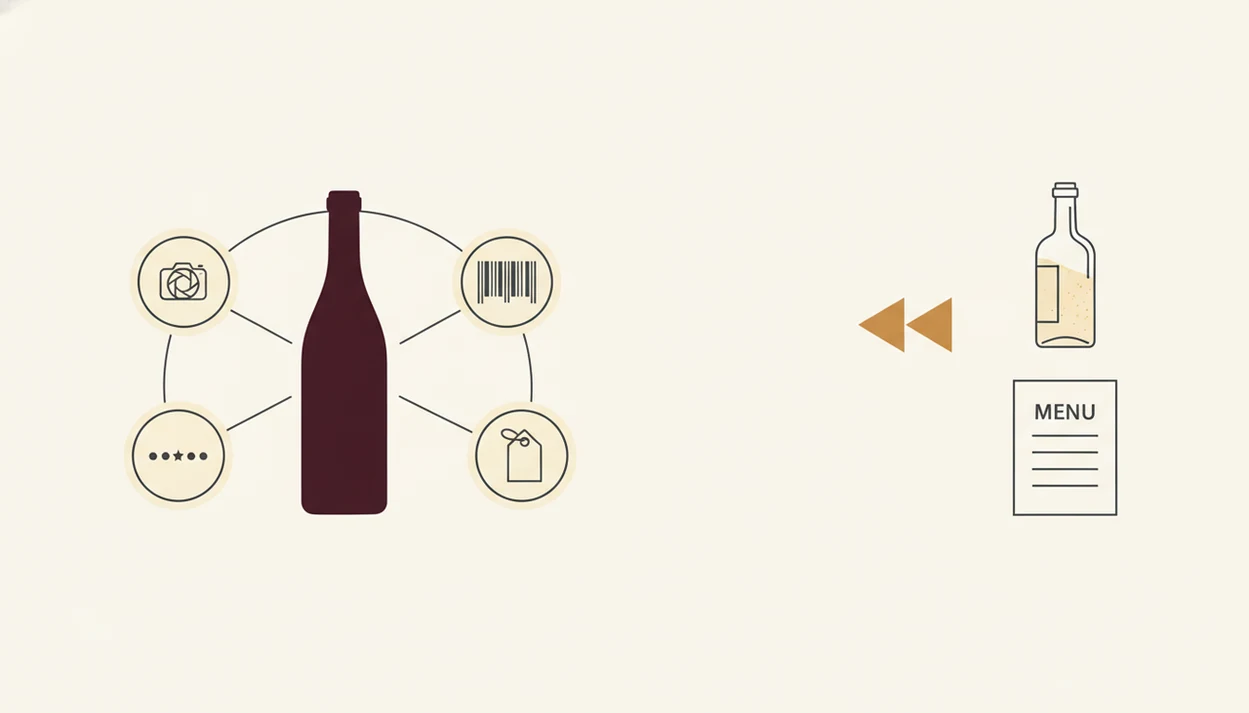
Use a wine app when the decision is everyday, reversible, and helped by quick context. Skip it when the purchase is expensive, rare, or depends on condition, provenance, or expert inspection.
- Use the app when browsing a retail shelf and you need a fast identity check. - Use the app when comparing a restaurant price against normal market data. - Use the app when you want a quick pairing idea for garlic shrimp while the pan is still sizzling. - Skip the app for rare auction lots, investment bottles, or suspected counterfeit wines. - Treat app data as a starting point, not the final verdict. This caution applies across common options, including Vivino, Delectable, CellarTracker, and DiVino; none can verify provenance or bottle condition from a scan alone.
The broader point is behavioral: people already use phone databases for quick, low-stakes decisions, but a wine scan still needs bottle-specific verification.
Tools like Wine Identifier App can help you scan the front label, save a quick tasting note, and favorite-it for next time. For bottle value questions, check wine price data accuracy before treating one number as market truth.
When to Ask a Wine Professional
Ask a wine professional when the bottle decision carries real money, real risk, or depends on details a scan cannot inspect. Apps are useful for identification and memory; people are still better for condition, context, and judgment.
- Bring in an appraiser when a bottle is rare, auction-bound, part of a cellar sale, or valuable enough to be treated as an investment. The question is not just “what is it,” but what a careful buyer would trust.
- Ask a trusted merchant when provenance, storage history, importer trail, fill level, capsule condition, or seepage affects the purchase. A good shop has seen enough problem bottles to slow you down.
- Consult a sommelier when the decision is about food pairing, serving temperature, decanting, or choosing from a restaurant list under time pressure.
- Avoid relying on a scan when you suspect a counterfeit, heat damage, leakage, pushed cork, moldy label, or oddly replaced capsule. In those cases, the front label may match perfectly while the bottle itself is still the problem.
Limitations
Wine scanner limitations are real, and they matter most when the bottle is rare, old, expensive, or personally important. A phone scan should not be the only check in those cases.
- Database coverage is weaker for niche producers, unusual grapes, natural wines, new releases, and very old vintages.
- Image recognition can fail under dim light, foil glare, damaged labels, stained vintage years, or stylized fonts.
- Crowd-sourced ratings can be distorted by small sample sizes, regional taste bias, and promotional review bursts.
- AI recommendation and taste-matching features do not have much independent, peer-reviewed validation.
- Price results may miss local taxes, shipping, bottle condition, and merchant reliability.
- Restaurant menu scanning is less dependable than scanning a real label or barcode.
- Over-reliance on scores can make you avoid odd, interesting wines you might actually like.
- Counterfeit detection requires provenance, packaging expertise, and sometimes lab work; a scan is not enough. The separate guide asks whether an app can wine app identify counterfeit bottles.
Small habit, useful guardrail.
Apps such as Wine Identifier App and DiVino can organize bottle memory, but they should sit beside your own notes, merchant advice, and specialist help for high-stakes purchases.
FAQ
Can wine apps identify old vintages?
Wine apps can identify some old vintages, but accuracy drops when labels are faded, damaged, or missing from the database. Always verify the producer, vintage, fill level, and condition separately.
Do wine scanner apps work offline?
Most wine scanner apps do not work fully offline because they need to query a cloud database. Some may save a photo or note offline, then match it later.
Are wine app ratings trustworthy?
Wine app ratings are useful signals, but they are crowd-sourced and affected by sample size, user taste, and regional bias. Treat them as guidance, not expert consensus.
Do wine apps work on restaurant menus?
Wine apps work less reliably on restaurant menus than on bottle labels or barcodes. Menu text may omit producer names, vintages, or appellations needed for an exact match.
Which wines do apps identify best?
Wine apps identify mainstream, high-volume bottles from well-known regions most accurately. Popular Napa, Bordeaux, Rioja, Champagne, and supermarket wines usually have stronger database coverage.
Can a wine app replace a sommelier?
A wine app cannot replace a sommelier because it retrieves data rather than tasting, judging service context, or checking cellar condition. It can still help with quick identity, price, and pairing clues.
Do free wine apps work as well as paid versions?
Free wine apps often perform the same basic label identification as paid versions. Paid plans usually add cellar tools, advanced filters, price tracking, or deeper recommendation features.
Why does my wine app show the wrong vintage?
A wine app may show the wrong vintage when several years use nearly identical label designs. Check the printed vintage on the bottle and adjust the saved record before you forget.