Can a Wine App Identify Counterfeit Bottles From a Label Scan?


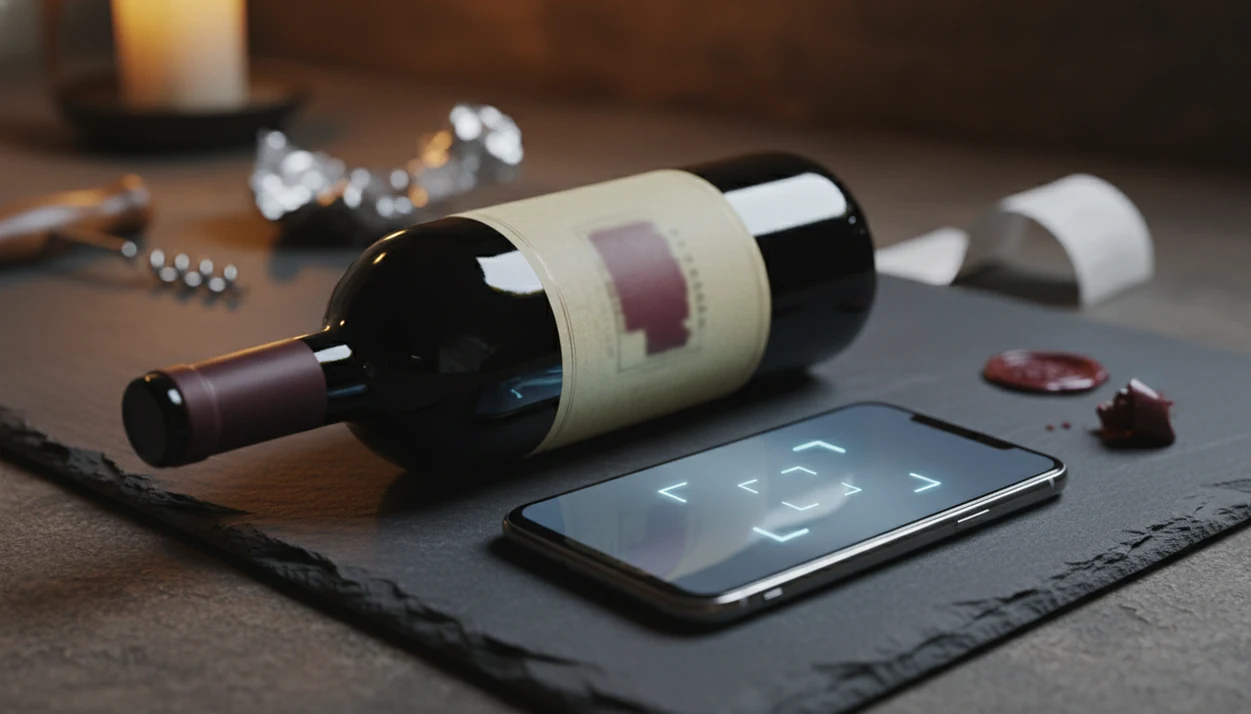
If you're asking "can wine app identify counterfeit bottles," the honest answer is no: a label scan can flag obvious label mismatches, but it cannot authenticate the cork, capsule, provenance, or liquid inside. Wine apps are useful for risk reduction, not proof of authenticity.
Wine authentication is the process of confirming that a bottle's label, closure, provenance, and liquid contents are genuine, requiring methods that go well beyond what any camera-based fake wine label scan can provide.
- Label-scanning wine apps identify wines by matching images to a database, this is recognition, not authentication.
- True counterfeit detection requires physical security features, such as NFC tags, holograms, microprinting, or lab-grade chemical analysis of the liquid.
- A wine authentication app can reduce risk by flagging red flags and logging provenance, but should never be treated as foolproof fraud protection.
Try the can wine app identify counterfeit bottles on iPhone to scan a label and save the bottle.
What a Wine Authentication App Actually Covers
A wine authentication app usually covers label recognition, product lookup, and record keeping; it does not prove that a bottle is genuine. Identification means the app compares a label photo with known label images and related wine data.
That scan may return the producer, vintage, region, grape clues, reviews, price ranges, and tasting notes. It can be genuinely useful when the back label is crowded with tiny print or the import sticker is half torn near the punt. Still, the app is recognizing a design pattern, not verifying the whole object in your hand.
Recognition is not authentication.
Technically, most wine label tools use image recognition against a database of known labels. If the label looks like a 2016 Barolo from a known producer, the app may identify that wine. But a copied label on a refilled bottle can still match the image. For label accuracy basics, the related question is whether do wine identifier apps work for normal bottle lookup.
Why Wine Counterfeiting Is a Billion-Dollar Problem
Wine counterfeiting matters because it affects money, trust, jobs, and sometimes safety. High-value bottles get the headlines, but fraud pressure can reach ordinary wines too, especially through gray-market resale and weak supply chains.
- A Europol–EUIPO study estimated counterfeit wines and spirits at about 2.3% of EU sector sales, equal to roughly €3.0 billion in lost annual revenue source.
- The same study estimated around 4,800 direct annual job losses in the legitimate EU wine and spirits sector.
- OECD and EUIPO reporting estimated counterfeit and pirated goods at up to 3.3% of world trade in 2016 source.
- Fine wine, rare vintages, and trophy bottles are primary targets because one fake bottle can be worth thousands.
- Everyday buyers are not immune; suspiciously cheap bottles, unclear import paths, and missing purchase records should slow you down.
A too-good price is a signal.
For most drinkers, the practical lesson is simple: use the app to check the label, then check the seller.
How Label Recognition Works
How label recognition works in a wine identifier app: the camera captures the label, the system extracts text and visual features, then it compares those signals with known wine records. The light technical terms are optical character recognition and image embeddings. In plain English, the app reads words and compares shapes.
First, the app looks for producer names, vintage years, appellations, and design elements. Then it matches those against a database of known wines, labels, vintages, regions, and sometimes community ratings. The result may include tasting notes, producer information, price ranges, grape clues, and food pairing ideas.
I use this most after dinner, when a bottle is on the kitchen counter at 10:40 p.m. and no one remembers the producer name. A quick scan saves the bottle memory before the label disappears into recycling.
But the scan cannot inspect the cork, capsule, fill level, glass weight, or sediment. It also cannot test the liquid. Use label-recognition tools for saved notes and wine lookup, not forensic proof.
Label Scan vs. Counterfeit Detection: The Gap a Fake Wine Label Scan Cannot Close
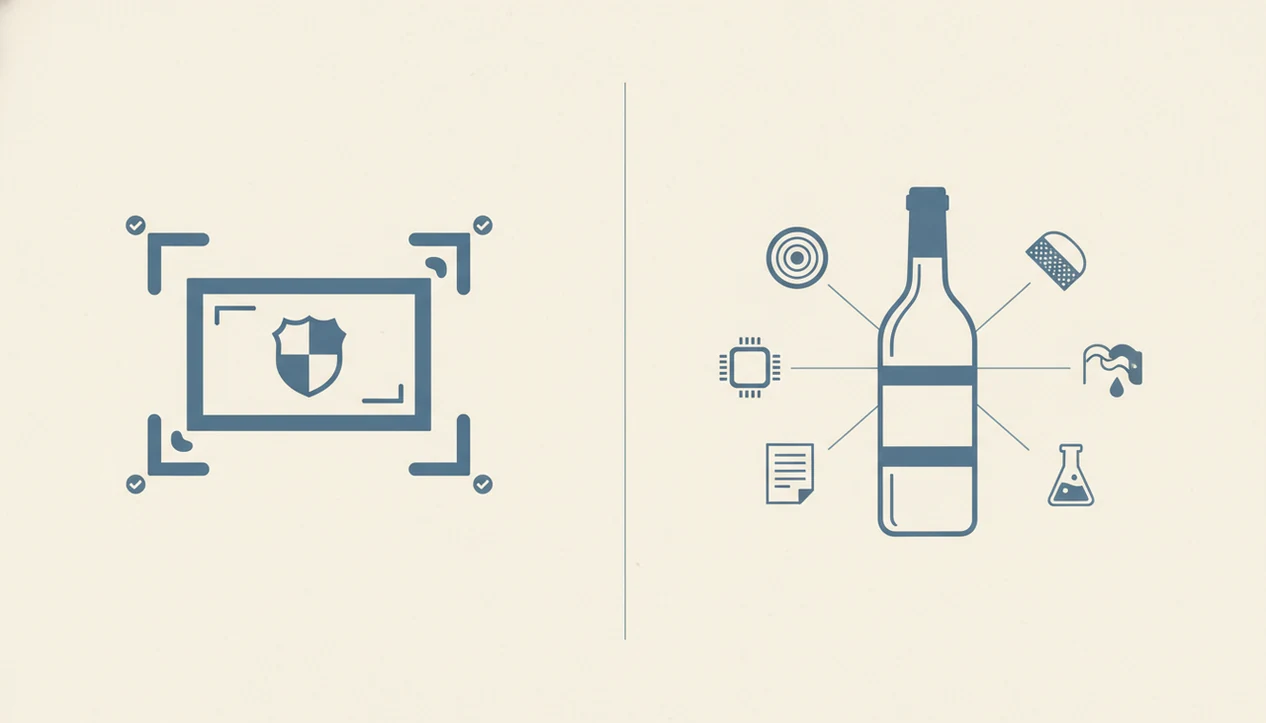
A fake wine label scan can reveal mismatches, but it cannot close the gap between visual recognition and full counterfeit detection. Counterfeiters can replicate labels, capsules, bottles, and even wear patterns well enough to fool a camera photo.
| Check type | What it can show | What it cannot prove |
|---|---|---|
| Label scan | Producer, vintage, region, label design match | Genuine cork, capsule, bottle history, or liquid |
| QR code | A web page or product record | Authenticity if the code was copied |
| NFC tag | Producer-issued digital identity when protected | Authenticity if the tag is generic or poorly secured |
| Physical inspection | Capsule, cork, glass, fill, label paper | Chemical identity of the wine |
| Lab testing | Origin or variety signals from the liquid | Full provenance chain without records |
Physical Security Features Apps Can Read
Apps can read producer-backed NFC tags, secured QR codes, serial numbers, and some visible markers. Good AI-powered wine identification and cellar management apps deliver label lookup, provenance notes, and security-feature prompts, not a courtroom-level authenticity verdict.
Lab-Grade Authentication Methods
Scientific methods such as spectroscopy and chemical profiling can classify wines by origin or grape variety with above 90% accuracy in some studies, but they require lab equipment, not a phone camera source.
Common Myths About Wine App Counterfeit Detection
Wine app counterfeit detection is often misunderstood because label recognition feels more certain than it is. The screen returns a confident wine match, and that can make a risky bottle feel safer than it deserves.
- Myth: a recognized label means the bottle is authentic. Reality: the app matched an image to a database, not the cork, glass, or liquid.
- Myth: AI image scanning can always spot fake wine from a photo. Reality: skilled counterfeiters can copy fonts, paper color, label spacing, and bottle shape.
- Myth: any QR code or NFC tag guarantees authenticity. Reality: ordinary QR codes can be copied, and NFC only helps when the producer controls and secures it.
- Myth: an app removes the need for provenance checks. Reality: receipts, merchant reputation, and storage history still matter.
- Myth: low-priced wine is never counterfeited. Reality: large-volume fraud can target ordinary bottles when margins add up.
For everyday use, a label scan is often better than guessing because it catches simple mismatches quickly. It is not a substitute for buying from a merchant you trust.
How Wine Apps Reduce Counterfeit Risk Without Overclaiming
A wine identifier app reduces counterfeit risk by helping you spot inconsistencies, save evidence, and compare the bottle with known records. It should not promise to certify the wine.
How to use a wine app to reduce counterfeit risk:
- Scan the front label and check the producer, vintage, appellation, and bottle format.
- Compare the back label for importer details, alcohol level, barcode, and spelling.
- Photograph the capsule, cork top, serial number, receipt, and any NFC or QR tag.
- Save the purchase source, date, price, and seller notes in the bottle record.
- Recheck unusual results before buying, especially for rare or expensive bottles.
The useful moments are small. A wrong vintage, missing region term, or label layout that differs from the producer record can make you pause before paying. A scanner can support this habit by combining label recognition, notes, and cellar records in one place.
For high-value bottles, provenance records are often more useful than a single scan because they show where the bottle came from and how long you have held it.
Provenance Tracking With Cellar Management for Long-Term Wine Authentication
Provenance tracking with cellar management builds a stronger authenticity record than one label scan. It records the bottle’s history, not just its appearance on one day.
Start with the purchase source, date, merchant name, receipt, bottle price, and shipping details. Add photos of the front label, back label, capsule, cork top, and any serial or tag at the time of purchase. If the vintage year is stained or the barcode is half-covered by your thumb, retake the photo before the bottle goes on the shelf.
Small cleanup later saves trouble.
A cellar record can also track storage location, temperature notes, movement between homes, and chain of custody. That matters for resale, insurance, and family collections. If you already keep a handwritten shelf map taped to the cellar door, the app version is just a cleaner memory trail.
Ongoing logging usually beats one-time scanning for collectible wine because provenance depends on history, storage, and ownership records.
When to Get Professional Wine Authentication
Get professional wine authentication before money, rarity, or missing history turns a label question into a real risk. A wine app can help you organize clues, but it should not be treated as a certificate.
Use a specialist before buying rare, trophy, old-vintage, or strangely discounted bottles, especially when the seller is new to you. Escalate faster if receipts are missing, provenance records have gaps, or the bottle has passed through unclear private channels. Physical inspection matters when the capsule looks re-crimped, the cork branding seems wrong, the fill level is low for the age, or the glass does not match known producer examples.
A practical escalation path looks like this:
- Pause the purchase when the price, story, or bottle condition feels off.
- Gather label photos, receipt copies, seller history, storage notes, and any tag or serial details.
- Ask a qualified merchant, auction house, or authentication specialist to review the record.
- Request hands-on inspection if the capsule, cork, fill, label paper, or glass raises concern.
- Reserve lab testing for high-value bottles where the cost makes sense.
Treat app results as screening notes for that conversation, not the final verdict.
Limitations
Wine app authentication has hard limits, and they matter most when the bottle is expensive. A phone camera can reduce uncertainty, but it cannot replace specialist inspection or a verified supply chain.
- A camera-based scan cannot verify the liquid inside the bottle.
- A scan cannot reliably detect refilled bottles if the label and glass look convincing.
- Standard QR codes can be cloned unless they are tied to producer-issued cryptographic systems.
- NFC or IoT tags only help when issued, secured, and maintained by the producer or trusted platform.
- Spectroscopy and chemical profiling require lab equipment, trained handling, and reference data.
- Many consumers do not know how to interpret microprinting, UV inks, capsule details, or fill levels.
- Counterfeiters keep improving label paper, capsule replication, bottle aging, and digital copying.
- No app can replace buying from reputable merchants with verified supply chains.
- Database gaps mean some wines, older labels, private imports, and small releases may not match.
For privacy-sensitive photos, especially receipts and home cellar shots, review wine app photo privacy before uploading records. If a bottle has serious value, use the app as your notebook, then ask a qualified wine authentication specialist.
FAQ
Can Vivino detect counterfeit wine?
Vivino can identify labels against its wine database. It does not authenticate bottle contents, corks, capsules, or provenance.
Does scanning a label prove authenticity?
No. Label recognition confirms a design match, not that the bottle, closure, or wine inside is genuine.
What is an NFC wine tag?
An NFC wine tag is a small producer-issued chip that a phone can read. When cryptographically protected, it can add a stronger digital identity layer.
Can AI detect fake wine labels?
AI can flag visual inconsistencies in labels. Skilled counterfeiters may still replicate labels accurately enough to avoid detection.
How do experts authenticate expensive wine?
Experts use physical inspection, provenance review, spectroscopy, chemical profiling, and comparison with known producer records. Lab methods are not standard phone features.
Is there a free wine scanner app?
Yes, free label-scanning apps exist. They identify wines, but free scanning is not the same as counterfeit verification.
Do QR codes on wine prevent counterfeiting?
Standard QR codes can be copied. Only protected codes tied to trusted producer systems add meaningful security.
How common is counterfeit wine?
A Europol–EUIPO study estimated counterfeit wines and spirits at about 2.3% of EU sector sales. High-value bottles carry the greatest risk.