How to remove a wine label from a bottle (and keep it in one piece)
To remove a wine label from a bottle, soak the bottle in hot tap water with a spoonful of baking soda or a squirt of dish soap, wait until the paper slides, peel slowly from one edge, then dry it flat under weight. Stubborn glue needs steam or gentle heat instead.


What you end up with
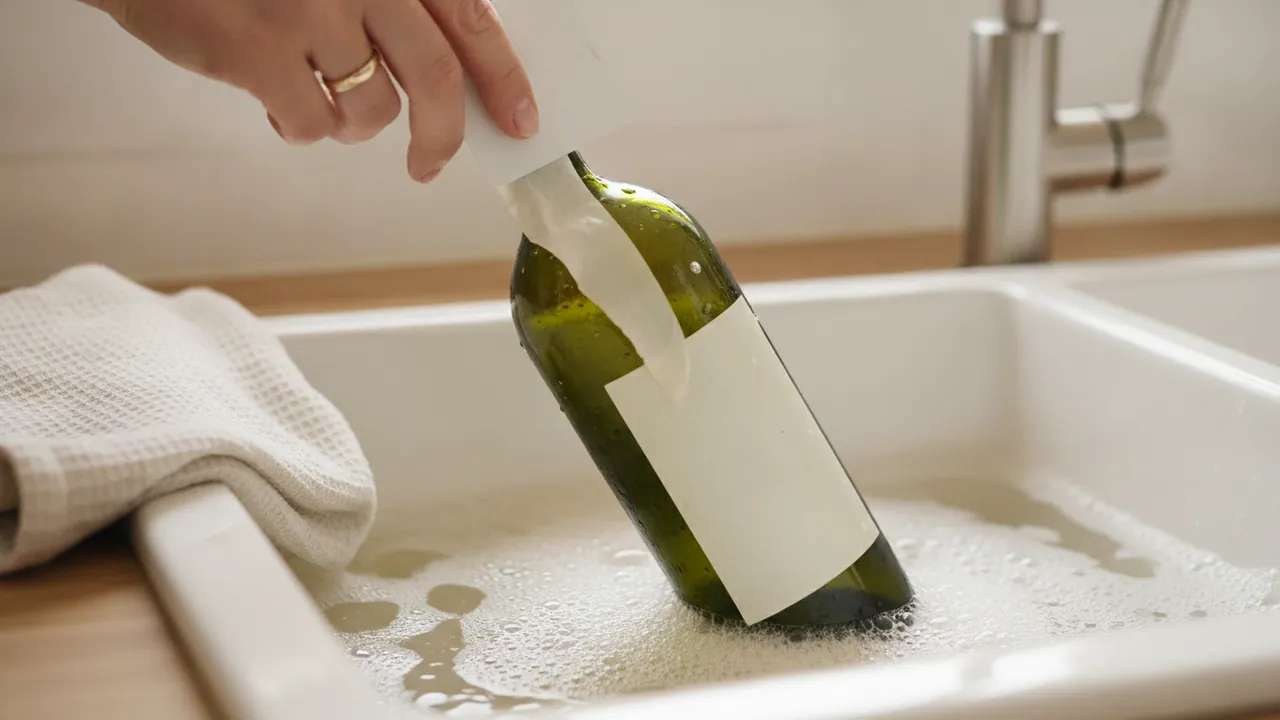
A clean, flat, uncreased label that you can tape into a journal, frame, or slip into a sleeve. That is the goal, and it is reachable most of the time. Paper labels on ordinary glue come off well. Foil, embossed and self-adhesive labels are fussier, and some will tear no matter what you do. Plan for that before you start (more on this at the end).
Steps for soaking a wine label off
Empty, rinse and drain the bottle first. You will need a sink or tub, hot tap water, baking soda or dish soap, a plastic card or butter knife with a dull edge, paper towels and something heavy and flat.
- Check the label before you start. Rub a corner with a dry finger; if the ink smears or the surface feels plasticky, it may be a self-adhesive label and needs the heat methods below.
- Scan the label first with your phone. If the label tears, you still have the producer, wine, vintage and details saved, and a photo is easier to file than a ruined scrap.
- Fill the bottle with hot tap water, not boiling. Hot water on one side and a cold bottle can crack glass, so warm it gradually if the bottle has been in a cool cellar.
- Fill a sink or tub with more hot tap water and stir in a spoonful or two of baking soda, or a squirt of dish soap. Both help the glue let go.
- Lay the bottle on its side so the label is fully submerged, and leave it. Thirty minutes to an hour is a normal range for water-based glue; stubborn ones may take longer.
- Test a corner with the plastic card. If it lifts without resistance, keep going; if it fights you, put the bottle back in the water for longer.
- Peel slowly, starting from the edge that lifts easiest, and keep the label as close to the glass as possible so it does not stretch. Slide the card under the paper as you go.
- Lay the label face up on a paper towel and blot it. Remove leftover glue from the back with a damp cloth, gently, since wet paper scuffs easily.
- Dry it flat, covered by a clean paper towel and weighed down by a heavy book. Change the towel after an hour or so if it is soaked.
Troubleshooting a label that will not budge
The label soaks but the paper shreds
You are peeling too fast or the paper is thin. Let it sit in the water longer, then slide the card underneath in short strokes instead of pulling. If it still fragments, lift it in pieces and reassemble on a sheet of paper once dry; a photo you took earlier fills the gaps.
The glue does not soak at all
Many modern labels use glue that water barely touches. Try steam: hold the label in the steam from a kettle (keep hands well clear) or fill the bottle with hot tap water and wipe the label with a hot damp cloth. Safety note: hot water, steam and heat can crack glass, so do not pour boiling water into a cold bottle.
Steam is not enough
Warm the glue with a hair dryer on a medium setting, moving it back and forth over the label for a minute or two, then try the card at a corner. For a very stubborn label, some people use an oven on low heat with the empty bottle; only do that with the bottle starting at room temperature, heat it gradually, and wear oven gloves. Glass can crack with fast temperature swings.
The label is self-adhesive or plastic-coated
These stretch and curl instead of letting go. Heat plus patience is the best bet, but the result may be thin and wrinkled. This is where clear adhesive label lifting sheets, sold for collectors, are worth buying: you press the sheet over the label, rub it down, and peel the label and sheet off together.
The label curls as it dries
Dry it between two sheets of paper under a heavy book and leave it for a day. If it is still wavy, repeat with fresh paper.
Sticky residue stays on the bottle or the label
On glass, rub with dish soap and a sponge. On the paper, leave a thin residue alone and resist scrubbing; a sheet of baking paper between the label and your book keeps it from sticking.
Ink runs or foil flakes
Metallic foil and some inks bleed in water. Switch to dry heat and the lifting sheet, and lift the label while it is only slightly warm.
Why scan the label before it comes off
A torn label is a lost record. A scan keeps the details even when the paper does not survive. DiVino, the wine label scanner app we write about, reads producer, wine, vintage and key details from a photo, and you can keep it with your notes in the cellar and journal. A good label photo is easy when the bottle is sitting on a table in even light.
You can download the wine label scanner from the App Store on iPhone or iPad. For Android, the wine scanner is on Google Play. A clear, well-lit photo matters, and you should check the year on the bottle yourself because similar labels can have vintages misread. A scan will not prove the bottle is genuine, either.
If you are not sure how to read a wine label, the scan result gives you a starting point to compare against the paper in your hand.
Planning the label size and the surface
Labels vary, and the wine bottle label size on a Bordeaux bottle is not the same as on a Burgundy or a Champagne bottle, so check how large your tub and your book are before you start. Wide wraparound labels need a bigger soak and a longer dry, and a label that wraps a curve may stay curved a bit.
What to do once the label is off
Dry it for a day, then decide how to keep it. Tape it into a notebook with acid-free tape, slide it into a clear sleeve, or press it flat in a binder with a short note: date, who you shared it with, how it tasted. A wine label collector usually keeps them in an album or box, filed by region or by year, away from sunlight and damp.
Write the date and place on the back in pencil. Keep a scanned copy in the app next to your notes. If you like labels that move, the living wine labels app idea is a separate topic: some brands print augmented reality labels that animate on a phone, which is a reason to photograph those and leave them on the glass.
Frequently asked questions
How much is a 50 year old bottle of wine worth?
It depends entirely on the producer, vintage and condition, ranging from a few dozen dollars to many thousands. Age alone does not make a wine valuable, and a bottle with a low fill level or a damaged label is usually worth less.
Does removing the label lower a wine bottle's value?
Yes, for most bottles. Collectors and buyers expect an intact original label, so remove labels only from empty bottles you plan to keep as souvenirs, never from wine you intend to store or resell.
How long does it take to soak a wine label off a bottle?
Water-based glue often releases within about an hour in hot water with baking soda or dish soap. Stubborn glue may need steam, a hair dryer or a longer soak.
Can you remove a wine label without damaging it?
Yes, often, if the glue is water-based and you peel slowly with a dull plastic card. Self-adhesive and foil labels may tear, so photograph the label before you start.
What is the best way to get a wine label off if soaking does not work?
Apply gentle heat from a hair dryer or steam to soften the glue, then lift a corner with a plastic card. A clear adhesive lifting sheet made for collectors is the safest option for stubborn labels.
Is it safe to put a wine bottle in the oven to remove a label?
It carries risk, because glass can crack with sudden temperature changes. If you try it, use low heat, start with a room-temperature empty bottle, and wear oven gloves.