Wine Label Scanner Myths: What AI Can and Cannot Tell You About Taste, Value, and Authenticity


Most wine label scanner myths stem from the assumption that a photo of a label can reliably judge taste, confirm authenticity, or fix a market price. In reality, scanner apps excel at identifying a bottle and matching it to a database, but they cannot replace your palate, verify provenance, or guarantee value on their own.
This guide is for consumer education, not professional appraisal, authentication, legal, or investment advice. For rare, expensive, insured, or disputed bottles, use a qualified wine appraiser, auction house, producer, or provenance specialist.
Definition: Wine label scanner myths are the common misconceptions that a single label photo can predict personal taste, prove a bottle is genuine, or determine its exact market value, when scanners actually identify text and match bottles to databases, not act as sommeliers or forensic authenticators.
TL;DR
- Label scanning identifies bottles; it does not judge quality or predict whether you will enjoy a wine.
- No basic scan can authenticate a bottle; counterfeit detection requires provenance data and security features beyond the front label.
- AI wine app recommendations improve over time with your flavor feedback, not from label images alone.
Try the wine label scanner myths app on iPhone to scan a label and save the bottle.
What Wine Label Scanner Myths Actually Claim
Wine label scanner myths usually make four claims: a scan can predict taste, prove authenticity, set a fixed value, and instantly match your personal preferences. Those claims confuse identification with judgment.
A scanner can often read producer, vintage, region, and sometimes grape variety. It may also infer likely style from database records. That is useful, especially when the label is in tiny type under restaurant lighting and nobody wants to spell the appellation out loud.
But useful is not magic.
These myths persist because app language sometimes sounds smarter than the task itself. Users also bring fair expectations. If a phone can recognize a face or translate a sign, it feels reasonable to ask whether it can say, “You’ll like this Cabernet.” It can’t know that from the front label alone. For a broader accuracy breakdown, the related question is whether are wine scanner apps accurate for the specific job you expect.
How OCR Wine Label Scanning Technology Works
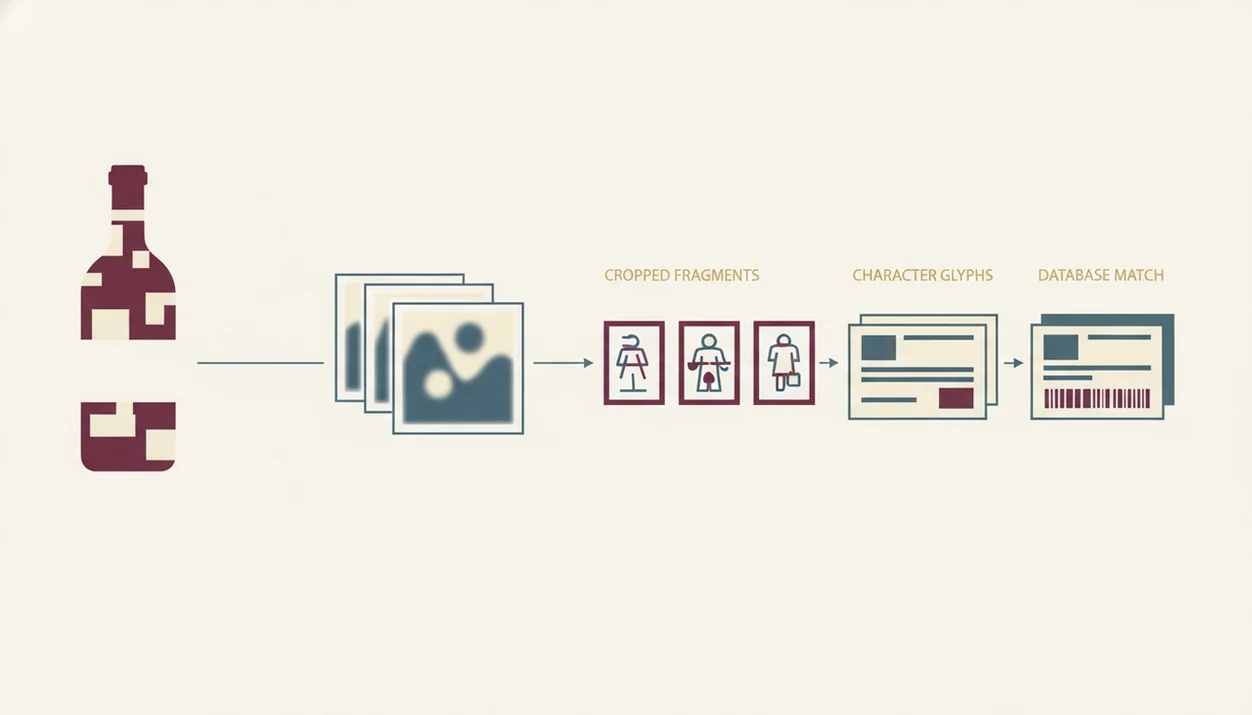
How does OCR wine label scanning technology work? It uses optical character recognition, often called OCR, plus image recognition to pull visible information from a bottle photo. The app looks for text, label shapes, producer marks, vintage year, region names, and other visual clues.
Then it compares those signals with a wine database. If the match is strong, the app can return bottle details, average prices, reviews, grape clues, and pairing suggestions. If the thumb covers the vintage year during a barcode scan beside grocery shelves, the result may be weaker or need manual correction.
Wine AI research also shows why labels are only one input. The WineSensed study presented at NeurIPS in 2023 studied relationships among visual perception, language, and flavor, not label text alone source. Good ai-powered wine identification and cellar management apps deliver faster recognition and better records, not instant truth about taste, provenance, or resale value.
Myth: A Wine Scanner Can Tell You If a Wine Is Good
Can a wine scanner tell you if a wine is good? It can show ratings, reviews, and tasting notes, but it cannot make a reliable personal quality verdict from the label alone.
Taste depends on the drinker. One person wants ripe black fruit and oak; another wants bright acidity with leftover roast chicken. A high score may describe a wine many people admire, not the wine you want with Tuesday tomato pasta.
Researchers from DTU, the University of Copenhagen, and Caltech reported in 2024 that adding people’s flavor impressions improved preference prediction compared with using only wine label images and text source. That matters because flavor words carry information the label cannot.
Tools like Wine Identifier App provide identification plus crowd and critic data, not a personal quality guarantee. For casual drinkers, a saved rating plus a quick tasting note is often more useful than a global score because it records what your own palate did last time.
Myth: AI Wine Apps Predict Your Personal Taste Instantly
Can AI wine apps predict your personal taste instantly? No. First scans usually return generic bottle data, not a true preference model built around you.
Preference models need repeated feedback. Ratings, likes, dislikes, quick tasting notes, and “buy again” saves all teach the system more than the front label can. A first scan of a Rioja might know region and vintage. It does not know whether you dislike coconut-like oak or love dried cherry.
Label data and reviews also miss aroma, texture, serving temperature, glass condition, and storage history. The empty glass beside a tasting flight card tells you more about your actual reaction than the clean label image does.
Wine Identifier App learns as users log and rate bottles in their cellar. The first result is a starting point. The useful pattern appears after several honest notes, even if they sound simple: “too smoky,” “great with pizza,” or “favorite-it for next time.”
Myth: A Successful Wine Label Scan Proves Bottle Authenticity
Does a successful wine label scan prove bottle authenticity? No. Label recognition means the app matched visible text or imagery to a known record; it does not verify provenance, custody, or the physical bottle.
A counterfeit label can copy a real producer name and still match a database entry. More serious authentication may involve font deviation analysis, micro-texture inspection, ink irregularity checks, serial numbers, capsule details, NFC tags, or blockchain provenance. Those signals sit beyond an ordinary front-label scan. For high-value bottles, treat label recognition as a lead only; FBI wine-fraud case files show that authentication disputes rely on provenance, expert inspection, sales records, and custody history, not image matching alone: https://www.fbi.gov/news/stories/a-case-of-wine-fraud.
The gap matters most with rare, expensive, or old bottles. A stained vintage year on a cellar bottle can still scan correctly, but that does not prove where the bottle has been since release.
Treat a successful scan as identification, not a certificate. If the question is specifically whether can wine app identify counterfeit bottles, the short answer is that basic recognition and authentication are different jobs.
When to Seek a Wine Appraiser or Authenticator
Seek a wine appraiser or authenticator when the bottle is rare, old, insured, disputed, or valuable enough that a wrong answer would matter. A scan can help name the wine, but it should not be the basis for selling, insuring, or settling an authenticity question.
For cellar finds, estate bottles, auction candidates, and producer names that attract counterfeits, slow the process down. The goal is not just “what is this?” but “can the bottle’s history and condition support the claim?”
- Gather provenance such as original receipts, allocation emails, importer stickers, auction invoices, storage records, and any chain-of-custody notes.
- Photograph condition including label, capsule, cork area, fill level, back label, serial marks, and packaging.
- Contact the right authority such as the producer, official importer, reputable auction house, or certified wine appraiser.
- Avoid relying on the scan before listing the bottle for sale, adding it to insurance, or representing it as authentic.
- Keep app results as notes for identification and organization, not as authentication documents.
That distinction protects both the owner and the next buyer.
Myth: Scanner Prices Equal Exact Wine Market Value
Scanner prices are reference estimates, not exact wine market values. They usually come from merchant listings, historical averages, regional data, or database partners.
If a scanner shows a price, treat it as a snapshot of available market data. Wine-Searcher describes its market prices as aggregated merchant offers, not appraisals of a specific bottle’s condition, provenance, or resale value: https://www.wine-searcher.com/help/market-price.
A bottle’s value changes with vintage reputation, fill level, cork condition, label damage, storage history, and buyer location. Retail price, restaurant list price, and auction hammer price can all describe the same wine in different markets. That steak order beside bold red options may show a restaurant markup, not what the bottle is worth at home.
Wine Identifier App presents pricing as a reference range, not a guarantee. That framing matters when you find a duplicate Cabernet behind Syrah in the wine fridge and wonder whether it is a weeknight bottle or something to hold.
For home users, scanner pricing is best used as a rough orientation because it helps separate everyday bottles from bottles that deserve a closer condition and market check.
When Wine Scanners Fail on Faded, Damaged, and Curved Labels
Wine scanners fail most often when the photo does not give the software clean text, clean shapes, or enough database clues. The problem is usually not the user; it is the image.
- Faded labels reduce OCR accuracy. Pale ink, cellar staining, and torn paper make producer and vintage text harder to read.
- Curved glass distorts recognition. A Burgundy-shaped bottle can bend words near the edge of the frame.
- Glare hides key fields. Foil glare or a shiny cream back label can wash out importer text.
- Counterfeit labels may still match. A copied design can resemble a valid database record without proving the bottle is real.
- Fallbacks matter. Manual entry, back-label scanning, or searching by producer and vintage can rescue many misses.
Tap, check, adjust. If the first scan fails, take a flatter photo, include the full label, and remove your thumb from the year. For technical background, it helps to ask can AI identify wine from photo under imperfect conditions.
What a Wine Label Scanner Can Reliably Do
A wine label scanner can reliably help identify, organize, and remember bottles when the label is readable and the database has coverage. It is a starting point for learning, not the final verdict on quality or value.
- Identify the bottle. A clear front label can return producer, region, vintage, and sometimes grape variety.
- Explain the basics. Database records can surface plain-English grape and region clues, useful when the label assumes you already know the map.
- Summarize public opinion. Aggregated ratings and tasting notes can show broad patterns, though are wine app ratings reliable depends on sample size and reviewer mix.
- Suggest pairings. A scanner can connect the bottle to food cues, like supermarket goat cheese or spicy curry steam over rice bowls.
- Create a bottle memory. Saved photos, ratings, and notes keep six similar bottle shots from disappearing between dog pictures, receipts, and a blurry restaurant menu.
How to use wine label scanner results well:
- Scan the front label in bright, even light.
- Check the match for producer, vintage, and region before saving.
- Add a quick tasting note in your own words.
- Save the context such as meal, price, or occasion.
- Review repeats before buying the same bottle again.
Evidence Behind Wine Scanner Limits
The evidence is strongest for identification limits and weakest for broad claims about instant taste prediction or authentication. A scanner can read and match visible label data, but the proof gets thinner when the question moves from “what bottle is this?” to “is it genuine, valuable, and right for me?”
Poor light, glare, curved glass, stained paper, and hidden vintages all reduce OCR and image-recognition confidence because the software has less clean text and fewer stable visual clues. Taste research already cited in this guide points the same way: preference prediction improves when systems include people’s flavor impressions, not just label images and text. Authentication evidence also favors provenance over pictures. As the FBI wine-fraud example above shows, serious disputes turn on custody history, records, expert inspection, and physical details that a normal scan cannot see.
Use the evidence in this order:
- Trust identification most when the photo is clear and the database match is specific.
- Treat taste outputs as suggestions until your own notes train the recommendation model.
- Escalate authenticity questions to provenance records, producers, auction houses, or appraisers.
- Read prices as market references because databases aggregate listings, while appraisals judge the actual bottle’s condition, history, and sale context.
Limitations
Wine scanner limitations are not small print. They are the difference between a helpful phone habit and misplaced confidence.
- A scanner cannot reliably judge taste quality from appearance alone, because taste is subjective.
- Basic scanning does not prove authenticity; counterfeit detection needs security features, provenance, or supply-chain evidence.
- Results weaken on old, damaged, curved, glossy, or poorly lit labels.
- Price outputs are estimates, not guarantees, because market conditions and vintage variation matter.
- AI recommendations remain data-limited; labels and reviews do not capture aroma, texture, storage condition, or provenance.
- Database gaps mean some small-production, regional, or older wines may return no result.
- Similar labels can create wrong matches, especially when the vintage or cuvée name is hidden.
I see this most after dinner, around 10:40 p.m., when plates are still out and someone says, “I liked the red one from dinner, but I have no idea what it was.” The scan helps. The saved note helps more. If label photos raise storage or privacy questions, read the wine app photo privacy guide before uploading sensitive images.
FAQ
Can a wine scanner tell if wine tastes good?
A wine scanner can show reviews, ratings, and tasting notes from other people. It cannot guarantee that you personally will enjoy the wine.
Do wine apps detect counterfeit bottles?
Basic wine apps identify label text and imagery, not forgery. Counterfeit detection requires extra verification such as provenance records, security features, or expert inspection.
Are wine scanner prices accurate?
Wine scanner prices are usually aggregated estimates from merchant or market data. They should be treated as reference ranges, not fixed appraisals.
Why won't my wine label scan?
A label may fail to scan because it is faded, damaged, curved, glossy, poorly lit, or missing from the database. Try a flatter photo, better light, or manual search.
How does AI learn my wine preferences?
AI learns wine preferences through repeated ratings, tasting notes, saved favorites, and dislikes. Wine Identifier App uses logged bottle feedback to improve future suggestions over time.
Is a high scanner rating a quality guarantee?
No. A high scanner rating reflects aggregated crowd or critic opinion, not certainty that the wine matches your palate.
Can scanners identify old or rare wines?
Scanners can identify some old or rare wines if the label is readable and the database includes the bottle. Aged labels and limited-production wines create more misses.
What data does a wine scanner actually read?
A wine scanner reads visible label data such as producer, region, vintage, variety, cuvée name, and other label text. DiVino may then match that data to bottle records, notes, pairings, and cellar fields.