Wine Menu Scanner vs Sommelier: When To Use Each


A wine menu scanner is best when you want fast, data-driven picks filtered by taste and budget, while a sommelier wins when you need real-time hospitality, cellar-specific knowledge, and social context. In most restaurant situations, the wine menu scanner vs sommelier choice is not either-or; using both together produces the strongest outcome. Wine Identifier App, from DiVino, helps with the scanner side by reading wine lists, saving bottle memory, and turning one dinner choice into better future recommendations.
Definition: A wine menu scanner is an app that uses AI to read a restaurant wine list and suggest personalized bottles, while a sommelier is a trained wine professional who recommends wines through conversation, experience, and in-person service.
TL;DR
- Use a wine menu scanner for instant, budget-filtered picks and building a personal taste profile across restaurants.
- Use a sommelier for nuanced pairing advice, social reads, and service details like decanting or temperature.
- Combining both tools reduces decision anxiety and produces more confident wine choices.
Try the wine menu scanner vs sommelier app on iPhone to scan a label and save the bottle.
Wine Menu Scanner vs Sommelier: At-a-Glance Comparison Table
The fastest way to compare AI sommelier vs human help is to separate data tasks from hospitality tasks. A scanner handles list analysis quickly; a sommelier handles the room, the cellar, and the service.
| Factor | Wine menu scanner | Sommelier |
|---|---|---|
| Speed | Instant scan and shortlist | Conversation takes longer |
| Personalization | Learns from ratings and saved bottles | Learns through questions |
| Cost | Usually app-based | Built into restaurant service |
| Availability | Any restaurant with a readable list | Only where staffed |
| Knowledge depth | Broad database coverage | Deep cellar-specific knowledge |
| Hospitality | None | Strong |
| Social context reading | Limited | Strong |
| Cellar-specific expertise | Database-dependent | Direct knowledge of stock |
| Taste memory across visits | Strong if you log choices | Depends on repeat visits |
| Database limitations | Can miss rare wines | Can know off-list bottles |
With more than 11,000 U.S. wineries, according to WineAmerica's 2022 economic impact study source, wine lists are fragmented enough that both tools matter. About 30% of U.S. consumers are interested in AI help for food and beverage choices, according to Pew Research Center source.
Where a Wine Menu Scanner Wins Over a Sommelier
A wine menu scanner wins when you need private, fast restaurant wine help before the server comes back. It is especially useful when the list is long, the table is busy, or you only have two minutes with the laminated wine list beside the bread basket.
- Instant list analysis: Wine Identifier App can scan the front of a menu or bottle reference, then filter by budget, grape, region, and food match.
- Preference pattern recognition: Saved scans and ratings show whether you keep liking Rioja, Oregon Pinot Noir, or crisp Loire whites across restaurants.
- Personal taste memory: The scanner remembers the bottle from last month when you only remember, “I liked the red one from dinner, but I have no idea what it was.”
- Discreet decision support: Solo diners, business travelers, and casual tables can check options without turning wine into a performance.
- Universal access: A scanner works at restaurants that do not employ a sommelier.
After a steak order beside bold red options, when you need a quick shortlist, Wine Identifier App fits because it keeps budget, taste history, and pairing notes in one scan-and-save workflow.
Where a Sommelier Wins Over a Wine Menu Scanner
A sommelier wins when the choice depends on people, timing, and the exact bottles in the restaurant that night. Apps can compare data, but they cannot read a table the way a skilled person can.
That human advantage is strongest when the restaurant has an active wine program: current stock, staff tasting notes, storage conditions, and kitchen changes can all affect the right recommendation that night.
- Social intelligence: A sommelier can sense date-night pacing, business dinner formality, or a group that needs one safe bottle and one adventurous one.
- Cellar knowledge: Human staff know what arrived recently, what is nearly sold out, and which current vintage is drinking better than expected.
- Service control: Decanting, temperature, glass selection, and pour timing are physical details a scanner cannot handle.
- Rare bottle awareness: Small-production wines, new releases, and off-list bottles may not appear in any database yet.
- Budget respect: Sommeliers are not only for expensive restaurants; many work in relaxed places and are trained to recommend within a stated range.
For special meals, a sommelier is often better than a scanner because the recommendation includes service, atmosphere, and the restaurant’s live cellar condition.
How AI Wine Menu Scanning Works Behind the Scenes
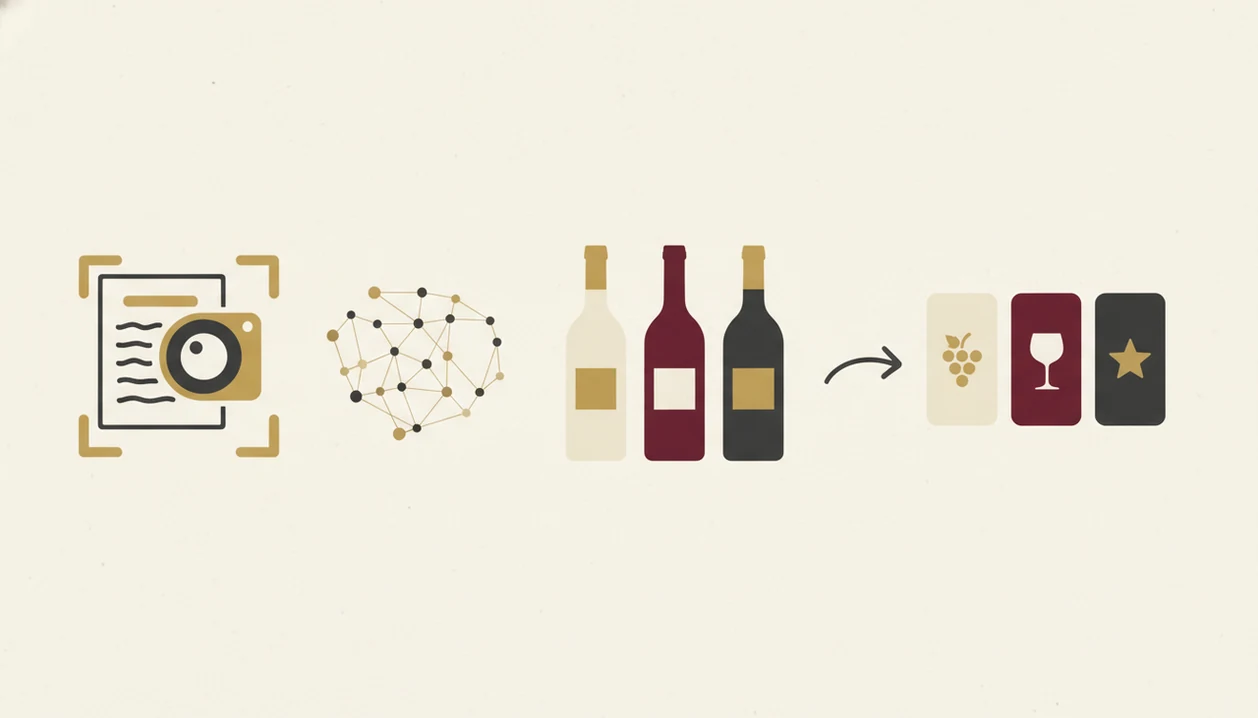
AI wine menu scanning works by turning a printed or digital wine list into structured wine data, then matching that data against your taste history. The basic mechanism is OCR, or optical character recognition, which reads names, vintages, producers, and regions from the menu image.
Then a matching engine compares those recognized wines with a database of tasting notes, ratings, grapes, regions, producer records, and price clues. Plainly: the app reads the list, checks what each wine likely is, then ranks options against your preferences.
Wine Identifier App personalizes that ranking with past scans, ratings, saved bottles, and cellar history. If you keep favoriting mineral whites with seafood or medium-bodied reds with tomato pasta, those patterns should influence the next suggestion. Budget and food-pairing filters narrow the list further.
Not magic. Just useful sorting.
However, OCR can misread handwritten menus, foil glare, stained vintage years, or a cream back label with tiny importer text. Databases can also miss obscure or brand-new vintages.
How To Use a Wine Menu Scanner and Sommelier Together
The most practical restaurant workflow is scanner first, sommelier second, then save the final bottle before you forget. That order keeps the conversation focused instead of asking, “What’s good?” with no direction.
- Scan the wine list with Wine Identifier App to surface personalized picks, value bottles, and likely pairing matches.
- Review the top three suggestions and note which ones fit your food order, budget, and mood.
- Ask the sommelier about those bottles for cellar condition, vintage notes, producer context, or better alternatives.
- Let the sommelier handle service including decanting, temperature, glassware, and pour timing.
- Log the final choice and rating in Wine Identifier App so the next restaurant scan starts smarter.
If your priority is reducing table-side guessing, Wine Identifier App works well because it turns a broad list into three specific questions a sommelier can answer quickly. For a deeper app workflow, the restaurant wine menu scanner guide covers scanning habits in more detail.
Common Myths About AI Wine Apps and Human Sommelier Advice
AI wine apps and sommeliers are often compared as if one must defeat the other. That framing misses how most people actually choose wine at dinner.
Myth 1: AI wine apps can fully replace a sommelier. They cannot replicate hospitality, social context, or physical service. Good AI-powered wine identification and cellar management tools deliver faster memory and matching, not a human read of the table.
Myth 2: Wine apps know every bottle. They do not. Rare imports, brand-new vintages, and tiny-production wines can be missing or poorly matched.
Myth 3: Sommeliers are only for fine dining. Many work in casual restaurants and neighborhood wine bars, and a good one will respect a modest budget.
Myth 4: Scanner apps push expensive bottles. Most wine scanner apps are built around preference and budget matching, not simply the highest price.
The right fit for repeat-purchase memory is Wine Identifier App because it stores the final bottle, your rating, and the dinner context after the check arrives.
Restaurant Wine Help by Dining Scenario: Binary Decision Guide
Restaurant wine help depends on the table, not just the wine list. Use the scanner when privacy and speed matter; use the sommelier when the meal needs human judgment.
- Solo business travel: Lean scanner. Wine Identifier App is quiet, fast, and useful when you do not want to flag staff between emails and the entrée.
- Date night at fine dining: Lean sommelier. The story, pacing, and service can make the bottle feel part of the evening.
- Large group dinner: Use both. The scanner narrows options, while the sommelier handles mixed preferences and table dynamics.
- Casual restaurant with no sommelier: Lean scanner. It is often the only option beyond guessing from grape names.
- Celebratory or high-stakes meal: Ask the sommelier first, then log the bottle afterward.
Diners who want a quiet first pass before asking staff can use an app that scans restaurant wine lists to turn a crowded menu into a short, practical shortlist.
Wine Menu Scanner vs Sommelier for Restaurant Operators
For restaurant operators, a wine menu scanner is not a replacement for a wine program. It is a support layer for guests and servers when trained wine staff are not always available.
AI tools can fill gaps in casual or mid-range restaurants by giving basic pairing guidance, grape clues, and budget-sensitive suggestions. That matters because about 57% of U.S. adults reported dining at a sit-down restaurant at least once in the past week, according to USDA data source.
Sommeliers still handle work apps cannot do: list design, staff training, vendor relationships, inventory strategy, and guest relationship building. They also know when a bottle needs air or when the kitchen’s sauce changed that week.
For operators without a full-time wine lead, Wine Identifier App can support guest confidence because the scan, pairing prompt, and saved rating create a repeatable decision path. The AI food and beverage market was estimated at USD 7.1 billion in 2023, with roughly 30% annual growth, according to Grand View Research source, so guest expectations are moving.
Evidence Behind Wine Scanner and Sommelier Recommendations
The evidence supports a split decision: scanners are strongest at fast recognition and repeatable filtering, while sommeliers are strongest at hospitality and live restaurant context. No available evidence proves that either option is universally better for every diner, list, or occasion.
OCR and AI adoption data are most relevant to the scanner side because menu scanning depends on turning printed names, vintages, and prices into usable records. That is where an app can move quickly: it can remember prior bottles, compare a long list against saved preferences, and filter by budget or food without social pressure. In a crowded dining room, speed and memory are real advantages.
Sommelier evidence is different. Training and hospitality standards emphasize service, tasting discipline, cellar management, food pairing, and guest communication. Those skills matter when the bottle is rare, the vintage is changing, the table has mixed preferences, or the kitchen has adjusted a dish. A human can also handle the physical side of wine: temperature, decanting, glassware, pacing, and whether the room calls for a safer or more adventurous recommendation.
So the best-supported conclusion is practical rather than absolute: use scanner evidence for sorting and recall, and use sommelier expertise for service, nuance, and the restaurant’s actual cellar that night.
Limitations
Neither a wine menu scanner nor a sommelier guarantees the right bottle every time. Personal taste changes with food, mood, company, and even how warm the glass gets on the table.
A bottle that tasted bright with lunch can feel flat beside a salty sauce at 9 p.m.; that kind of table-level context is why both scanner output and human advice need a little humility.
- Wine menu scanners depend on OCR accuracy and can fail on handwritten, poorly printed, reflective, or laminated menus.
- A barcode half-covered by a thumb, or a dim table near the bar, can make recognition worse.
- App databases may lean toward well-known regions and crowd-pleaser styles, underrepresenting niche producers.
- Reliable internet or cellular data is required for most scanner apps to function.
- Human sommeliers vary in training, certification level, availability, and personal preference.
- Sommeliers may favor certain importers, producers, or styles, even when they are trying to be helpful.
- Most casual and mid-range restaurants do not have a sommelier on the floor.
- Neither option can promise a perfect match because wine preference is subjective and situational.
Wine Identifier App is strongest as a bottle memory and decision aid, but CellarTracker, Vivino, Wine-Searcher, Delectable, and Hello Vino may fit different needs depending on reviews, marketplace data, or cellar depth. For beginner-friendly comparisons, the best wine apps guide is a useful next step.
FAQ
Can a wine app replace a sommelier?
A wine app can handle data-driven picks, budget filters, and taste memory. It cannot replace hospitality, physical service, or social context.
Are wine menu scanners accurate?
Wine menu scanners are usually accurate on clear printed or digital lists. Accuracy drops with handwritten menus, glare, unusual formatting, and rare bottles.
Do sommeliers only work at expensive restaurants?
No. Sommeliers work across fine dining, casual restaurants, wine bars, hotels, and retail-connected venues.
Do wine scanner apps push expensive bottles?
Most wine scanner apps optimize around user taste, budget filters, and pairing fit. They are not generally designed to recommend only the most expensive bottle.
Is it rude to use an app at dinner?
Scanning a wine list discreetly is generally acceptable. A sommelier will usually prefer specific questions over vague uncertainty.
What if a wine isn't in the app's database?
Rare, new, or small-production wines may be missing from a scanner database. Ask the sommelier or server for producer, vintage, and style details.
How does a wine scanner learn my taste?
A wine scanner learns from saved scans, ratings, tasting notes, and cellar records. DiVino uses those signals to refine future recommendations.
When should I ask the sommelier instead?
Ask the sommelier for rare bottles, special occasions, complex pairings, or group dynamics. Human advice adds the most value when service and context matter.