What Is Wine Drinking Window? A Cellar Tracking Essential


A wine drinking window is the estimated range of years when a specific bottle is expected to taste its best, typically expressed as a span like 2024–2032. Understanding what is wine drinking window helps you decide when to open each bottle in your cellar rather than guessing, and modern cellar tracking apps use vintage data, critic reviews, and AI to suggest and update these windows automatically.
> Definition: A wine drinking window is the projected time range, shaped by grape, region, vintage, storage, and style, during which a bottle is likely to show its best flavors and complexity.
TL;DR
- Drinking windows are educated estimates, not hard expiration dates.
- They depend on grape variety, vintage, producer style, and storage conditions.
- Cellar tracking apps can dynamically update drink dates as new data and reviews emerge.
- Most wines are designed to drink within a few years of release, not age for decades.
- AI-powered wine apps personalize windows based on your taste preferences over time.
Try the what is wine drinking window app on iPhone to scan a label and save the bottle.
Wine Drinking Window Meaning: The Core Definition
A wine drinking window is the estimated period when a bottle should be opened for the most enjoyable balance of fruit, structure, freshness, and maturity. You’ll usually see it written as a range, such as “drink 2024–2032.” The first year means the wine is expected to be ready. The final year suggests when it may start losing freshness or shape.
Cellar drink dates mean the same thing. They are the planned “open between these years” dates used in cellar notes, critic reviews, and wine apps.
They are not promises. A bottle stored in a warm hallway can taste tired years early, while the same wine kept cool and dark may hold longer. I think of the window as a useful calendar note, not a command.
Good enough beats guessing.
Five Facts Every Wine Drinker Should Know About Drinking Windows
- Drinking windows are built from several clues. Grape variety, region, vintage, producer style, acidity, tannin, sugar, and oak all affect how long a wine may improve or hold.
- Most wines are made to drink young. Everyday whites, rosés, and simple reds are often most enjoyable within 1–5 years of release, not after decades in a closet.
- Storage changes the real window. Heat, bright light, low humidity, and big temperature swings can push a wine past its best before the printed date suggests.
- Different sources can disagree. One critic may say 2026–2038, while an app or community tasting note may suggest opening earlier. That gap is normal.
- Your taste matters. If you like bright fruit and softer decisions at dinner, open earlier. If you enjoy leather, dried flowers, and earthier notes, you may prefer the later side of the window.
A stained vintage year can change the whole decision.
Wine Drinking Window Calculations Behind the Scenes
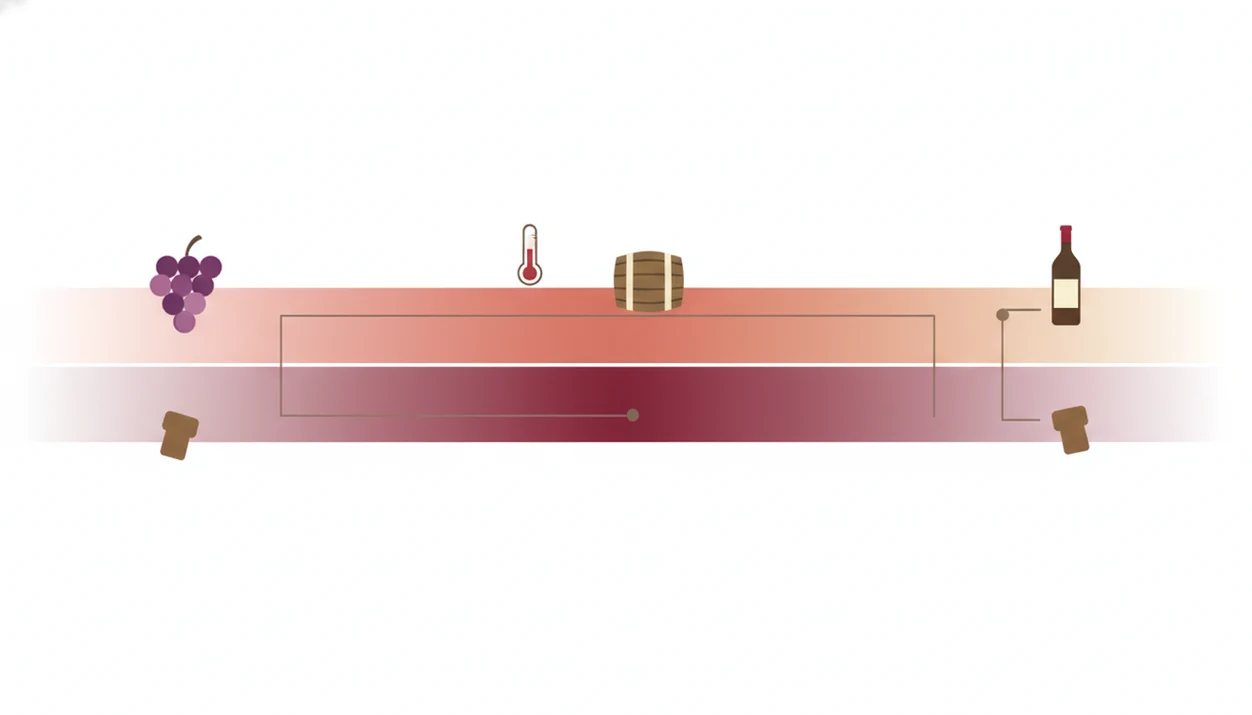
Wine drinking window calculations work by combining known aging patterns with live tasting data. The main inputs are vintage conditions, grape chemistry, producer track record, regional aging curves, critic notes, community reviews, and sometimes cellar storage history.
Critic Data, Community Input, and AI Models
Modern systems compare the bottle against similar wines using machine-learning models. In plain English, the model looks for patterns: grape, place, vintage, price tier, producer history, and how people describe the wine as it ages. A 2020 wine consumer survey found that 56% of U.S. wine drinkers used digital tools, such as apps or websites, to help choose or manage purchases; cite the original survey inline here: [source URL]. That makes drink-date guidance more than a collector feature.
For grape basics, a wine grape varieties guide helps explain why Riesling and Merlot age so differently.
Why Cellar Drink Dates Shift Over Time
Cellar drink dates shift because new evidence arrives. A vintage once thought stern may soften faster than expected. Community notes may show fruit fading. An app that logs cellar temperature can also adjust the estimate if your storage runs warm.
At 10:40 p.m., with plates still out, nobody wants to debate tannin chemistry. You just want the right bottle opened.
Drinking Window Examples by Wine Style and Region
Typical drinking windows vary widely by style and region. Global wine production was about 258 million hectoliters in 2022, according to the International Organisation of Vine and Wine: https://www.oiv.int/what-we-do/statistics.
- Light whites: Pinot Grigio and Sauvignon Blanc. Many taste freshest within 1–3 years, when citrus, green apple, and herbal notes are still bright.
- Age-worthy whites: Burgundy Chardonnay and Riesling. Better examples can run 5–15+ years, especially when acidity, concentration, and balance are strong.
- Everyday reds: entry-level Merlot and Garnacha. These often sit in a 2–5 year window, with soft fruit as the main appeal.
- Age-worthy reds: Barolo and classified Bordeaux. Serious bottles may need 10–25+ years to show mature complexity.
Region matters here. The wine regions and appellations guide is useful when a label gives you place clues before it gives you grape clues.
Wine Drinking Window vs. Expiration Date: Key Differences
Does wine expire when the drinking window ends? No. Wine usually fades gradually after its window, rather than becoming unsafe or instantly spoiled.
Food expiration dates are tied to safety rules, freshness labeling, or retail handling. A drinking window is different. It is an expert or data-based opinion about quality and enjoyment. The wine may still be drinkable after the final year, but the fruit can taste flatter, the aromas can feel duller, and the finish may shorten.
The same grape can have completely different windows. A simple Cabernet may be ready now, while a structured Napa Cabernet from the same vintage may need years. Producer style and vintage conditions matter.
A drinking window is a starting point, not a verdict. For a more date-focused workflow, a drinking window calculator can help turn label details into a first estimate.
How to Use a Wine Drinking Window
Use a wine drinking window as a practical opening plan, not a fixed rule. Start with the bottle’s known facts, then adjust the timing for condition, storage, and your own taste.
- Gather the basics from the label or cellar record: producer, region, grape, vintage, and the current suggested drink range. A 2019 Barolo and a 2019 supermarket Merlot should not sit on the same mental clock.
- Decide where the bottle sits inside that range. If it is before the first year, expect more fresh fruit, acidity, and grip. If it is near the middle, look for balance. If it is beyond the end, assume the wine may be past peak.
- Move the date earlier when storage has been warm, the fill level is low, the cork looks fragile, or the bottle has had a rough shipping history.
- Open sooner if you prefer bright fruit, firmer tannin, and a cleaner snap of freshness at the table.
- Wait longer if you like leather, earth, spice, dried flowers, and a softer texture.
Then write a quick note. The next bottle gets easier.
Cellar Drink Dates for Everyday Wines and Age-Worthy Bottles
Cellar drink dates are most useful when you own bottles that may improve, hold, or decline over several years. They matter for age-worthy Bordeaux, Barolo, Burgundy, Riesling, vintage Champagne, and other wines you plan to keep.
They matter less for the Tuesday bottle you bought with pizza boxes already on the counter. If the label is a fresh rosé or a simple supermarket red, the better move is usually to drink it while the fruit is lively.
Obscure producers and smaller regions can have rough or missing window data. In those cases, use grape, region, vintage, and your own note as the guide. A wine vintage lookup can help when the year on the label is the biggest clue.
Personal palate wins. If you like young fruit, open earlier. Poor storage can override everything.
Cellar Tracking Apps and Your Wine Drink Window
Cellar tracking apps use a wine drink window to turn a shelf of bottles into an opening plan. You scan the front label, confirm the vintage, and the app tries to identify the wine, retrieve drink dates, and place it in your cellar list.
Tools like Wine Identifier App connect AI-powered label scanning with cellar management, so the same bottle record can hold the photo, grape, region, tasting note, rating, and suggested drinking window. Good AI-powered wine identification and cellar management apps deliver better bottle timing and easier recall, not a promise that every cork will behave.
For context, established cellar tools such as CellarTracker and Vivino also use community data, tasting notes, or label records to help drinkers compare suggested drink dates.
Smart Queues and Personalized Drink Alerts
Smart queues such as “Ready to Drink” or “Open Tonight” push bottles nearing peak to the top. Alerts can tell you when a bottle is entering or leaving its window.
The practical use is simple:
- Scan the front label when you add a bottle.
- Check the vintage before saving the record.
- Add storage details if your cellar runs warm or cool.
- Rate the bottle after opening it.
- Adjust future alerts toward younger fruit or mature complexity.
That feedback loop teaches apps such as Wine Identifier App whether you prefer fresh fruit or evolved flavors. The DiVino system can then make future drink-date prompts more personal.
Limitations
Drinking windows are helpful, but they stay imperfect. Even AI cannot guarantee the exact peak timing of one individual bottle.
- Storage variation changes everything. Heat, light, dry corks, and temperature swings can shorten the real window without warning.
- Sources disagree. Critics, apps, winemakers, and community members may give different ideal dates for the same wine.
- Taste is personal. Some drinkers want blackberry fruit and grip. Others want cedar, tobacco, mushroom, and softer edges.
- Data gaps are real. Obscure producers, small regions, and older vintages often have less review coverage.
- Bottle variation happens. Cork quality, fill level, shipping history, and closure condition can make two bottles age differently.
- Everyday wines may not need tracking. A short-lived white in the fridge is usually a “drink soon” bottle, not a cellar project.
- Old does not mean better. Some wines simply become thinner, flatter, and less fun.
Use the window. Then trust the glass.
FAQ
Can wine go bad after the drinking window?
Wine usually fades after the drinking window rather than spoiling instantly. It may taste flat, oxidized, tired, or less aromatic.
Do all wines have a drinking window?
Every wine has a period when it is most enjoyable. For many everyday wines, that window is short, often around 1–3 years.
How accurate are app-suggested drink dates?
App-suggested drink dates blend critic reviews, community notes, vintage data, and AI models. They are useful estimates, not guarantees for an individual bottle.
Does storage change the drinking window?
Yes. Poor storage can shorten a drinking window, while cool, dark, stable storage can help a wine hold longer.
Who decides a wine's drinking window?
Drinking windows may come from critics, winemakers, cellar platforms, community tasting notes, and AI models. Many apps combine several of these sources.
Is drinking window the same as shelf life?
No. Shelf life usually refers to safety or spoilage, while drinking window refers to quality, flavor, and likely enjoyment.
Can an app update a wine's drink window?
Yes. Cellar platforms and apps such as Wine Identifier App can update drink windows as new reviews, tasting notes, and vintage data are added.