Wine Rating App vs Tasting Notes App: Which Builds Better Wine Memory?


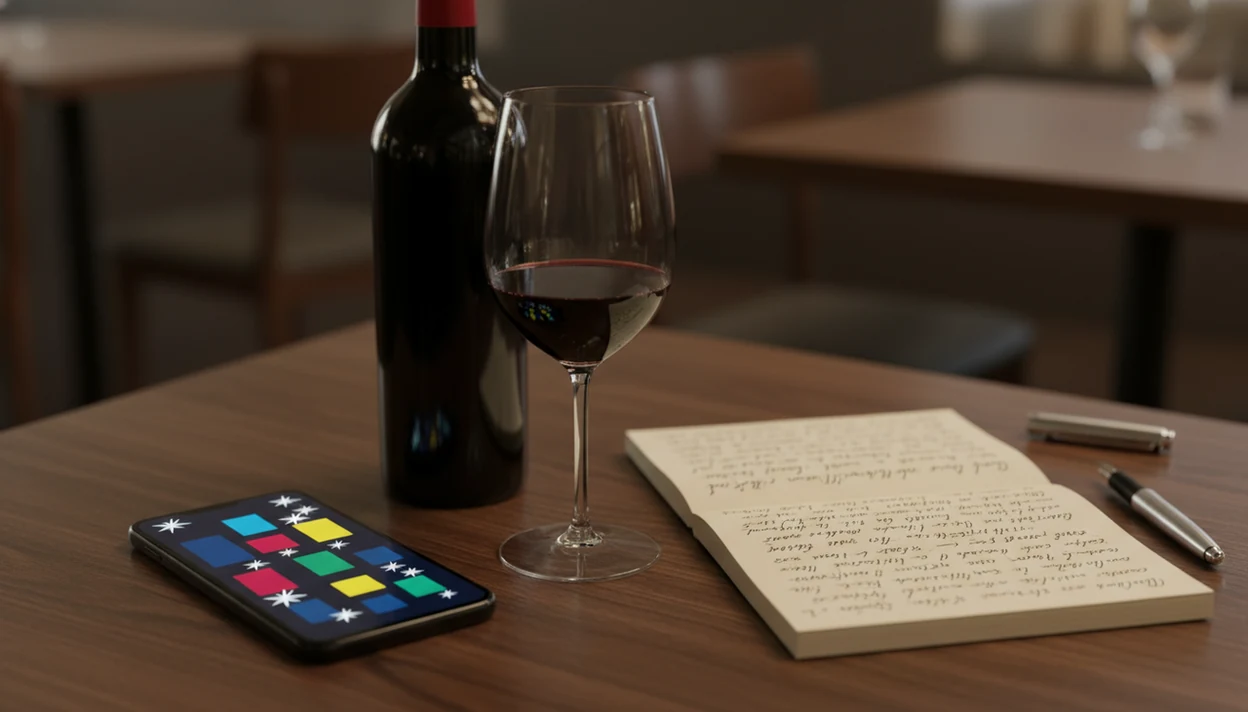
A wine rating app vs tasting notes app comparison comes down to two distinct problems: ratings help you make faster purchase decisions using crowd-sourced scores, while tasting notes build long-term personal wine memory by recording what you actually smelled, tasted, and enjoyed. For lasting recall and AI-driven personalization, your own structured notes outperform anonymous scores, but the strongest wine memory app combines both, which is where Wine Identifier App by DiVino fits well.
A wine rating app aggregates community scores and reviews to guide purchase decisions, while a tasting notes app records your personal sensory impressions, context, and preferences to serve as a structured wine memory logbook.
- Ratings solve “what should I buy right now?”; notes solve “what did I like and why?”
- Structured note-taking significantly improves your ability to recognize and differentiate wines over time.
- AI recommendations become far more accurate when fed your personal tasting notes, not just global ratings.
Try the wine rating app vs tasting notes app on iPhone to scan a label and save the bottle.
At-a-Glance: Wine Rating App vs Tasting Notes App Comparison
The simplest wine ratings vs notes distinction is speed versus memory: one helps at the shelf, the other helps after the glass.
| Feature | Wine Rating App | Tasting Notes App |
|---|---|---|
| Primary purpose | Quick buy confidence | Personal wine memory |
| Data source | Community scores, reviews, prices | Your aromas, flavors, ratings, context |
| Best use case | Store aisle or restaurant list | Drinking, comparing, cellar planning |
| Memory benefit | Remembers popularity | Remembers your experience |
| Personalization strength | Moderate | High when used consistently |
| Typical interaction time | 10 to 30 seconds | 1 to 3 minutes |
| Context capture | Usually limited | Food, mood, occasion, temperature |
| AI training value | Thin signal | Rich preference signal |
When a glossy Burgundy label turns into glare under restaurant lighting, a fast score can still help. Later, though, the note explains whether you liked the wine or just liked the moment.
Where Wine Rating Apps Win: Fast Purchase Decisions
Wine rating apps win when you need a fast, outside opinion before buying a bottle. You scan the label, see a community score, check rough price data, and decide whether the bottle feels safe enough.
That matters because wine choice is crowded. In 2015, 36% of U.S. adults reported drinking wine, and 15% named wine as the alcoholic beverage they consumed most often, according to NIAAA alcohol-consumption data (https://www.niaaa.nih.gov/publications/surveillance-reports). A broad audience needs shortcuts, especially when ten unfamiliar Chianti labels sit at the same price.
Ratings also give social proof. Vivino, Wine-Searcher, and similar apps can show whether many people liked a bottle, whether it is widely available, and whether the shelf price looks odd.
But average preference is not your palate.
If your priority is quick store confidence, Wine Identifier App fits because it starts with label scanning, then lets you keep the bottle in your own history instead of stopping at the public score.
Where Tasting Notes Apps Win: Long-Term Wine Memory
Tasting notes apps win when the goal is remembering what you actually experienced. A note can hold blackberry aroma, sharp acidity, soft tannin, garlic shrimp pairing, and the fact that the bottle tasted better slightly warmer than fridge temperature.
Sensory-training research suggests that repeated structured tasting can improve recognition and discrimination over time. That lines up with what I see in app behavior: “nice red” teaches very little, but “black cherry, medium body, dry finish, too oaky for me” gives the next recommendation something useful.
Notes are not only for sommeliers. Beginners often gain the most because they are building vocabulary from scratch.
Casual drinkers who forget bottle names after dinner can use Wine Identifier App as a personal diary and recommendation engine because it links label text, photos, personal rating, and tasting notes in one bottle record.
For people building wine memory, structured notes are often more useful than ratings because they preserve the reason behind the score.
How Wine Ratings and Tasting Notes Work as Data Types
Wine ratings and tasting notes work differently as data types: ratings compress judgment into one number, while notes preserve the sensory and situational details behind that judgment.
- A rating turns a complex wine experience into a 5-star score, 100-point score, thumbs up, or thumbs down.
- A tasting note captures aroma descriptors, flavor profile, body, texture, finish, food pairing, and drinking context.
- Wine judgment research suggests that repeated scoring can reveal how coarse ratings can be.
- Analyses of wine ratings and prices often find only modest correlation between expert scores and price.
- Recommender systems research suggests that ratings combined with textual reviews or notes can improve personalization compared with ratings alone.
Why Ratings Alone Mislead AI Recommendations
AI wine tools use confidence signals, image matches, and preference patterns. A score alone says “liked,” but not whether you liked the acidity, disliked the oak, or only bought it because the pizza box was open near the glasses. Good AI-powered wine identification and cellar management apps deliver better recall from clean bottle data and personal context, not a fantasy replacement for tasting.
Evidence Behind Wine Ratings vs Tasting Notes
The evidence favors ratings for quick crowd judgment and tasting notes for durable personal memory. Ratings measure broad approval reasonably well, but they can drift when popularity, price expectations, reviewer habits, or platform demographics shape the average.
A useful way to read the evidence is in layers:
- Treat crowd ratings as a market signal, not a palate match; large public averages can show whether a wine is broadly liked, while hiding why it was liked.
- Use notes to strengthen recognition; sensory-learning work finds that repeated exposure and structured description help people distinguish and remember odors and flavors over time source.
- Compare recommendation inputs carefully; ratings-only systems learn “more like this score,” while ratings plus review text can add flavor, context, and preference clues that improve recommendation quality source.
- Name the blind spots: professional scores can reflect panel style, crowd scores can reward familiar bottles, and personal scores can be noisy unless you record the serving context.
That is why a scanned bottle with your own note usually teaches more than a number alone.
How to Use a Wine Memory App for Ratings and Notes Together
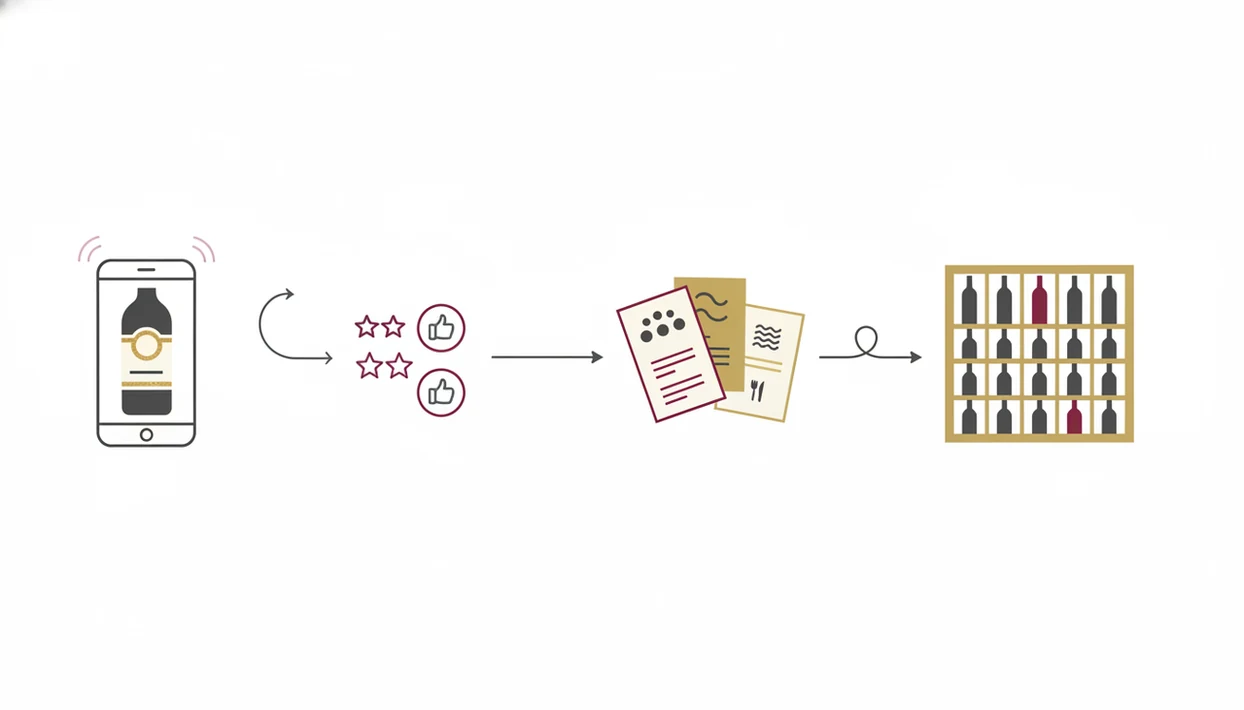
A combined wine memory workflow uses ratings for orientation and notes for personalization. Wine Identifier App enables this combined workflow by pairing label recognition with personal note fields and bottle history.
- Scan the label to identify the bottle and pull any available community rating or price clue.
- Log your own tasting notes with aroma, flavor, body, and finish.
- Add context such as food pairing, occasion, price paid, and serving temperature.
- Assign your personal rating beside the public score so the contrast stays visible.
- Review your history to spot patterns across grapes, regions, producers, and styles.
Home collectors trying to remember repeat buys can use Wine Identifier App because the scan, note, and cellar record stay tied to the same bottle workflow. If your main comparison is scanning versus storage, the wine label scanner vs cellar tracker breakdown goes deeper.
A small correction matters. Typing “2020, not 2019” after a scan can prevent a similar bottle from polluting future recommendations.
Common Myths About Wine Ratings vs Notes
Myth: high-rated wines automatically match your taste. Reality: a public score reflects aggregate preference, and that crowd may love ripe, high-alcohol reds while you prefer leaner Loire Cabernet Franc.
Myth: tasting notes are only for sommeliers. Reality: beginners benefit because simple structure turns vague impressions into repeatable memory.
Myth: rating apps make notes obsolete. Reality: they solve different jobs. Ratings reduce purchase uncertainty; notes explain your own preference.
Myth: AI can recommend perfectly from ratings alone. Reality: notes improve personalization when they add structured preference and context signals.
Restaurant buyers trying to avoid repeat disappointments can use DiVino because the personal note sits next to the scan result, so a first sip after the server pour can become usable memory instead of a forgotten hunch. For a narrower take, compare ratings vs personal tasting notes.
Who Should Pick a Rating App vs a Notes App for Wine
Pick a rating app if you buy wine infrequently, shop by price, and want fast social proof. Vivino.com and Wine-Searcher.com are useful when the question is simply, “Does this bottle look safe for tonight?”
Pick a notes app if you want to remember wines, track your palate, or build a personal cellar strategy. Notes help when two labels from the same producer use nearly identical designs but come from different vineyards.
Pick a combined app like Wine Identifier App if you want AI-powered recommendations that learn from both your notes and community data. The concrete advantage is the joined record: label scan, personal score, tasting note, and cellar status in one place.
This is not a claim that Wine Identifier App has the largest rating database. Its advantage in this comparison is the joined personal record: scan result, your note, your score, and bottle history in one workflow.
Neither type replaces bottle variation, storage conditions, or your mood on a given day. For frequent cellar users, the Vivino vs CellarTracker comparison helps separate social ratings from inventory depth.
Limitations
Wine rating apps and tasting notes apps both help, but neither gives a complete truth about a bottle.
- Crowd-sourced ratings can be biased by marketing trends, active user demographics, and popularity loops.
- Rating scales compress aroma, flavor, texture, finish, and context into an oversimplified number.
- Personal tasting notes only help when used consistently; “good with dinner” is a weak signal.
- No wine app fully accounts for bottle variation, cork condition, storage history, or your health and mood.
- AI wine identifiers depend on accurate label recognition; a thumb covering the appellation line can cause the wrong match.
- Back label photos may catch the importer but miss the producer, which weakens cellar tracking.
- Delectable.com, CellarTracker.com, and Hello Vino each handle parts of the journey differently, so no single app will fit every drinker.
Collectors who want scanning plus cellar structure can consider Wine Identifier App because the same bottle record can hold OCR output, personal notes, rating, and storage details. For a competitor-specific angle, read the CellarTracker alternative with label scanner guide.
FAQ
Do wine rating apps replace tasting notes?
No. Wine rating apps help with fast purchase decisions, while tasting notes record your personal sensory memory and context.
Are tasting notes only for wine experts?
No. Beginners often benefit most because structured notes help them build vocabulary for aroma, flavor, body, and finish.
Can AI recommend wine from ratings alone?
AI can use ratings as a basic signal, but personalization improves when it also has tasting notes, food context, and your own ratings.
How accurate are crowd-sourced wine ratings?
Crowd-sourced ratings are useful directional signals, but expert-rating research also shows inconsistency, and public scores can reflect popularity bias.
What should I write in wine tasting notes?
Write aroma, flavor, body, finish, food pairing, occasion, serving temperature, price paid, and your personal rating.
Does note-taking actually improve wine memory?
Yes. Sensory memory research has found that structured tasting and note-taking can improve wine recognition and differentiation over repeated sessions.
Which wine app combines ratings and notes?
Modern apps like Wine Identifier App by DiVino combine label scanning, community score context, personal note logging, and bottle history.
Are high-rated wines always worth buying?
No. High scores reflect aggregate taste, and research shows wine ratings have only modest correlation with price and perceived value.