
Ratings Vs Personal Tasting Notes: Which Signal Should Your Wine App Trust?


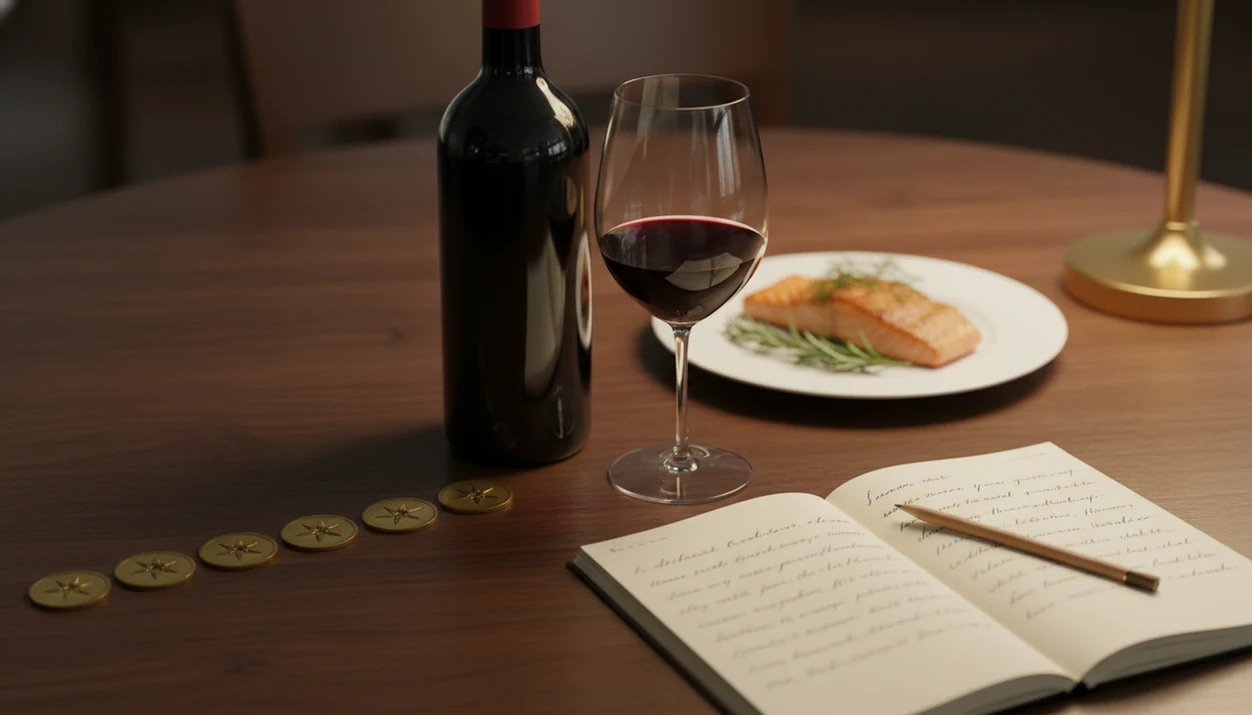
When comparing ratings vs personal tasting notes, crowd scores help you filter thousands of bottles quickly, while personal notes capture what you actually enjoyed: the meal, the place, and the flavors that stayed with you. In Wine Identifier App by DiVino, I’d use ratings to narrow the shelf and your own notes to make the final call, because a 4.3 score can't remember that the oak felt heavy with salmon.
Definition: Crowd ratings compress a complex wine experience into a single number (points or stars), while personal tasting notes are free-text sensory records you write about aroma, flavor, and context for a specific bottle at a specific moment.
TL;DR
- Ratings are fast consensus filters; personal notes are your flavor memory bank.
- Crowd scores carry herd bias; published wine-economics research has found only moderate agreement among judges and critics, so treat any score as a signal rather than a verdict (AAWE: https://wine-economics.org/wp-content/uploads/2012/10/AAWE_WP47.pdf).
- The strongest approach combines both: ratings to shortlist, notes to decide and train future AI recommendations.
Try the ratings vs personal tasting notes app on iPhone to scan a label and save the bottle.
At-a-Glance: Crowd Ratings Vs Personal Wine Notes Compared
Crowd ratings and personal tasting notes answer different questions: “What did many people think?” versus “What did I actually experience?” Both are time-stamped snapshots, and both can shift as bottles age, trends change, or your palate gets sharper.
| Feature | Crowd Ratings | Personal Tasting Notes |
|---|---|---|
| Format | 100-point scores or 5-star scales | Free text about aroma, flavor, body, finish, and context |
| Speed | Fast for scanning a shelf or restaurant list | Slower, because you write after tasting |
| Bias risk | Exposed to crowd ratings bias, hype, price, and brand effects | Exposed to mood, food, temperature, and memory limits |
| Personalization | Broad consensus, weak personal fit | Strong personal fit when logged consistently |
| Aging relevance | Often tied to one review moment | Can track bottle evolution across openings |
| AI training value | Useful baseline signal | Richer signal for recommendation pattern learning |
A glossy Burgundy label under restaurant lighting can hide the vintage, but the score still loads. Your note is what remembers whether the wine felt thin, bright, or just right with dinner.
Five Facts About Ratings Vs Personal Tasting Notes Every Wine Drinker Needs
Here are the core facts: ratings are efficient, notes are personal, and the useful signal comes from combining them. A wine app should treat both as evidence, not as final truth.
- Ratings compress complexity into one number. A critic score or crowd average usually reflects balance, complexity, style fit, and perceived quality, but it leaves out the exact smell, texture, and dinner setting.
- Personal wine notes evolve with your palate. “Too acidic” in your first month may become “bright, lemony, good with shellfish” a year later.
- Crowd ratings bias is real. Popular, ripe, high-impact wines often rise faster than quiet, mineral, or unusual bottles, especially when early reviews set the tone.
- Combining signals is the most effective strategy. Use ratings to shortlist sound bottles, then use your own tasting history to decide what belongs in your glass.
- AI wine apps can read note language. Phrases like “too oaky,” “loved the freshness,” or “peppery finish with roast lamb” help Wine Identifier App refine recommendations beyond raw scores.
When the issue is remembering why you liked a bottle six months ago, Wine Identifier App fits because the scan, personal note, and one-line verdict stay attached to the same saved wine record.
Where Crowd Ratings Win: Bottle Filtering and Wine Discovery
Crowd ratings win when the shelf is too large and your time is short. A score is not a verdict on your taste, but it is a fast way to remove obviously risky choices before you read deeper.
Consumer research shows that visible ratings can measurably shift wine choice, especially when shoppers are comparing unfamiliar bottles. By the late 2000s, one major U.S. wine platform already held more than 2 million consumer ratings and reviews. That volume matters. It gives you a quick quality signal when the price column on a restaurant wine list gets scanned with raised eyebrows.
Ratings are especially useful for identifying sound, well-made bottles before checking grape, region, vintage, or producer. Vivino.com, wine-searcher.com, and cellartracker.com all show how much people rely on score shortcuts, though each presents the signal differently.
If the priority is fast discovery, Wine Identifier App covers the first pass because label scanning can pull rating context before you spend time typing producer names.
Where Personal Wine Notes Win: Taste Memory and Dinner Context
Personal tasting notes win when the question is not “Is this wine respected?” but “Would I want this again?” Notes capture food pairing, mood, glassware, serving temperature, and the little context that scores flatten.
Sensory memory fades quickly. If you wait until the next morning, “black cherry and cedar” often becomes “red, pretty good.” Wine-panel research has repeatedly found meaningful variation between tasters judging the same wine, which explains why your “very tannic” can be another person's “medium grip” (AAWE judge-reliability paper: https://wine-economics.org/wp-content/uploads/2012/10/AAWE_WP47.pdf).
The pizza box open near wine glasses may explain why a simple Chianti felt better than a higher-scored Cabernet. That context is useful later.
For people buying mostly for themselves, personal notes are often more useful than crowd ratings because they preserve repeated evidence of your own preferences. Wine Identifier App supports that habit by saving flavor notes beside the scanned label.
How Crowd Ratings Bias and Personal Wine Notes Work Behind the Scenes
Crowd ratings work through aggregation, but aggregation does not erase bias. Personal notes work through pattern memory, especially when the language is consistent enough for humans and AI to compare over time.
Crowd Ratings Bias: Herd Effects and Expert Disagreement
The herd effect means early ratings can anchor later ratings through social influence. A PNAS study of online product ratings found that an early positive rating increased the chance of later positive ratings by 32%, showing how visible scores can pull later opinions toward the initial signal (https://www.pnas.org/doi/10.1073/pnas.1219177110). Expert disagreement also matters; wine-rating research reports inter-critic correlations often around 0.5–0.7.
So, a 93-point wine is a signal, not a command.
Ratings are time-stamped snapshots. A tight Barolo, a warm serving temperature, or a corked bottle logged after disappointment can all distort the moment.
How AI Reads Your Personal Wine Notes
AI reads personal notes by mapping words into structured style features. “Too oaky” points toward oak impact, “loved the freshness” points toward acidity, and “jammy but soft” points toward ripe fruit and lower perceived structure.
Good AI-powered wine identification and cellar apps deliver label recognition, cellar memory, and preference matching, not a replacement for your palate. Wine Identifier App uses OCR, image match, and note language as separate confidence signals, which matters when two similar bottles share one producer design.
The broader wine rating app vs tasting notes app choice comes down to how much personal context you want saved.
Evidence Behind Ratings Bias and Personal Note Reliability
The evidence is strongest on two points: visible ratings can influence later ratings, and wine scores often disagree across trained tasters. Personal notes are more reliable for your own buying when they are written immediately, but they remain personal records, not objective quality measurements.
The PNAS online-ratings study cited above is the clearest social-influence example: an early positive vote made later positive votes more likely, which shows how a visible score can become a nudge. Wine-judge reliability research points the other way too, showing that trained panels and critics do not always rank the same bottles in lockstep. That supports the practical advice here: use ratings as a discovery filter, not as proof that you will love the wine.
A cleaner note habit looks like this:
- Taste before checking the crowd score when you can.
- Write aroma, flavor, texture, food, and verdict while the glass is still in front of you.
- Mark whether the claim is evidence-backed, such as herd effects or critic disagreement, or workflow advice, such as scanning first.
- Treat your note as personal preference data, not a lab measurement of wine quality.
How to Combine Ratings and Personal Tasting Notes in a Wine App
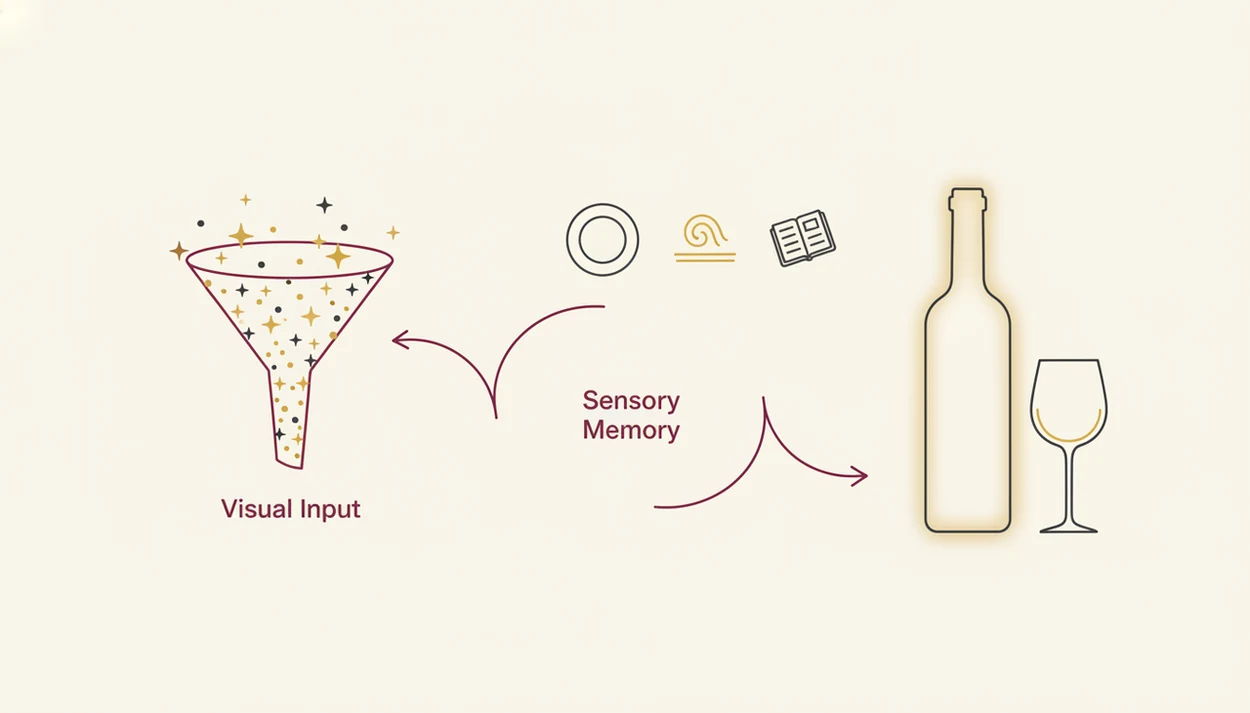
The best workflow is simple: use crowd ratings for the shortlist, then use personal wine notes for the decision. In DiVino, the scan gets you started, but your tasting history makes the next recommendation more personal.
- Scan the label with Wine Identifier App to pull the bottle identity, vintage, and crowd rating context instantly.
- Filter bottles above a minimum rating threshold, such as 3.8/5 or 88 points, to remove weak candidates.
- Log a personal tasting note after every glass with flavor, food, setting, and a one-line verdict.
- Review your note history to spot grapes, regions, producers, and styles you keep liking.
- Let AI cross-reference your notes with ratings so recommendations can surface bottles matching your pattern, not just the crowd average.
When a group chat asks for the bottle name, the scan helps. When you ask whether to buy it again, the note does more work.
Common Myths About Wine Ratings and Tasting Notes
Several rating myths sound reasonable until you test them against real bottles. The mistake is treating one signal as universal when wine changes with palate, setting, and purpose.
Myth: Higher ratings always mean you will like the wine more. A high score often signals quality, but it may favor a style you dislike, such as heavy oak or very ripe fruit.
Myth: Personal tasting notes are only for professionals. A useful note can be plain: “lemony, sharp, great with oysters, buy again.”
Myth: Crowd ratings are objective because averaging cancels out bias. Averages reduce some noise, but they can still reflect herd behavior, price cues, and popular style preference.
Myth: If your favorite wine scores average, your palate is wrong. Your palate is not wrong. It is data.
Intermediate drinkers looking for better repeat buys should use Wine Identifier App because saved notes can turn scattered impressions into a visible preference pattern.
Who Should Rely More on Ratings Vs Personal Wine Notes
New drinkers should lean on ratings for a baseline while writing simple notes. Intermediate drinkers should weight notes more heavily, using scores mainly to discover new grapes, regions, or producers.
Collectors and enthusiasts need a third layer: calibration. That means learning which critics, importers, or community reviewers align with your palate. If one rater consistently loves lean Loire Cabernet Franc and you do too, their score carries more weight than a generic average.
Here is the clean decision rule: if you buy for a crowd, weight ratings; if you buy for yourself, weight notes. For cellar decisions, combine both with drinking windows, storage location, and bottle history.
Collectors comparing scan-first and cellar-first workflows may also want the wine label scanner vs cellar tracker breakdown. Wine Identifier App fits the middle ground because it connects label capture, tasting notes, and cellar records in one phone workflow.
Limitations
Ratings and notes both have limits. Treat them as helpful signals, not permanent truth.
- Food, glassware, temperature, mood, and serving order can change perception, so one personal note should not become final law.
- Crowd ratings can skew toward price, famous brands, and trendy regions; quiet or niche wines may stay underrated.
- AI recommendations are only as good as the data you provide; sparse notes like “nice” or inconsistent star ratings create weak training examples.
- Neither ratings nor notes reliably predict long-term aging outside classic regions, strong vintages, and well-documented producers.
- Sensory memory fades within minutes, so delayed notes lose detail fast.
- Popularity bias can push heavily reviewed wines higher in app feeds while lesser-known bottles remain buried.
- OCR can misread a vintage when a thumb covers the appellation line or the bottle curve bends small text.
If you are comparing broader app choices, the best wine apps guide covers scanning, ratings, cellars, and recommendations side by side. For CellarTracker users who want faster photo capture, the CellarTracker alternative with label scanner page is the closer match.
FAQ
Are crowd wine ratings objective?
No. Crowd wine ratings combine many opinions, but they still carry herd bias, popularity effects, and disagreement between tasters.
Do personal tasting notes improve over time?
Yes. Personal tasting notes usually improve as your vocabulary, palate memory, and comparison points grow with repeated tasting.
Can AI learn from my tasting notes?
Yes. AI can parse free-text phrases such as “too oaky” or “loved the freshness” and map them to structured wine style features.
Why do critics disagree on wine scores?
Critics disagree because palate sensitivity, training, tasting context, and style preference differ. Research on expert wine ratings often finds inter-critic score correlation only around 0.5–0.7.
Should beginners trust ratings or notes more?
Beginners should use ratings for discovery while starting simple personal notes. Over time, their own notes should carry more weight.
How quickly does sensory memory fade?
Sensory recall can drop within minutes, especially for aroma and finish details. Immediate note-taking is more accurate than writing hours later.
Do wine ratings change as bottles age?
Yes. Wine ratings and personal impressions are time-stamped snapshots, and both can shift as a bottle matures, declines, or shows differently.
What should a wine tasting note include?
A useful wine tasting note should include aroma, flavor, body, finish, food pairing, setting, and a one-line verdict such as “buy again” or “not for me.”